
TL;DR:
- Small businesses can achieve significant growth using targeted automation and focused digital marketing campaigns. Effective strategies include CRM integration, precise local targeting, and ongoing optimization, leading to measurable results like increased revenue and reduced costs. Simplifying automation and concentrating on a few impactful channels enable SMBs to scale efficiently without overwhelming their teams.
Small businesses often assume that digital marketing success belongs exclusively to companies with six-figure ad budgets and full in-house teams. That assumption is wrong, and the data proves it. Real SMBs in sectors as different as nutrition clinics and neighborhood cafés have used targeted automation and smart campaign design to triple their revenue, slash their cost per lead, and free up hours of admin work every week. This article breaks down exactly how they did it and gives you a step-by-step framework you can apply to your own business starting today.
Key Takeaways
| Point | Details |
|---|---|
| Automate for impact | Strategic automation and CRM tools amplify SMB campaign ROI without excess complexity. |
| Start with clear goals | Defining campaign objectives up front ensures every tactic supports your business growth. |
| Optimize and iterate | Ongoing optimization and local targeting drive measurable gains for even the smallest companies. |
| Real-world examples work | Case studies from peers offer actionable blueprints any business can adapt with confidence. |
What is a digital marketing campaign?
A digital marketing campaign is a coordinated series of actions across one or more online channels, all working toward a specific business goal. That goal might be generating leads, booking appointments, driving foot traffic, or increasing product sales. The key word is “coordinated.” Random posts or occasional ads are not campaigns. A campaign has a defined offer, a target audience, a budget, a creative message, and a clear way to measure success.
The most common types of digital campaigns include:
- Paid search ads on Google or Bing, targeting people actively searching for what you sell
- Social media ads on Meta (Facebook and Instagram), LinkedIn, or TikTok, targeting people by interest and behavior
- Email marketing automation, sending personalized sequences to leads and customers based on their actions
- Content marketing, using blog posts, videos, or guides to attract organic traffic over time
- SMS campaigns, reaching customers directly on their phones with time-sensitive offers
Each channel serves a different purpose. Paid search captures high-intent buyers who are already looking for a solution. Social media ads build awareness and retarget warm audiences. Email keeps your existing contacts engaged and moves them closer to a purchase. Understanding which channel fits which goal is the foundation of any successful campaign.
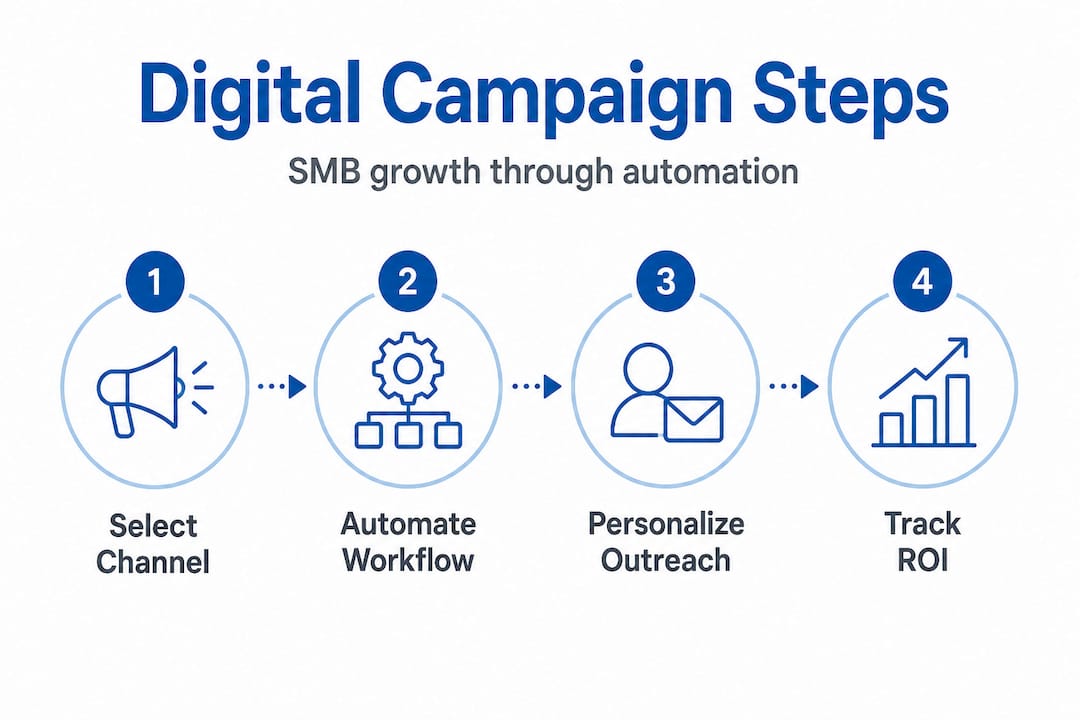
A campaign also needs automation built in from the start. When someone fills out your lead form, automation sends them a welcome email, notifies your sales team, and schedules a follow-up SMS without anyone lifting a finger. This is where building a strategy before you launch becomes critical. Every component should be connected: your targeting feeds your CRM (customer relationship management system), your CRM feeds your follow-up sequences, and your results feed your next round of optimization.
Pro Tip: Only automate processes that genuinely slow you down manually. Keep personal touchpoints like handwritten thank-you notes or personalized phone calls exactly as they are. Automation should remove friction, not personality.
GreenLeaf Clinic: Automating for massive results
With the basics clear, let’s look at a real-world campaign and show exactly how modern automation multiplies results for a small business.
GreenLeaf is a small nutrition clinic that faced a challenge most service-based SMBs know well: a decent client base, a small team, and no reliable system for attracting new patients or tracking which marketing efforts were actually working. Their admin staff spent hours each week on manual follow-ups, appointment reminders, and reporting. Revenue was flat.
Their transformation came from three specific moves. Here is exactly what they did, in order:
- Connected their CRM to their ad platforms. By integrating their client management system with Google Ads and Meta Ads, GreenLeaf could see which campaigns were generating real paying clients, not just clicks.
- Switched to value-based bidding. Instead of optimizing for the cheapest click, their ad system optimized for the highest-value clients, using lifetime customer value data from the CRM to guide decisions.
- Automated their follow-up sequences. Leads who expressed interest but hadn’t booked an appointment received a timed series of emails and SMS messages, nudging them back into the funnel without any manual effort.
- Set up automated appointment reminders. No-show rates dropped significantly once reminders went out automatically via SMS 24 hours and 2 hours before each appointment.
- Built a reporting dashboard. They could now see cost per acquisition (CPA), return on investment (ROI), and lifetime value (LTV) in one place, making it easy to cut what wasn’t working and scale what was.
The results speak for themselves. According to a detailed case study from Nutrient Cloud, GreenLeaf achieved 280% client base growth alongside a 320% revenue increase, a 5.4x ROI, a 48% drop in CPA, a 60% rise in LTV, and a 35% reduction in admin time in just 12 months.
| Metric | Before automation | After automation |
|---|---|---|
| Client base growth | Baseline | +280% |
| Revenue increase | Baseline | +320% |
| Return on investment | Baseline | 5.4x |
| Cost per acquisition | Baseline | -48% |
| Customer lifetime value | Baseline | +60% |
| Admin time spent | Baseline | -35% |
The lesson here goes beyond impressive numbers. GreenLeaf’s results came from CRM-powered efficiency tied directly to their ad spend. The CRM was not a passive database. It was an active engine feeding the right data into the right places at the right time. That is the kind of digital growth tactic that separates businesses that scale from ones that stay stuck.
Pro Tip: Before you flip any automation switch, set up ROI tracking first. If you don’t measure the baseline, you’ll never know how much you actually improved, and you’ll struggle to justify continued investment.
Local Grind: Hyperlocal targeting and smart optimization
Automation is powerful, but targeting matters just as much. Let’s see what happened when a small café fine-tuned its digital reach to match the real behavior of its local customers.
Local Grind is a neighborhood coffee shop competing against both large chains and other independent cafés. Their marketing budget was tight. They could not afford to waste a single dollar reaching people five miles away who would never walk through their door. So they got specific.
Their approach focused on two channels working together. First, they ran Meta ads with a one-mile radius targeting setting, reaching only people within walking or short driving distance. Second, they ran Google Ads targeting high-intent searches like “coffee near me” and “best espresso in [neighborhood].” Both campaigns worked, but the magic happened when they started optimizing.
Here is what they adjusted over time:
- Peak hour scheduling: They ran ads only during morning commute hours and weekend brunch windows, cutting wasted spend during slow periods.
- Remarketing: People who visited their website or engaged with their social content saw follow-up ads with a specific offer, like a discount on a second drink.
- Creative testing: They tested multiple ad formats (photos vs. short videos, promotional vs. lifestyle imagery) to find what drove the most foot traffic.
- Audience layering: They layered interest-based targeting (coffee lovers, brunch enthusiasts) on top of the geographic radius for even more precision.
According to the Local Grind case study from Organic Growth Studio, their cost per lead hit $7.60 and their return on ad spend (ROAS, the ratio of revenue earned for every dollar spent on ads) improved from 3.3:1 to 3.8:1 through consistent optimization.
“Every dollar we spent was working for customers who could actually come in tomorrow morning. That changed everything.” — Local Grind owner
| Tactic | Impact |
|---|---|
| 1-mile radius Meta ads | Reached only walk-in-range customers |
| Peak hour scheduling | Reduced wasted ad spend significantly |
| Remarketing campaigns | Improved repeat visit rates |
| Google Ads high-intent search | Captured in-market buyers actively searching |
| Creative testing | Identified top-performing formats faster |
The lessons other SMBs can take from Local Grind are practical and immediate. You can explore more SMB marketing tips to sharpen your own approach, and if you want to boost ROI for your SMB, precision targeting is one of the fastest ways to start.
The core takeaway: Local Grind did not try to compete on budget. They competed on precision. And precision, combined with ongoing optimization, delivered big-market returns on a small-market budget.
How to build a winning digital marketing campaign for your SMB
To put this inspiration into practice, here is how your team can adapt these methods for results you can measure and scale. The framework below applies whether you are a service clinic, a local retailer, a coaching practice, or a professional services firm.
- Define your single campaign goal. Choose one primary objective: leads, sales, bookings, or foot traffic. Campaigns that try to do everything at once typically accomplish nothing well.
- Match your channel to your goal. High-intent goals like bookings or purchases respond well to paid search and email automation. Awareness and remarketing work better on social media. Don’t spread your budget before you know what works.
- Set your KPIs before you launch. Key performance indicators (KPIs) are the specific numbers you’ll track. These should include cost per lead, conversion rate, ROI, and customer lifetime value. Setting them first prevents you from moving the goalposts after launch.
- Build your CRM integration. Connect your ad platforms to your CRM so every lead is captured, tagged by source, and entered into an automated follow-up sequence. This step alone can dramatically reduce your CPA, as CRM integration proved critical for GreenLeaf’s 48% drop in acquisition cost.
- Automate only the highest-impact touchpoints. Focus first on lead capture, appointment reminders, and follow-up sequences. These three automations deliver the most measurable ROI for the least setup effort.
- Launch, measure, and iterate. Run your campaign for at least four weeks before making major changes. Gather data on what is and isn’t working, then optimize one variable at a time. Local Grind’s ROAS improvement to 3.8:1 came from consistent iteration, not a single perfect launch.
- Scale what works. Once you have a campaign producing predictable results, increase the budget incrementally. Scaling works only when the foundation is solid.
Using a platform built around CRM for faster growth makes every step easier because your data, automations, and reporting live in one place rather than scattered across six different tools.
Pro Tip: Use your CRM data to personalize follow-up messages based on the specific action a lead took. Someone who visited your pricing page deserves a different message than someone who just downloaded a free guide. Personalization at this level is easy with automation and consistently improves conversion rates.
Why simple, focused automation wins for SMBs fast
Moving from steps to strategy, it’s important to understand why some campaigns outlast and outperform others. In our experience working with SMBs across coaching, real estate, salons, and professional services, the businesses that win fastest are not the ones using the most tools. They are the ones using the fewest tools well.

Most small business owners who struggle with digital marketing are not failing because they lack ambition. They are failing because they are overwhelmed by choice. There are dozens of platforms, hundreds of features, and endless advice pulling them in different directions. The result is partial implementations, ignored dashboards, and campaigns that never reach their potential because no one has the bandwidth to manage them properly.
The businesses in this article succeeded by doing less, not more. GreenLeaf automated three core processes and left everything else alone. Local Grind focused on two channels and optimized relentlessly rather than expanding into new ones. Both approaches worked because they were sustainable. A team of two or three people can manage a focused campaign and improve it over time. That same team will burn out trying to manage eight channels simultaneously.
There is also an important operational truth here: automation frees your attention for the work that actually requires a human. Following up with every new lead manually takes time away from serving existing clients. Sending appointment reminders by hand is time that could go into improving your service or closing the next sale. When you implement automation with discipline and clarity, as the proven SMB strategies consistently show, you get the double benefit of better results and a less stressful workday.
The businesses that struggle with automation are usually the ones who automate everything at once, create messy workflows, and then blame the technology when leads fall through the cracks. Start small. Prove one automation works. Then build from there.
Ready to launch your SMB campaign? Get the right automation
If the GreenLeaf and Local Grind examples sparked ideas for your own business, the next question is simple: do you have the right tools to execute? Most SMBs waste months stitching together separate platforms for email, CRM, ads, and reporting, only to find the data doesn’t connect and the costs keep climbing.
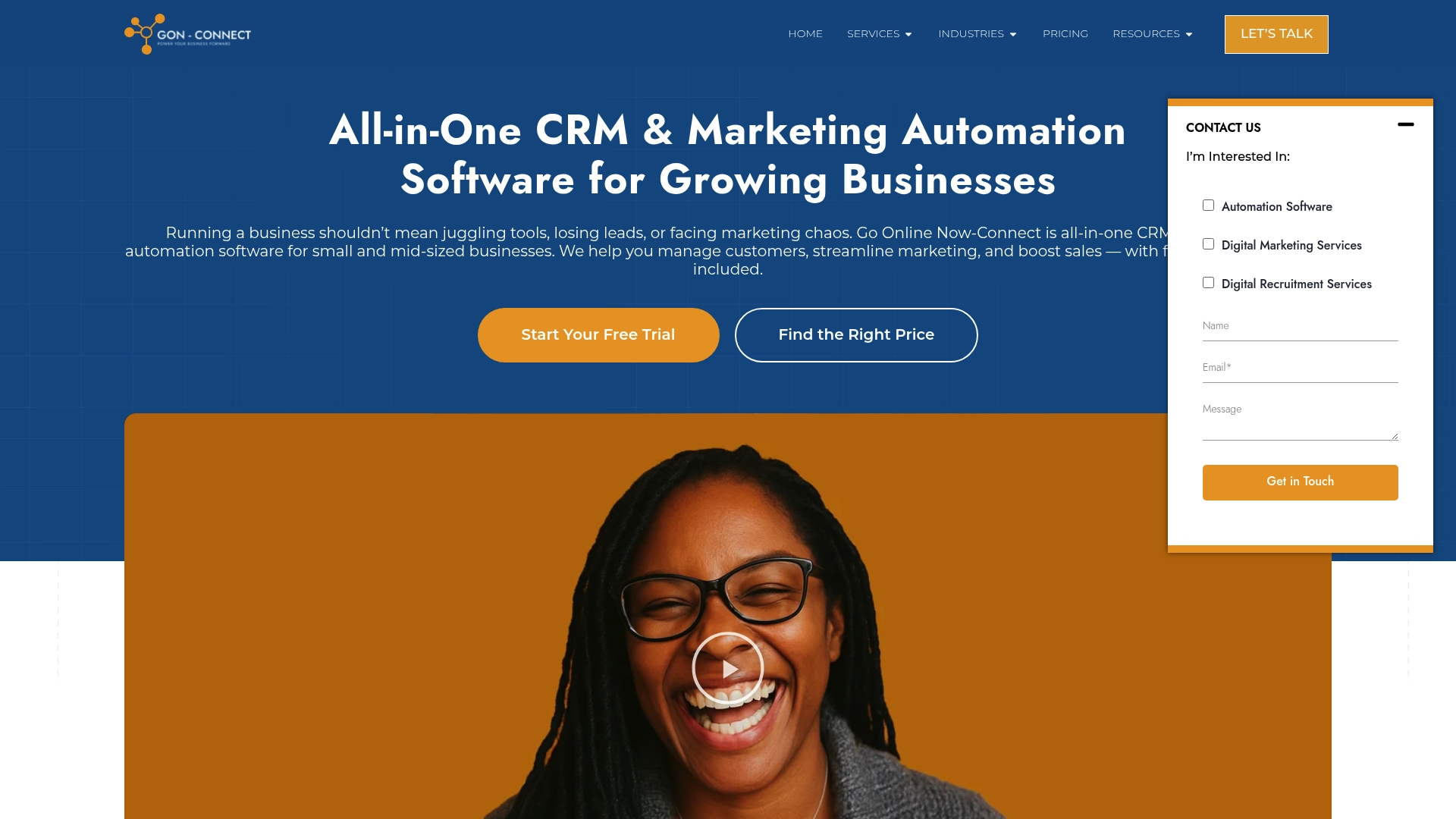
Go Online Now-Connect is built for exactly this situation. Our all-in-one platform combines email automation, SMS, CRM, funnels, and reporting in one affordable system, with done-for-you setup included at no extra cost. Whether you want to boost SMB conversions, drive SMB growth with smarter campaigns, or track proven ROI gains from day one, our platform gives you everything GreenLeaf and Local Grind had access to, at a price that makes sense for a growing business. No contracts. No hidden fees. Real human support from a team that wants to see you succeed.
Frequently asked questions
What are the main benefits of using automation in digital marketing campaigns?
Automation boosts ROI, cuts manual work, and allows small teams to scale campaigns efficiently without losing the personal touch. Real results include a 35% admin time reduction and 5.4x ROI for an SMB that implemented CRM integration and automated follow-ups.
Which digital marketing channels are best for small businesses?
Social media, paid search, and local ad targeting give most SMBs fast, measurable wins, especially when campaigns are tightly focused on a specific audience and goal. Local Grind’s use of Meta and Google Ads for precision local targeting is a strong model to follow.
How do I measure success in a digital marketing campaign?
Track cost per lead, ROI, and growth in qualified clients or revenue, and set these KPIs before launching so you can optimize as you go. GreenLeaf tracked ROI, CPA, and LTV as their core campaign measurement framework.
How soon can small businesses see results from automation?
Notable improvements can appear within two to three months, especially in admin efficiency and lead response time, with major gains documented over a full year. GreenLeaf’s 280% client growth and 320% revenue increase were achieved within 12 months of implementing their automation strategy.
Recommended
- Digital growth tips for SMBs: boost ROI and streamline sales – Go Online Now
- Understanding Why Digital Marketing for SMBs Matters – Go Online Now
- Understanding Digital Growth Strategies for SMBs – Go Online Now
- What Is SMB Digital Strategy and Why It Matters – Go Online Now
- How campaign data drives results and real wins