

TL;DR:
- Improving each stage of the funnel reduces visitor drop-off and increases conversions.
- Proper tracking, clear goals, and targeted testing are essential for effective funnel optimization.
- Small, continuous adjustments often outperform major overhauls in boosting SMB revenue.
You put real effort into driving traffic to your website, but visitors keep leaving without converting. This is the reality for most SMBs: traffic is flowing, but revenue isn’t following. Funnel leaks, unclear messaging, and missed opportunities at every stage quietly cost you customers every single day. The good news? Most of these problems are fixable with the right framework and tools. This guide is built specifically for marketing managers and entrepreneurs at small to mid-sized businesses who want practical, evidence-backed strategies to stop the leaks, reduce friction, and turn more visitors into paying customers.
Key Takeaways
| Point | Details |
|---|---|
| Map your funnel stages | Clear funnel definition reveals where prospects drop off and what you must focus on. |
| Use the right tools | Integrated marketing automation and analytics tools streamline measurement and optimization. |
| Test and iterate | Split testing and incremental changes drive steady conversion improvements. |
| Avoid top mistakes | Common errors like unclear CTAs and ignoring analytics can stall your results—fix them fast. |
| Small changes, big impact | Minor tweaks often outperform large redesigns when optimizing SMB conversion funnels. |
Understanding the conversion funnel: The essentials
Before you can fix a funnel, you need to understand how it works. A conversion funnel is the path a potential customer takes from first discovering your business to making a purchase or taking a desired action. Each stage filters out some visitors, which is normal. The goal is to reduce unnecessary drop-off at every point.
Funnels are typically broken into three layers:
- TOFU (Top of Funnel): This is the awareness stage. Prospects are discovering you for the first time through ads, social media, or search. Your job here is to attract and educate.
- MOFU (Middle of Funnel): This is the consideration stage. Visitors know who you are and are evaluating their options. Your job is to nurture and build trust.
- BOFU (Bottom of Funnel): This is the decision stage. Prospects are ready to buy or commit. Your job is to remove any remaining friction and close the deal.
A clear funnel structure improves your ability to target the right audience and monitor performance at every stage. Without it, you’re essentially guessing where things go wrong.
Here’s a quick reference table to align your goals and metrics at each funnel stage:
| Funnel stage | Primary goal | Key metrics |
|---|---|---|
| TOFU (Awareness) | Attract visitors | Traffic, impressions, click-through rate |
| MOFU (Consideration) | Nurture leads | Email opens, time on page, lead score |
| BOFU (Decision) | Convert prospects | Conversion rate, cost per acquisition, revenue |
Common problems SMBs face include unclear messaging that doesn’t match the visitor’s stage, weak calls to action, and no system for tracking where people exit. When you create sales funnels with defined stages, you gain both clarity and control. Understanding customer acquisition funnels at a structural level is where every optimization journey should start.

Preparation and tools: Setting up for success
With a solid grasp of funnel structure, you’re ready to prepare. Jumping into optimization without the right foundation is one of the most common mistakes SMBs make. You need tracking, clear targets, and the right people involved before you touch a single headline or button.
Here’s a checklist of funnel prerequisites:
- Analytics tracking: Make sure Google Analytics or a comparable tool is installed and capturing user behavior at every page.
- Goal setup: Define what a conversion means for each funnel stage, not just the final sale.
- Baseline data: Gather at least 30 days of traffic and behavior data before making changes.
- Clear targets: Set specific, measurable improvement goals, such as increasing email sign-ups by 15% in 60 days.
You’ll also want the right team in place. Funnel optimization is rarely a solo effort. These are the key roles:
- Marketer: Owns the strategy, messaging, and campaign performance.
- Web admin: Handles technical setup, page speed, and tracking configuration.
- Content creator: Produces landing page copy, emails, and lead magnets.
- Sales team: Provides feedback on lead quality and buyer objections.
Integrated marketing automation tools smooth out funnel tracking and optimization by centralizing data and automating repetitive tasks. Here’s a comparison of popular options for SMBs:
| Tool | Best for | Price range | Key feature |
|---|---|---|---|
| Go Online Now-Connect | All-in-one SMB growth | Affordable, transparent | CRM, funnels, automation bundled |
| HubSpot | Mid-to-large businesses | High | Advanced reporting |
| Mailchimp | Email-focused SMBs | Free to mid-tier | Email automation |
| ClickFunnels | Funnel builders | Mid-tier | Page builder and funnels |
Choosing the right marketing automation software depends on your budget, team size, and how many tools you want to manage. For most SMBs, fewer tools that work together beats a stack of disconnected platforms.
Pro Tip: Set up split testing (A/B testing) infrastructure before making any major changes to your funnel. This way, every change you make is measurable, and you’ll know exactly what’s working.
Step-by-step funnel optimization: Actionable tactics
Once your tools and team are in place, it’s time to take action. Here’s exactly what to do, in order:
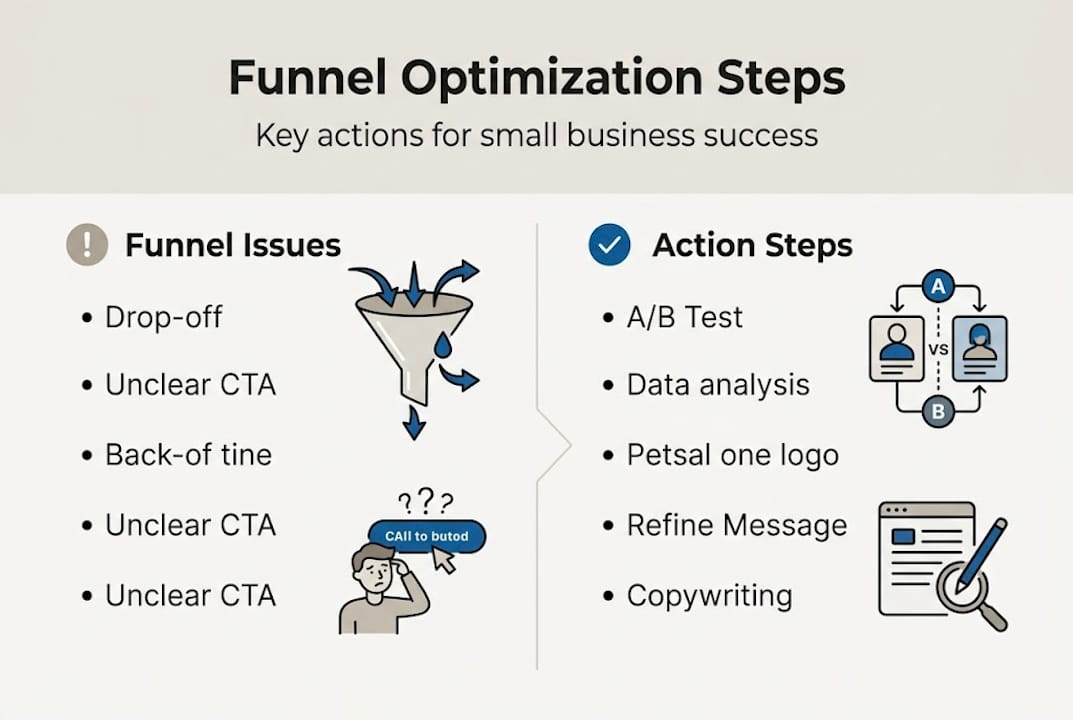
- Audit your current funnel. Map every step from traffic source to conversion. Identify where users drop off using your analytics data. You can’t fix what you haven’t found.
- Set specific, stage-level goals. Don’t just aim for “more conversions.” Set targets per stage, like improving MOFU email open rates by 20% or reducing BOFU cart abandonment by 10%.
- Test your calls to action (CTAs). A small wording change, like switching “Submit” to “Get my free guide,” can lift clicks significantly. Run A/B tests on button copy, color, and placement.
- Personalize your messaging. Match your content to where the prospect is in the funnel. A first-time visitor needs education; a returning prospect needs reassurance and a clear next step.
- Leverage automation for follow-up. Use email marketing tips to build automated sequences that nurture leads without manual effort. Triggered emails based on behavior convert far better than broadcast campaigns.
- Monitor analytics weekly. Review both macro-conversions (sales) and micro-conversions (clicks, sign-ups, page visits). Sequential funnel optimizations lead to measurable gains when tracked consistently.
Tracking micro-conversions is often more valuable than obsessing over the final sale. When you know which small actions predict a purchase, you can engineer more of them intentionally. These leading indicators give you the power to course-correct early, before revenue is lost.
To further improve funnel process outcomes, prioritize the stage with the highest drop-off rate first. That’s where you’ll see the fastest ROI.
Pro Tip: Optimize one funnel stage at a time. Changing multiple elements simultaneously makes it impossible to know which change drove results.
Troubleshooting & common mistakes: Avoiding pitfalls
You’ve applied the steps. If results stall or conversions dip, here’s how to diagnose and recover.
The most common mistakes SMBs make in funnel optimization include:
- Unclear CTAs: Visitors don’t know what to do next. Every page needs one clear, visible action.
- Inconsistent messaging: If your ad promises one thing and your landing page delivers another, trust breaks instantly.
- Lack of segmentation: Treating all leads the same ignores where they are in the buying journey.
- Ignoring analytics: Ignoring analytics is the most common cause of stalled optimizations. Data tells you what’s broken; guessing just wastes time.
If you’re seeing a plateau, work through this troubleshooting checklist:
- Check your tracking setup. Are events and goals firing correctly in your analytics tool? A broken pixel means blind decisions.
- Review the full user journey. Walk through your funnel as a first-time visitor. What feels confusing or slow?
- Test alternatives. If a CTA isn’t converting, try a completely different offer or format, not just a color change.
- Collect direct feedback. Use short surveys or on-page polls to ask visitors why they didn’t take action. Their words often reveal the exact fix.
- Check page speed. A one-second delay in load time can reduce conversions noticeably. Speed matters at every stage.
Exploring proven customer acquisition strategies can also help you spot patterns in your funnel that aren’t visible from the inside.
Pro Tip: When prioritizing fixes, start with the funnel stage that has the biggest gap between traffic volume and conversions. That’s where recovering even a small percentage of drop-offs creates the largest revenue impact.
Our hard-won lessons from real SMB funnel optimization
Most optimization guides focus on the big moves: redesigning landing pages, relaunching ad campaigns, or overhauling email sequences. But here’s what we’ve seen repeatedly working with SMBs: small, targeted changes almost always outperform sweeping overhauls.
A single subject line test. A repositioned CTA button. A shorter contact form. These tiny tweaks regularly deliver 10 to 30% conversion lifts without a single dollar of extra ad spend. The businesses that grow fast funnel growth aren’t necessarily the ones with the biggest budgets. They’re the ones who commit to testing relentlessly and reading their data honestly.
The uncomfortable truth is that there’s no such thing as a perfect funnel. Every funnel you build is already in need of its next iteration. The goal isn’t to get it right once. It’s to build a system of continuous improvement where each small change compounds over time. That mindset shift, from project to process, is what separates consistently growing SMBs from ones that hit a ceiling and stay there.
Level up your conversion funnel with our solutions
Ready to accelerate your results? The strategies in this guide work even better when you have the right tools supporting them.
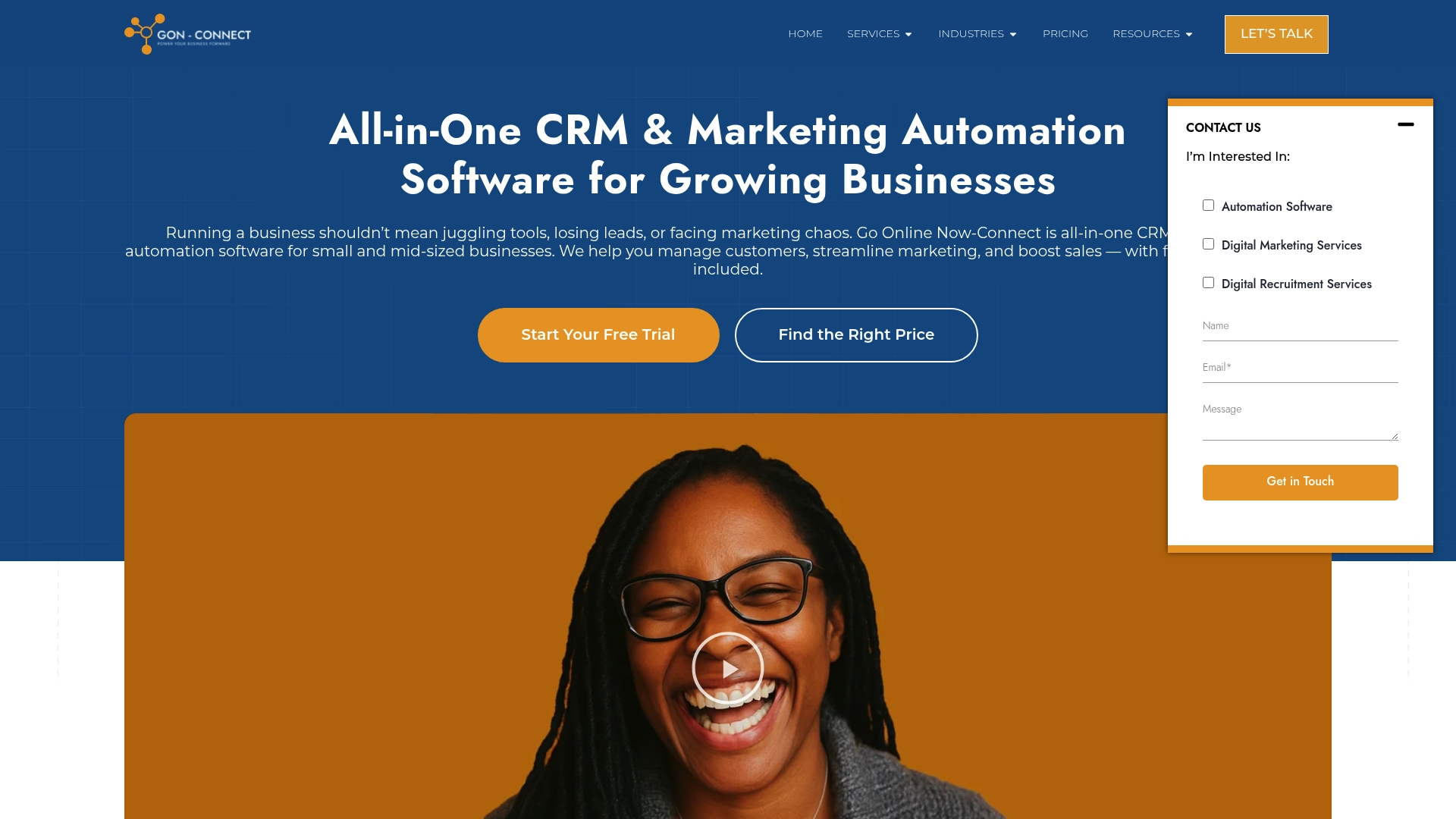
Go Online Now-Connect gives you everything you need to track, automate, and optimize your funnel in one place. Our SMB conversion automation tools are built for businesses like yours: affordable, simple to use, and backed by real human support. From pipeline tracking in our all-in-one CRM for SMBs to automated follow-up sequences that nurture leads around the clock, we handle the complexity so you can focus on growth. Explore our automation guide for SMBs to see exactly how our platform supports every stage of your funnel.
Frequently asked questions
What is a conversion funnel and why should SMBs optimize it?
A conversion funnel is the online pathway from visitor to customer. A clear funnel structure increases conversions and revenue by reducing friction and guiding prospects through each stage more effectively.
Which tools are best for SMB conversion funnel optimization?
Integrated marketing automation tools help SMBs track, automate, and refine their funnels affordably. Look for platforms that combine CRM, email, and funnel tracking in one system to avoid managing multiple disconnected tools.
How do I identify funnel leaks and fix them quickly?
Review your analytics data to find pages with high exit rates, then test different CTAs or messaging at those drop-off points. Ignoring analytics is the most common reason SMBs fail to fix leaks quickly.
How long does it take to see results from funnel optimization?
Most SMBs begin seeing measurable conversion increases within a few weeks when applying split tests and incremental changes. Sequential funnel optimizations compound over time, so starting early matters more than starting perfectly.