

TL;DR:
- An effective email marketing strategy involves setting clear goals, segmenting audiences, maintaining list hygiene, and automating key flows. Building and nurturing a high-quality, engaged list outperforms larger but inactive lists, focusing on deliverability and relevance. Measuring success through click-through, conversion, and revenue metrics, along with ongoing optimization, ensures continuous growth and improved ROI.
An email marketing strategy plan is a structured blueprint that defines how a business uses email campaigns to engage customers, drive sales, and measure results. Done right, email delivers $36–$42 for every $1 spent, making it the highest-ROI digital channel available to small and mid-sized businesses. That return does not happen by accident. It comes from a deliberate process: setting goals, building a quality list, writing focused content, automating key flows, and tracking the metrics that actually matter. This guide walks you through each step so you can build a program that grows with your business.
What are the essential components of an email marketing strategy plan?
A strong email marketing strategy plan is built on seven core components. Skip one and the whole system underperforms. Master all seven and you have a self-sustaining revenue engine.
- Clear, measurable goals. Every campaign should connect to a business objective. Examples include growing monthly recurring revenue by 15%, recovering 10% of abandoned carts, or re-engaging lapsed customers within 90 days. Vague goals produce vague results.
- Audience segmentation. Sending the same message to every subscriber is the fastest way to lose them. Segment by purchase history, signup source, engagement level, or customer lifecycle stage. A real estate agency, for example, sends different content to first-time buyers than to investors.
- List building and hygiene. Your list is only as valuable as the people on it. Use double opt-in forms, remove invalid addresses quarterly, and suppress contacts who have not engaged in six months.
- Technical deliverability. Gmail and Yahoo now require all senders to implement DKIM, SPF, and DMARC authentication. These are email security protocols that verify your identity to inbox providers. Without them, your emails land in spam regardless of how good the content is.
- Content planning. Map your content to subscriber lifecycle stages: welcome, nurture, conversion, and retention. Each stage needs a different message and tone.
- Marketing automation. Welcome sequences, abandoned cart reminders, and post-purchase follow-ups run without manual effort. They are the highest-leverage activity in any email campaign process.
- Performance measurement. Track click-through rate, conversion rate, and revenue per email. Vanity metrics like total sends tell you nothing useful.
Pro Tip: Set up your DKIM, SPF, and DMARC records before you send a single campaign. Deliverability problems are far harder to fix after the fact than to prevent from the start.
How do you build and maintain a healthy, engaged email list?
List quality beats list size every time. A small, engaged list consistently outperforms a large, disengaged one in both open rates and revenue generated. This is the single most misunderstood principle in email marketing for SMBs.
Here is a practical four-step process for building and maintaining a healthy list:
- Set clear expectations at signup. Tell subscribers exactly what they will receive and how often. A salon that promises “monthly styling tips and exclusive offers” attracts people who actually want that content. Vague promises attract unqualified contacts who unsubscribe or mark emails as spam.
- Use double opt-in. This requires subscribers to confirm their email address before joining your list. It adds one extra step but filters out bots, typos, and low-intent signups. The result is a cleaner list from day one.
- Start small before scaling. Protecting your sender reputation means beginning with your most engaged contacts, not blasting your entire database. Inbox providers like Gmail track engagement signals. A strong early track record earns you better placement in the inbox as you scale.
- Remove inactive subscribers regularly. Run a re-engagement campaign for contacts who have not clicked in 90 days. If they still do not respond, remove them. Keeping dead weight on your list drags down your deliverability scores and distorts your performance data.
Pro Tip: Never buy an email list. Purchased lists are filled with invalid addresses and people who never consented to hear from you. They destroy sender reputation fast and can get your domain blacklisted.
A healthy list is not the biggest list. It is the most responsive one. Treat it as a living asset that needs regular maintenance, not a static database you set and forget.

What content and automation tactics drive the most conversions?
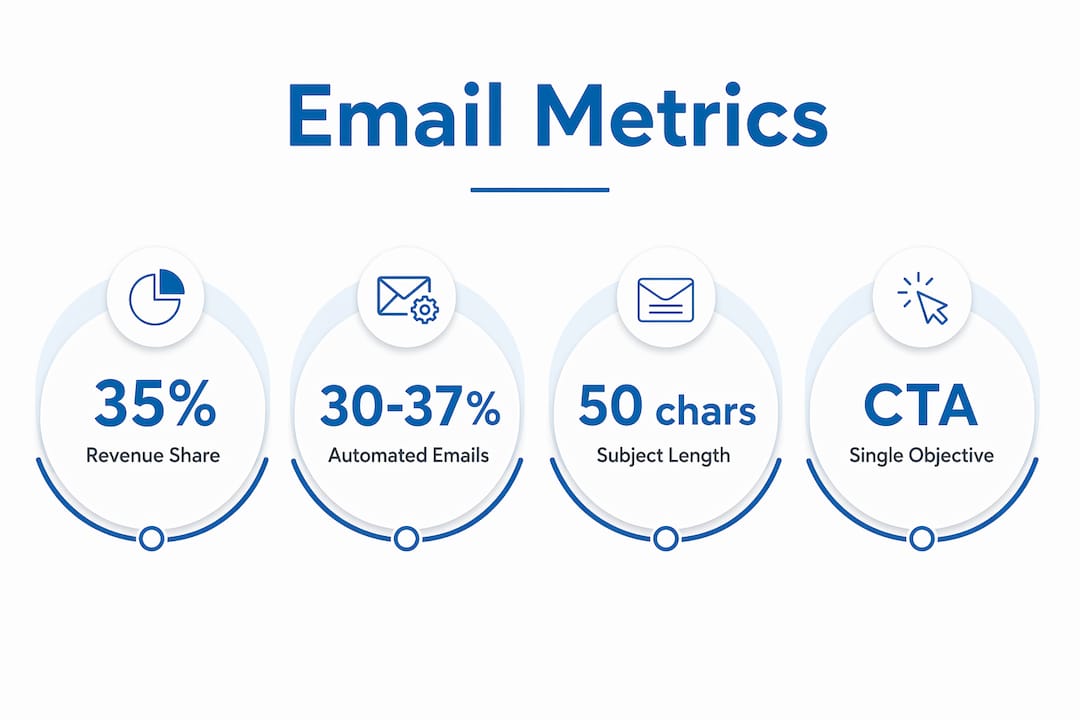
The most effective email content follows one rule: one email, one objective. Single-objective emails with one clear CTA produce higher click-through rates than emails with multiple links or competing messages. Every distraction you add reduces the chance a reader takes the action you want.
Subject line best practices
Subject lines determine whether your email gets opened. Keep them under 50 characters to avoid truncation on mobile devices, where more than half of all emails are read. Avoid words like “free,” “guaranteed,” and “act now,” which trigger spam filters. Specificity works better than hype. “Your appointment is confirmed for Tuesday” outperforms “Don’t miss this amazing opportunity.”
Personalization that works without being intrusive
Basic personalization, like using a subscriber’s first name or referencing their last purchase, increases engagement without feeling invasive. Avoid over-personalization that signals you are tracking too much. Saying “We noticed you visited our pricing page three times” can feel uncomfortable. Stick to data the subscriber knowingly shared.
Core automation flows every SMB needs
The table below shows the four automation flows that generate the most revenue relative to the effort required.
| Automation Flow | Trigger | Primary Goal |
|---|---|---|
| Welcome Series | New subscriber joins list | Build trust and set expectations |
| Abandoned Cart | Item added, checkout not completed | Recover lost revenue |
| Post-Purchase | Order confirmed | Upsell, review request, loyalty |
| Win-Back | No engagement in 90+ days | Re-engage or remove |
Automated email flows make up roughly 2% of total email volume but generate 30–37% of total email revenue. That ratio is the strongest argument for prioritizing automation over manual campaigns. A coaching business that sets up a five-email welcome sequence and a three-email abandoned cart flow has a revenue-generating system running 24 hours a day with zero ongoing effort. You can find industry-specific automation examples across sectors like real estate, education, and professional services to see how these flows apply to your business.
How do you measure and optimize your email marketing results?
Measurement is where most SMBs either give up or go in the wrong direction. The most common mistake is treating open rate as the primary success metric. Open rates are now unreliable for decision-making because Apple Mail Privacy Protection and similar features pre-load email pixels, inflating open counts regardless of whether a human actually read the message.
Focus on these metrics instead:
| Metric | What It Measures | Why It Matters |
|---|---|---|
| Click-Through Rate (CTR) | Percentage of recipients who clicked a link | Shows content relevance and CTA effectiveness |
| Conversion Rate | Percentage who completed the desired action | Directly ties email to revenue or leads |
| Revenue Per Email | Total revenue divided by emails sent | Measures campaign profitability |
| List Growth Rate | Net new subscribers per period | Tracks audience expansion health |
| Unsubscribe Rate | Percentage who opted out | Flags content or frequency problems |
Track these metrics by segment, not just overall. A campaign that performs poorly with cold subscribers but strongly with loyal customers tells you something specific and useful. That kind of segmented insight is what drives real improvement.
A/B testing is the most reliable way to improve results over time. Test one variable per campaign: subject line, send time, CTA button color, or email length. Run the test on 20% of your list, then send the winner to the remaining 80%. Over a quarter, this compounds into measurable gains.
Treat your email strategy as a continuous loop: audit performance each quarter, identify the weakest segment or flow, adjust one variable, and measure again. This iterative approach beats any one-time overhaul.
Pro Tip: Build a simple dashboard in a spreadsheet that tracks CTR, conversion rate, and revenue per email for every campaign. Reviewing it monthly takes 15 minutes and reveals patterns that are invisible when you look at campaigns in isolation.
What i have learned running email programs for smbs
Most SMBs I have worked with come in with the same problem: they have overcomplicated their approach before sending a single email. They are debating content calendars, brand voice guides, and newsletter designs when they have not yet set up DMARC or built a welcome sequence. That is backwards.
The first 90 days of any email program should focus almost entirely on the technical foundation and the core automation flows. Get your authentication records in place. Send only to your most engaged contacts while your sender reputation builds. Set up a welcome series and an abandoned cart flow. Nothing else matters more in that window.
The second insight that surprises most business owners: you do not need a large list to see real revenue. A list of 500 highly engaged subscribers with a well-built automation stack will outperform a list of 10,000 cold contacts with no automation. I have seen this play out repeatedly across coaching businesses, salons, and service providers. The math is simple. Engagement drives deliverability. Deliverability drives opens. Opens drive clicks. Clicks drive revenue.
The third thing I would tell any SMB owner: resist the urge to send more emails when results are flat. The answer is almost never more volume. It is better segmentation, a stronger subject line, or a cleaner list. More email to a disengaged audience accelerates the problem. Slow down, audit your data, and fix the root cause.
You can explore effective email tactics for SMBs to see how these principles apply across different business types and campaign goals.
— Go
How Goonlinenow helps you execute your email marketing plan
Building a solid email marketing strategy plan takes the right tools and the right support. Goonlinenow combines marketing automation software, an all-in-one CRM, and done-for-you setup so you can launch effective campaigns without the technical headaches.
With Goonlinenow, you get email automation, list management, and performance tracking built into one affordable platform. Our team configures your welcome sequences, abandoned cart flows, and segmentation rules at no extra cost. SMBs using our platform report up to 85% more conversions and 75% time saved within 90 days. No contracts, no hidden fees, and real human support when you need it. Explore our marketing automation software for SMBs and see how we make email marketing work for your business from day one.
FAQ
What is an email marketing strategy plan?
An email marketing strategy plan is a documented blueprint that defines your goals, audience segments, content approach, automation flows, and success metrics for email campaigns. It gives your email program structure and direction instead of relying on one-off sends.
How much ROI can email marketing deliver?
Email marketing delivers $36–$42 for every $1 spent, making it one of the strongest ROI channels in digital marketing. That return depends heavily on list quality, automation setup, and consistent optimization.
What automations should smbs set up first?
Start with a welcome series and an abandoned cart flow. These two automations generate 30–37% of email revenue while requiring minimal ongoing effort once configured.
Why are open rates no longer reliable?
Apple Mail Privacy Protection and similar features pre-load email tracking pixels, which inflates open rate data. Marketers should rely on click-through rate, conversion rate, and revenue per email for accurate performance measurement.
How often should you clean your email list?
Remove invalid addresses and suppress unengaged contacts at least once per quarter. Regular list hygiene protects your sender reputation and improves deliverability across all campaigns.