

TL;DR:
- Digital recruitment offers SMBs cost-effective, faster hiring using online platforms, automation, and data tools.
- Key tools include ATS, AI screening, social media, and niche job boards to target specific talent.
- Balancing technology with personalized candidate experiences is crucial for successful SMB hiring.
Many small business owners assume advanced digital recruitment belongs to the big players with large HR teams and deep pockets. That assumption is costing them great hires every single day. Digital recruitment uses online platforms, automation, and data tools to attract and hire qualified people faster and smarter. It is not a luxury reserved for corporations. In 2026, even a five-person team can tap into the same recruitment technology that Fortune 500 companies use, often at a fraction of the cost. This guide breaks down what digital recruitment actually involves, which tools work best for SMBs, and how to avoid the pitfalls that trip up most small businesses.
Key Takeaways
| Point | Details |
|---|---|
| Digital tools enable SMB hiring | Technologies like ATS and social media help small businesses recruit efficiently and widen their talent pool. |
| Balance tech with human review | Automation accelerates screening, but human judgment is crucial for key roles and avoiding missed talent. |
| Streamline for candidate experience | Easy-to-use applications and transparent processes boost completion rates and employer reputation. |
| Monitor and adapt processes | Track key metrics and regularly refine your recruitment strategy for ongoing improvement. |
What is digital recruitment?
Now that we have set the stage for why digital recruitment matters, let us clarify what it actually involves and what makes it so transformative for hiring efficiency.
At its core, digital recruitment is the practice of using digital platforms and automation to attract, screen, and hire talent. It replaces slow, paper-heavy, purely manual hiring with streamlined, data-informed processes. Digital recruitment leverages technologies like online job boards, social media, Applicant Tracking Systems (ATS), AI screening, video interviews, and predictive analytics to streamline talent acquisition for SMBs.
An ATS, for example, is software that automatically collects, sorts, and ranks job applications based on criteria you set. Instead of reading through 200 resumes manually, your ATS surfaces the top 20 candidates worth your time. AI-powered screening goes further, analyzing language patterns, experience match, and even cultural signals in applications.
Here is a quick look at how key digital recruitment technologies compare:
| Technology | Primary function | Best for |
|---|---|---|
| Online job boards | Wide reach, passive candidates | Entry to mid-level roles |
| Social media recruiting | Targeted outreach, brand building | B2B roles, niche talent |
| ATS software | Application sorting and tracking | All role types |
| AI screening tools | Resume analysis, fit scoring | High-volume hiring |
| Video interviewing | Async or live candidate interviews | Remote or global teams |
| Predictive analytics | Forecasting candidate success | Senior or critical roles |
The benefits for SMBs are real and measurable. Digital recruitment reduces cost-per-hire, shortens time-to-fill, and opens your search to a much wider talent pool than local job postings ever could. You also get cleaner data, meaning you can track what is working and adjust fast.
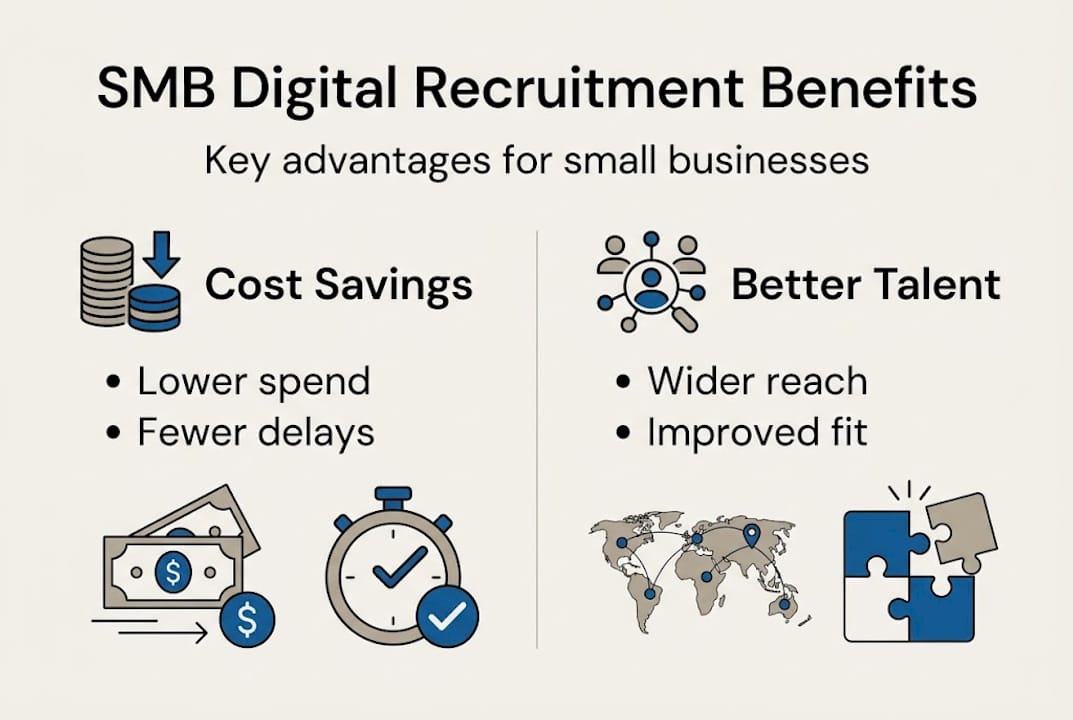
A notable data point: 55% of SMBs now use social media as part of their recruitment process, according to SHRM 2025 Talent Trends. That number is growing quickly because social platforms allow you to reach passive candidates, people who are not actively job hunting but would consider the right offer.
Key benefits of digital recruitment for SMBs include:
- Faster hiring cycles with automated screening and scheduling
- Lower cost-per-hire by reducing reliance on expensive recruiters
- Broader talent access across geographic regions and skill sets
- Better candidate tracking through centralized ATS data
- Stronger employer branding via social media presence
Understanding how digital recruitment works gives you a strategic foundation before investing in any tools.
Key methods and tools for SMB recruitment
With the basics and benefits established, let us look at which methods and technology choices actually drive better hiring outcomes for SMBs.
The biggest mistake SMBs make is picking tools before defining their process. Technology should support your strategy, not replace it. Key methodologies include defining ideal candidate profiles, selecting the right platforms, using AI-powered screening, multi-channel sourcing, skills-based hiring, and streamlining applications.

Here is a platform comparison to help you choose where to post:
| Platform | Strengths | Best fit |
|---|---|---|
| Professional network, B2B roles | Marketing, sales, tech | |
| Indeed | High volume, broad reach | General and trade roles |
| Niche job boards | Targeted audiences | Specialized industries |
| Company career page | Owned channel, brand control | All roles |
| Social media (Meta/X) | Paid targeting, broad exposure | Entry-level, creative roles |
Follow this proven sequence to build a smarter recruitment process:
- Define your Ideal Candidate Profile (ICP). Specify the skills, experience, values, and work style you need. Be precise. Vague job descriptions attract the wrong applicants.
- Choose your platforms strategically. Do not spread yourself thin. Pick two or three channels based on where your target candidates spend time.
- Set up an ATS or use built-in screening tools. Even free or low-cost ATS options can dramatically cut the time you spend reviewing applications.
- Use skills-based assessments. Short, role-relevant tests reveal actual ability far better than resumes alone. They also level the playing field for candidates from non-traditional backgrounds.
- Streamline the application experience. Long, complex application forms kill conversion. Keep it under ten minutes to complete.
- Activate multi-channel sourcing. Post on multiple platforms, engage employee networks, and consider referral incentives to maximize reach.
Pro Tip: Set a tracking link for each platform where you post. This shows you exactly where your best applicants are coming from, so you stop wasting budget on channels that do not convert.
For a deeper look at real-world approaches, explore these examples of digital recruitment that SMBs are using right now. You can also check recruitment trends data directly from SHRM to stay current on what is working across industries.
Challenges and risks of digital hiring
While the right tools are powerful, it is critical to navigate the practical and cultural obstacles SMBs face when adopting digital recruitment.
Digital recruitment is not risk-free. Most SMBs run into a predictable set of problems when they adopt these tools without a clear plan.
Common challenges include:
- Limited budget and tech resources. Many SMBs cannot afford enterprise-grade tools and lack a dedicated HR team to manage them.
- Skill gaps in-house. Setting up and optimizing an ATS or AI screening tool requires some technical knowledge that most small business owners do not have.
- Resistance to change. Teams used to traditional hiring methods often push back when new digital processes are introduced.
- Risk of false negatives. Automated screening can reject strong candidates who do not fit a rigid keyword profile, especially in senior or creative roles.
- Employer brand perception. Heavy automation can feel impersonal to candidates, which may reduce your appeal as an employer.
SMEs face resource limits, skill shortages, and resistance to change, and automation risks producing false negatives, particularly for senior roles where nuanced judgment matters most.
There is also a perception issue worth taking seriously. Research shows that candidates wary of AI data use report lower organizational attractiveness, and social media content heavily influences how competent a company appears to potential applicants.
“Over-automating your hiring process can save time in the short run but cost you exceptional talent in the long run. The best candidates have options, and a cold, impersonal process pushes them toward competitors who make them feel valued from the very first touchpoint.”
The path to efficient hiring for SMBs is about finding the right balance, not going fully hands-off.
Best practices for effective digital recruitment in 2026
Given these obstacles, let us focus on what actually works. Here are practical tactics and principles for SMBs looking to optimize their digital recruitment in 2026 and beyond.
The smartest SMBs treat digital recruitment as a system to iterate on, not a set-and-forget tool. Follow these best practices to stay ahead:
- Map your entire hiring process first. Before adding any technology, write out every step from job posting to offer letter. Identify where the slowdowns and drop-offs happen.
- Choose the right level of automation for each stage. Use AI for high-volume screening tasks. Keep human judgment front and center for final interviews and senior role decisions.
- Prioritize candidate experience throughout. A clunky, confusing application process costs you qualified people before you even see their resume. Streamlined processes and transparency help SMBs compete directly with larger firms.
- Add pay transparency and skills-based assessments. Publishing salary ranges upfront improves applicant quality and trust. Skills tests filter more accurately than credentials alone.
- Monitor your key metrics. Track time-to-hire, cost-per-hire, and quality-of-hire consistently. These numbers tell you where to improve and what is already working.
Pro Tip: If you use AI screening, review a random sample of rejected applications each week. This helps you catch patterns where your filters may be eliminating strong candidates unfairly.
A critical reminder: balance AI automation with human judgment to avoid biases and false rejections, monitor benchmarks like time-to-hire reduction with AI, and address candidate privacy concerns, especially in markets with strong data protection laws.
For more on putting this into practice, see these streamline recruitment process tips and a full 2026 digital hiring guide that covers what top-performing SMBs are doing differently this year.
A fresh perspective: Why digital recruitment is about balance, not just tech
As we wrap up with best practices, it is worth stepping back and considering a broader view that ties technology with the values and strengths unique to SMBs.
Here is something most tech vendors will not tell you: technology amplifies whatever you already have. If your hiring process is unclear and rushed, automation will make it faster and still unclear. If you have genuine clarity about what you need and a culture worth joining, digital tools will help you find the right people far more efficiently.
Many SMBs rush to adopt the newest tools without first fixing the fundamentals. That is backwards. The companies that consistently make great hires use technology to scale good judgment, not to replace it.
Smaller businesses have a real competitive advantage that gets overlooked: the ability to build personal connections with candidates, move faster on offers, and offer a culture that a large corporation simply cannot replicate. Leaning into that human element, even inside a digital process, is often the deciding factor for top talent choosing between you and a bigger employer.
Our take at Go Online Now: prioritize quality over volume. A targeted search with ten well-qualified applicants is worth more than 300 resume submissions from a broad, automated blast. Explore our in-depth digital recruitment guide to see how this approach plays out in practice.
How Go Online Now can accelerate your digital hiring success
Ready to put these digital recruitment strategies into action? Powerful tools and expertise are just a click away.
At Go Online Now, we help SMBs build hiring systems that actually work, without the complexity of enterprise platforms or the cost of a traditional recruitment agency. Whether you need to cut hiring time or simply build a more consistent process, we have done-for-you solutions that fit your budget and your goals.
Our digital recruitment support includes personalized strategy, platform setup, and access to a skilled team that knows what great SMB hiring looks like in practice. We also connect our recruitment services with our broader marketing automation platform, so your employer brand and lead generation work together. Explore our digital recruitment solutions and reach out to our team for a no-obligation consultation today.
Frequently asked questions
What are the main benefits of digital recruitment for small businesses?
Digital recruitment saves time and money, widens the talent pool, and improves hiring accuracy for SMBs by replacing manual processes with data-driven, automated tools.
Are AI tools reliable for screening candidates?
AI tools boost efficiency significantly, but you should balance AI with human judgment to avoid biases and false rejections, particularly for senior or specialized roles where nuance matters.
Which platforms work best for digital recruitment?
LinkedIn leads for B2B roles; niche job boards, social media channels, and your company career page are highly effective for reaching specific talent segments.
How can SMBs make digital recruitment more candidate-friendly?
Streamline your application process, communicate clearly at each stage, and use skills-based assessments to create a fairer, more transparent candidate experience that builds trust from the start.