

TL;DR:
- A social media plan is a documented roadmap that aligns goals, target audience, platforms, and metrics to drive business growth. Most businesses fail by neglecting systems and overextending across platforms instead of focusing on building consistent, well-structured processes. Implementing clear workflows, setting SMART goals, and using automation support sustained success and measurable results.
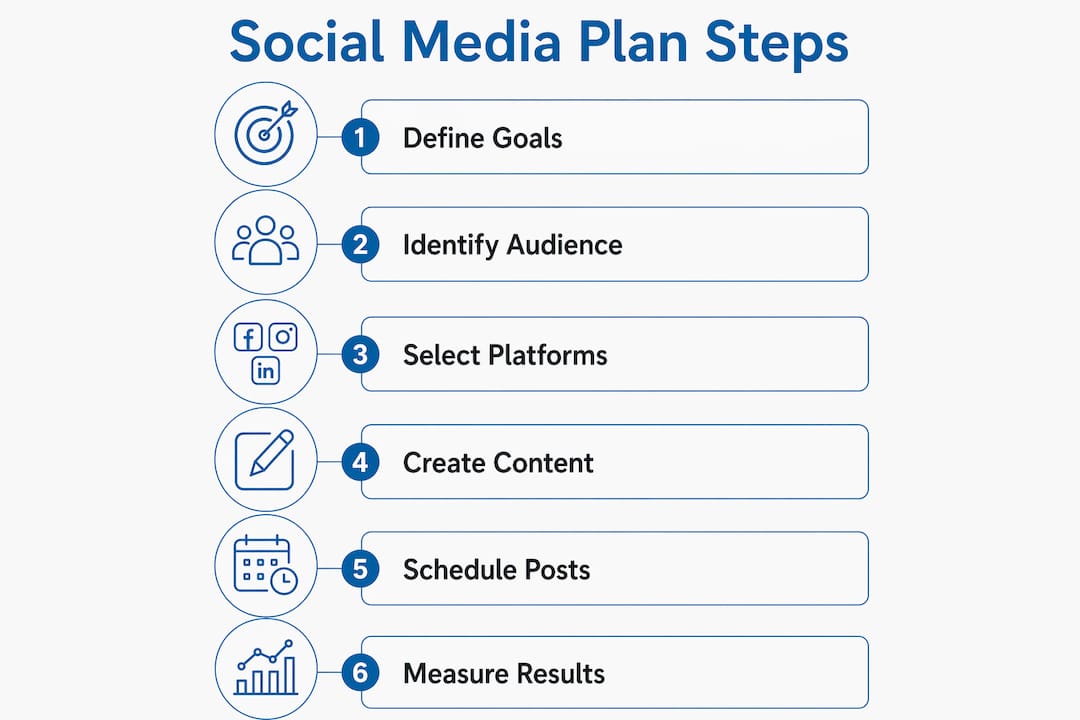
A social media plan is a documented operational roadmap that specifies your goals, target audience, platforms, content approach, and performance metrics to drive measurable business growth. Without one, your posts become guesswork and your budget disappears into activity that never connects to revenue. The good news is that learning how to create a social media plan does not require a marketing degree or a big team. You need a clear structure, the right frameworks like SMART goals, and a commitment to measuring what actually matters. This guide walks you through every step, from setting objectives to tracking results, so you can build a plan that works in the real world.
How do you set clear and actionable social media goals?
Every effective social media plan starts with goals that connect directly to business outcomes. The SMART framework is the industry standard for this: goals must be Specific, Measurable, Achievable, Relevant, and Time-bound. A vague goal like “grow our Instagram” tells you nothing. A SMART goal like “increase Instagram follower growth by 15% within Q2 using weekly performance reports” gives you a target, a timeline, and a measurement method.
The most common mistake small business owners make is chasing too many goals at once. Focusing on two clear goals consistently outperforms a scattered approach across six vague ones. That means you need to choose your primary objectives before you write a single post.
Here are the most common social media goals that tie directly to business outcomes:
- Brand awareness: Measured by reach, impressions, and follower growth
- Lead generation: Measured by clicks to landing pages, form fills, and email sign-ups
- Customer retention: Measured by engagement rate, direct messages, and repeat traffic
- Revenue: Measured by conversions, sales attributed to social, and return on ad spend
Pro Tip: Link every social media goal to a business metric your leadership team already tracks. If your company cares about monthly revenue, your social goal should connect to pipeline or conversions, not just likes.
You can also use the social media goals framework from Goonlinenow to map each objective to a specific KPI before you move to the next step.
What are the steps to identify your audience and choose platforms?
Knowing who you are talking to is the single biggest factor in whether your content performs. Audience research means going beyond basic demographics like age and location. You need to understand your audience’s behavior: what problems they search for, what content formats they prefer, and when they are most active online.
Start by building a buyer persona for your primary customer. A persona for a local salon owner might look like this: female, 30–45 years old, active on Instagram and Facebook, searches for business tips on weekends, and responds to before-and-after visuals. That level of detail changes every content decision you make.
Once you know your audience, platform selection becomes straightforward. The research is clear: focusing on 1–2 platforms where your audience is most active produces better conversion rates than spreading thin across every channel. Here is a quick reference for platform-audience fit:
- Instagram and TikTok: Visual products, lifestyle brands, younger audiences (18–34)
- Facebook: Local services, community groups, audiences 35 and older
- LinkedIn: B2B services, professional development, coaching, and consulting
- YouTube: Tutorial-heavy industries, real estate, education, and long-form content
Each platform also demands a different tone. LinkedIn content reads more formally. Instagram captions are shorter and more conversational. Adjusting your voice per platform is not optional. It is the difference between content that feels native and content that feels like an ad.
Pro Tip: Run a simple audit of your existing customers. Ask where they found you and which social platform they use most. That data beats any demographic report.

How to develop a content strategy and workflow that drives consistency
Content without a system collapses within weeks. The businesses that maintain consistent, quality publishing all share one thing: a documented content strategy built around content pillars and a production workflow.
Content pillars are the three to five core themes your brand covers consistently. A real estate agency might use pillars like market updates, client success stories, home-buying tips, and behind-the-scenes team content. Every post maps back to one of these pillars. This keeps your feed coherent and your brand voice recognizable.
A centralized strategy document defining tone, voice, and content pillars preserves brand coherence even when multiple contributors are involved. That document becomes your single source of truth. New team members, freelancers, and agency partners all work from the same reference.
The production workflow is where most small businesses lose control. Here is a proven sequence:
- Ideation: Generate post ideas weekly, tied to your content pillars and upcoming calendar dates
- Creation: Write copy, design visuals, or record video based on the approved idea
- Review: A first-level review checks accuracy and brand voice
- Approval: A second-level approval confirms the post aligns with active campaigns and business goals
- Scheduling: Approved content goes into your scheduling tool with UTM tags attached
- Publishing: Posts go live at the planned time, with monitoring for early engagement signals
Skipping production workflow steps is a key failure point for small teams. The approval step feels slow until the day a post goes out with the wrong price or an off-brand message. Building multi-level approval into your workflow prevents last-minute chaos and protects your brand reputation.
Pro Tip: Batch your content creation. Set aside one day per week to create and approve the next week’s posts. You will spend less time context-switching and produce more consistent quality.
For a detailed look at production systems, Goonlinenow’s content creation workflow guide covers the full process for SMBs.
What are the best practices for building a social media calendar?
A social media calendar is the operational layer of your plan. It turns your strategy into a schedule. The most effective calendars balance three content types:
| Content Type | Purpose | Frequency |
|---|---|---|
| Evergreen | Timeless tips, FAQs, how-to posts | 40–50% of posts |
| Timely | Seasonal events, news, trending topics | 20–30% of posts |
| Campaign-driven | Promotions, launches, paid ads | 20–30% of posts |
Mixing evergreen, timely, and campaign-driven content in your calendar keeps your feed relevant without burning out your team on constant trend-chasing. Evergreen content also gives you a buffer when a campaign runs long or a timely post falls through.
Building the calendar itself follows a simple process:
- Map your content pillars to specific days of the week (e.g., Monday = tips, Wednesday = client stories, Friday = promotions)
- Block out key dates: product launches, holidays, industry events, and local community moments
- Assign each post a content type, platform, format, and responsible team member
- Attach UTM tracking parameters to every link so you can attribute traffic and conversions accurately
Real-time flexibility matters too. Leave 10–15% of your calendar slots open for reactive content. When a relevant trend or local event surfaces, you want room to respond without breaking your schedule.
For a deeper look at calendar structure, the guide on planning a content calendar covers how to organize content types and production timelines for consistent results.
How do you track, analyze, and optimize your social media plan?
Measurement separates a social media plan from a social media wish list. The key distinction is between leading indicators and lagging indicators. Leading indicators like engagement rate, click-through rate, and reach tell you how content is performing right now. Lagging indicators like sales conversions and revenue tell you the business impact over time.
Tracking both types gives you the full picture. Engagement tells you what content resonates. Conversions tell you what content drives revenue. You need both to make good decisions.
Here is a practical optimization process:
- Weekly: Review engagement metrics and flag posts that outperformed or underperformed the average
- Monthly: Analyze traffic from social to your website, and compare conversions by platform and content type
- Quarterly: Review goal progress against your SMART targets and adjust the strategy for the next quarter
Avoid vanity metrics. Follower count and total impressions feel good but rarely connect to business outcomes. Every social media post should support measurable company goals beyond surface-level engagement. If a metric does not connect to a goal you set in step one, it is a distraction.
For tracking website performance tied to your social campaigns, the guide on measuring website success provides frameworks for KPIs and attribution that work alongside your social analytics.
What I have learned from building social media plans for SMBs
Working with small and mid-sized businesses on their social media plans has taught me one uncomfortable truth: most businesses fail at social media not because of bad content, but because of bad systems. They post when they feel inspired, chase every new platform, and measure success by likes instead of leads.
The businesses that get real results treat social media planning as a systematized process, not sporadic inspiration. They document their workflows, assign clear ownership, and review performance on a fixed cadence. That discipline is what separates a plan that survives three months from one that gets abandoned in week two.
The other mistake I see constantly is overextending across platforms. A salon trying to maintain active accounts on Instagram, TikTok, Facebook, Pinterest, and LinkedIn will do all of them poorly. Pick the one or two platforms where your customers actually spend time, and do those well. Depth beats breadth every time.
My honest advice: write your plan down. A centralized strategy document that your whole team can access is worth more than any tool or tactic. When everyone knows the goals, the audience, the content pillars, and the approval process, execution becomes consistent. And consistency is what builds an audience that actually buys.
— Go
How marketing automation can support your social media plan
Executing a social media plan manually across multiple platforms, campaigns, and team members is time-consuming. That is where marketing automation software changes the equation for small businesses.
Goonlinenow combines marketing automation, CRM, and content tools in one affordable system built specifically for SMBs. You can schedule posts, track leads generated from social campaigns, and connect your social data directly to your pipeline, all without switching between five different tools. The platform’s done-for-you setup means your automations and workflows are configured by a real team, not left for you to figure out alone. If you are ready to put your social media plan on autopilot and start measuring real business results, explore Goonlinenow’s marketing automation for SMBs to see how it fits your business.
FAQ
What is a social media plan?
A social media plan is a documented roadmap that defines your goals, target audience, platform choices, content strategy, and performance metrics. It connects every post to a measurable business outcome.
How do I write a social media plan from scratch?
Start with SMART goals tied to business outcomes, then define your audience persona, select one or two primary platforms, build content pillars, create a production workflow, and set up a tracking system using UTM parameters and platform analytics.
How often should I post on social media?
Posting frequency depends on the platform and your team’s capacity. Consistency matters more than volume. A reliable schedule of three posts per week outperforms seven posts one week and zero the next.
What is the difference between a social media plan and a social media strategy?
A social media strategy defines your overall direction, goals, and positioning. A social media plan is the operational document that translates that strategy into specific content, schedules, workflows, and KPIs.
How do I measure whether my social media plan is working?
Track leading indicators like engagement rate and click-through rate weekly, and lagging indicators like conversions and revenue monthly. Compare results against the SMART goals you set at the start of your plan.