

Every hiring manager at a tech-focused SMB knows the pressure of finding great talent faster than bigger competitors. The rush to adopt digital recruitment often leads to misunderstandings about what truly drives hiring success. Digital recruitment means more than posting jobs on LinkedIn or automating emails. For American digital recruitment managers seeking affordable automation, this guide clears up common misconceptions, explains strategic approaches, and shows how to transform the hiring process for lasting results.
SMB digital recruitment defined and misunderstood
Small and medium-sized businesses throw around the term “digital recruitment” like everyone agrees on what it means. But here’s the problem: most SMBs believe it simply means posting a job on LinkedIn or using an automated email system to screen candidates. That’s only scratching the surface. Digital recruitment actually encompasses a much broader strategic shift in how organizations find, evaluate, and hire talent in an increasingly digital world. It’s not just about the tools. It’s about transforming your entire hiring process to align with how modern talent works and communicates.
One of the biggest misunderstandings is that digital recruitment is only about technology. Many hiring managers think buying recruitment software automatically means they’ve “gone digital.” In reality, digital recruitment involves rethinking your recruiting roles, adapting your hiring strategies to attract digital professionals, and building processes that can scale without burning out your team. It’s about positioning your recruiters as mediators and catalysts for change within your organization, helping you find people who not only have the technical skills you need but also fit your company’s direction as you grow. This is especially critical for tech-focused SMBs where finding the right digital talent shapes your competitive advantage.
Another misconception involves what digital recruitment actually solves. When most SMBs think about implementing digital hiring solutions, they focus on cost and speed. While those benefits are real, they’re actually secondary advantages. The real value lies in expanding your candidate reach beyond geographic limitations and accessing talent pools you couldn’t reach through traditional recruitment. Instead of being limited to local applicants, you can attract developers, marketers, designers, and specialists from anywhere in North America or globally. You gain access to a much larger talent pool, which means you’re comparing higher quality candidates instead of settling with whoever applied to your job posting.
For digital recruitment managers at tech-focused SMBs, here’s what actually matters: digital recruitment is a strategic process that combines technology, people, and methodology to find the right digital professionals at scale. It’s not about replacing human judgment with automation. It’s about using automation to handle the repetitive parts of hiring so your team can focus on evaluating culture fit and technical capabilities. You’re fundamentally changing how your company attracts talent in a way that supports your growth without requiring you to hire three more recruiters.
Pro tip: Start by auditing your current hiring process to identify which steps waste the most time, then prioritize automating those specific bottlenecks rather than trying to overhaul everything at once.
Key digital recruitment methods for small business
When you’re trying to fill positions at your SMB, you don’t have the luxury of waiting weeks for applicants to trickle in through traditional channels. That’s where understanding the specific digital methods available to you becomes critical. Digital recruitment isn’t one-size-fits-all. Instead, social media recruiting, online job boards, and targeted digital advertising each serve different purposes in your hiring funnel, and choosing the right combination depends on the roles you’re trying to fill and where your ideal candidates spend their time. Tech professionals often live on platforms like GitHub, Twitter, and Slack communities. Marketers congregate on LinkedIn and industry-specific Slack groups. Designers hang out on Dribbble and design-focused Discord servers. The key is matching your method to where your candidates actually are.
The most effective digital methods fall into a few distinct categories. Social media recruitment uses platforms like LinkedIn, Facebook, and Twitter to post positions and engage directly with potential candidates. This method works especially well for SMBs because you can target specific demographics, experience levels, and skill sets without massive advertising budgets. Online job boards like Indeed, AngelList, and industry-specific platforms cast a wider net. You post once and reach hundreds of qualified candidates actively searching for work. Then there’s targeted digital advertising, which combines job postings with paid promotion to ensure your positions appear in front of the right people. You can set parameters like location, experience level, industry, and even job title to narrow down who sees your openings. Each method has different costs and timelines. Social media recruiting can be nearly free but requires consistent engagement. Job boards charge per posting or subscription but reach passive candidates. Digital advertising requires budget but delivers fast results when you’re in a hiring crunch.
Beyond these foundational methods, AI-powered platforms and digital assessments are increasingly accessible to SMBs and can dramatically reduce the time you spend screening candidates. AI tools can analyze resumes, rank candidates by qualifications, and even conduct preliminary technical assessments before your team ever speaks to someone. This matters because it lets your small recruiting team focus on the human side of hiring—culture fit, communication skills, and potential for growth—rather than getting buried in resume reviews.
The mistake most SMBs make is picking one method and hoping it covers everything. You need a mix. Maybe you post positions on two or three job boards, run a targeted LinkedIn campaign, and reach out personally to candidates in your professional network. This multi-channel approach ensures you’re not missing candidates who prefer certain platforms, and it gives you backup options when one channel isn’t producing results. Start with the methods that match your budget and the type of roles you’re hiring for, then measure which channels bring you the best candidates.
Here’s a comparison of major digital recruitment methods and their unique business benefits for SMBs:
| Digital Method | Main Use Case | Candidate Reach | Typical Cost |
|---|---|---|---|
| Social Media Recruiting | Direct engagement and outreach | Targeted, niche | Low, time-intensive |
| Online Job Boards | Mass exposure to active seekers | Broad, national | Moderate, per post |
| Digital Advertising | Fast, focused talent acquisition | Highly specific | High, scalable |
| AI-Powered Platforms | Automated screening and ranking | Global, filtered | Variable, by tier |
Pro tip: Track which digital method brought each hire to you, then double down on the channels delivering the highest quality candidates rather than spreading your effort evenly across all methods.
How automation software transforms the hiring process
Imagine spending 20 hours a week just screening resumes. Your recruiter reads the same qualification keywords over and over, makes snap judgments, and inevitably misses promising candidates buried in the pile. This is the reality for most SMBs without automation. When you implement automation software in your hiring process, you’re not just saving time. You’re fundamentally changing how candidates move through your funnel. Resume screening that took days now happens in hours. Candidate communication that required manual emails now triggers automatically based on qualifications. Interview scheduling, which once meant back-and-forth message chains, now happens with a single calendar invite. The software handles the repetitive work while your team focuses on what humans do best: evaluating culture fit and technical depth.
The real transformation happens through AI-driven automation that analyzes candidate responses to predict fit and sociability. Instead of relying on gut instinct or incomplete information from a resume, automation software processes candidate data to identify patterns that predict success in your specific roles. This means you’re making hiring decisions based on actual predictive indicators rather than first impressions. For digital recruitment managers at SMBs, this is a game changer because you can evaluate more candidates in less time while making better decisions. You might discover that candidates without obvious brand name experience actually have the technical skills and cultural alignment you need. Automation removes bias from initial screening and surfaces candidates who might otherwise get lost.

Another critical transformation involves the operational side. Automation software enables small businesses to automate repetitive tasks like resume screening, candidate communication, and interview scheduling. Your system can send personalized rejection emails to candidates who don’t meet minimum qualifications, automatically advance qualified candidates to the next stage, and send interview confirmation details without a single manual action. This creates a consistent candidate experience regardless of how many people you’re hiring. It also means your recruiting team isn’t bogged down by administrative work. A single recruiter using automation can manage the pipeline that would normally require two or three people handling emails and scheduling. This efficiency advantage lets SMBs compete with larger companies that have dedicated recruiting departments. You’re not replacing recruiters with software. You’re giving your existing team the ability to handle significantly more volume without burnout.
The timeline impact is substantial. Without automation, moving a candidate from application to offer might take three to four weeks with multiple delays. With automation handling the mechanical parts, that same process can compress to five to seven days. Faster hiring means you fill positions before competitors snap up your top candidates. It also means you can move quickly when market conditions shift and you suddenly need to hire more developers or marketers. You set up the automation once and it runs consistently across every hiring cycle, improving your process each time you learn what works.
Pro tip: Start by automating your most time-consuming task first, whether that’s resume screening or interview scheduling, then layer in additional automation as your team adapts to the workflow changes.
Critical challenges and compliance for SMB digital hiring
Digital recruitment sounds perfect until you hit reality. You’re excited about automation, faster hiring, and accessing global talent pools. Then compliance questions start creeping in. What data can you actually collect from candidates? How long can you store their information? If you’re hiring internationally, which countries’ privacy laws apply? These aren’t theoretical concerns for SMBs. They’re real obstacles that can derail your entire hiring operation if you get them wrong. The challenge is that digital hiring systems collect vastly more candidate data than traditional recruitment ever did, and that data carries legal weight. Data privacy issues, technological proficiency gaps, and biases in automated tools represent the core obstacles SMBs face when shifting to digital hiring. You’re collecting resumes, email addresses, phone numbers, and assessment responses. If that data leaks or you mishandle it, you’re liable. If you’re hiring in the European Union, GDPR requirements are strict and penalties are expensive. If you’re in California, the California Consumer Privacy Act has its own rules. Canada, Australia, and other regions add more layers of complexity.
The bias problem deserves its own attention because it’s subtle and easy to miss. When you implement automation software for screening, you’re trusting algorithms to make fair decisions about candidates. But algorithms trained on historical hiring data can perpetuate the biases that existed in your past hiring decisions. If your previous hires skewed toward candidates from specific universities or companies, the algorithm will favor similar candidates, potentially screening out equally qualified people from different backgrounds. This isn’t just an ethical issue. It’s a legal liability. Discrimination lawsuits in hiring are expensive, and automated bias is harder to defend than human bias. You need transparency about how your recruitment tools make decisions and regular audits to catch unfair patterns before they cause problems.
Then there’s the technology gap. Many SMBs lack the internal expertise to implement and manage digital hiring systems properly. You might not have a dedicated IT person to ensure your recruitment software integrates securely with other systems, backs up candidate data properly, or updates security patches when vulnerabilities emerge. Ensuring regulatory compliance and data security while managing costs and infrastructure limitations stretches SMB resources thin. You need to balance security investments against hiring budget constraints. You can’t afford to ignore either one. This is why choosing a digital recruitment partner who handles compliance for you matters. Instead of your team managing GDPR requirements, data backups, and security audits alone, working with a platform that’s built compliance into its foundation reduces your risk significantly. Your team focuses on finding great candidates. The platform handles the legal and security complexity.
One more practical challenge: integration. Your digital recruitment system needs to talk to your applicant tracking system, which needs to connect to your CRM and payroll. When these systems don’t communicate smoothly, you end up manually copying candidate information between platforms, which creates errors and security risks. Poor integration also means you can’t track hiring metrics effectively, so you’re flying blind about which recruitment channels actually work.
Pro tip: Document your data handling practices, including what information you collect, how long you store it, and who can access it, then review this documentation quarterly as regulations and your hiring needs change.
Cost, ROI, and selecting recruitment solutions
You’re evaluating recruitment software and you see two options. One costs $500 a month. The other costs $2,000 a month. The obvious choice is the cheaper one, right? Not necessarily. This is where understanding cost versus ROI becomes critical for SMBs. The real question isn’t what the software costs. It’s what the software saves you and what quality of hires it generates. A cheap platform that takes twice as long to find candidates actually costs you more in recruiter time. An expensive platform that helps you fill positions 50% faster might pay for itself within months. SMBs prioritize affordable solutions that align with growth objectives while seeking clear ROI. Cost remains a significant barrier to adoption, but companies that make tech investments do so because they’ve calculated the return.
Let’s talk about the metrics that actually matter. You need to understand three key numbers before selecting a recruitment solution. First, cost per hire. This is the total expense of recruiting, including software, recruiter time, and job posting fees, divided by the number of people you successfully hire. If you’re currently spending $3,000 to hire one developer and a new platform drops that to $1,500, you’re saving $1,500 per hire. If you hire 10 developers a year, that’s $15,000 saved annually. Second, time to fill. How many days pass between posting a position and bringing someone onboard? If automation reduces this from 45 days to 30 days, you’re filling positions faster and keeping your team at full capacity longer. Third, quality of hire. This one’s harder to measure but crucial. Are the people you hire staying in their jobs? Are they performing well? A slightly more expensive solution that produces better quality candidates generates better long-term ROI because turnover costs money. When someone leaves after six months, you start the hiring process over again.
Analyzing cost per hire, time to fill, and quality of hire metrics optimizes recruitment investments and gives you a real framework for comparing platforms. Start by calculating what you currently spend on hiring. Track every cost for the last three months: software subscriptions, job board fees, recruiter salary allocated to hiring, time spent by other employees on recruitment tasks. Get a honest number for what you’re spending now. Then evaluate new platforms against that baseline. If a $1,000 per month recruitment platform saves your team 10 hours per week on administrative work, and your recruiter costs $50 per hour, you’re saving $500 weekly or $26,000 annually. That platform essentially costs you nothing.
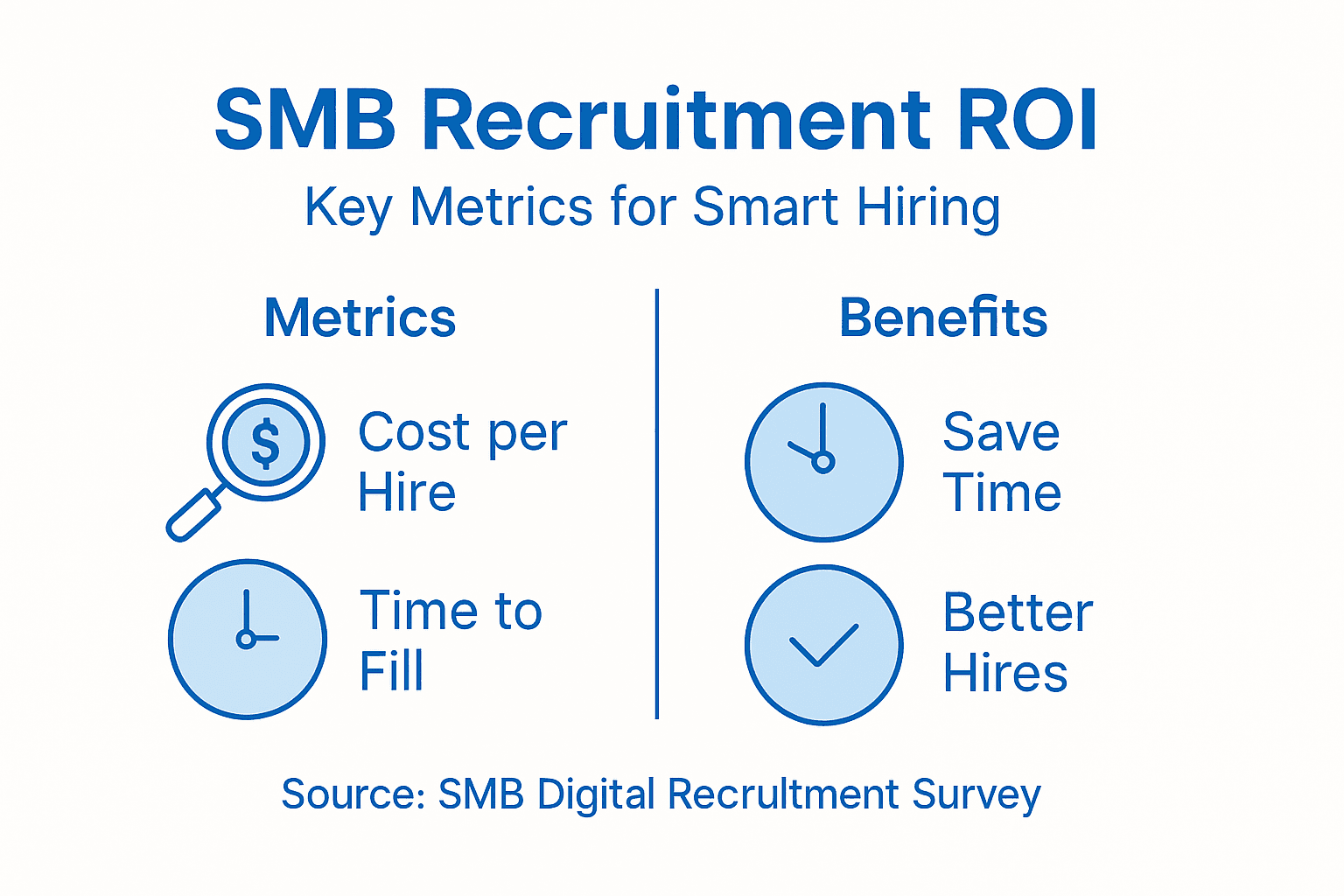
Here’s a summary of key recruitment performance metrics and why they matter for SMB decision-making:
| Metric | Business Impact | SMB Benefit |
|---|---|---|
| Cost per Hire | Controls recruitment expenses | Lower costs, better budgeting |
| Time to Fill | Reduces operational downtime | Faster hiring, minimal gaps |
| Quality of Hire | Improves workforce effectiveness | Higher retention, productivity |
When selecting a solution, avoid the trap of choosing based on price alone. Instead, create a comparison matrix. List the features you actually need, the cost, the expected time savings, and the quality improvements. Weight each category based on your priorities. If finding quality candidates matters more than speed, quality of hire gets more weight than time to fill. If you’re in a competitive hiring market and need to move fast, time to fill becomes critical. Look for platforms that offer transparency about these metrics and provide real customer case studies showing actual ROI. Ask for references from other SMBs in your industry. What did they pay? What results did they get? This beats any marketing promise.
Pro tip: Calculate your current cost per hire, then require any new recruitment platform to demonstrate how it will improve this metric by at least 20% within the first six months, and get that commitment in writing before signing any contract.
Streamline Your SMB’s Digital Recruitment with All-In-One Solutions
The article highlights a common challenge SMBs face: managing complex digital recruitment processes while battling time constraints, compliance concerns, and the need for quality hires. Many small businesses struggle with fragmented tools that demand extra effort, leading to wasted recruiter hours and missed top talent. Finding and qualifying the right digital professionals calls for more than just technology – it requires an integrated approach that simplifies hiring without sacrificing quality or compliance.
At Go Online Now, we understand these pain points and offer a powerful yet affordable platform combining digital recruitment solutions with marketing automation and an all-in-one CRM. This means you can automate candidate screening, schedule interviews, and nurture leads all within one simple system. Our done-for-you setup and real human support help SMBs avoid the complexity and biases described in the article while giving your team back precious time to focus on what matters most. Explore how our combined platform can redefine your hiring strategy and accelerate growth by visiting our Virtual Assistance Archives – Go Online Now and learning more about digital recruitment.
Take control of your digital recruitment process today with Go Online Now-Connect. Visit our website to see how we integrate automation, candidate management, and lead nurturing in one hassle-free platform. Ready to save time, reduce costs, and hire smarter? Start now and build the talented team your SMB deserves. For broader business growth insights, check out our Digital Marketing Archives – Go Online Now to complement your recruitment efforts.
Frequently Asked Questions
What does digital recruitment mean for small and medium-sized businesses (SMBs)?
Digital recruitment involves a strategic transformation in how SMBs find, evaluate, and hire talent, utilizing technology, people, and methodologies to enhance the hiring process. It’s more than just posting jobs online; it’s about creating efficient, scalable systems that align with modern hiring practices.
How can SMBs expand their candidate reach through digital recruitment?
By leveraging digital recruitment strategies like social media recruiting, online job boards, and targeted digital advertising, SMBs can attract talent beyond geographic limitations, accessing a larger pool of qualified candidates and improving their hiring outcomes.
What role does automation play in the hiring process for SMBs?
Automation helps streamline repetitive tasks such as resume screening and interview scheduling, allowing recruiting teams to focus on evaluating candidates’ cultural fit and technical skills. This improves efficiency and reduces hiring timelines significantly.
What are the key metrics SMBs should consider when evaluating recruitment solutions?
SMBs should analyze cost per hire, time to fill, and quality of hire. Understanding these metrics helps optimize recruitment investments and ensures that the chosen solutions align with their hiring goals.
Recommended
- Digital Recruitment in SMEs: Driving Smarter Hiring – Go Online Now
- Streamline Digital Recruitment Process for SMBs Easily – Go Online Now
- How Digital Recruitment Works: Complete Guide for SMBs – Go Online Now
- Complete Guide to Digital Recruitment Solutions – Go Online Now
- Invest In A Comprehensive Digital Marketing: Best Tips