

Every hiring cycle brings the pressure of finding digital talent that truly fits your firm’s culture and skill needs. The challenge grows as competition for qualified candidates intensifies across the United States, especially for small and mid-sized marketing firms. By focusing on a precise digital candidate profile and integrating advanced digital tools, you set the foundation for more targeted, efficient talent acquisition that delivers measurable results.
Step 1: Define ideal digital candidate profile
Defining a precise digital candidate profile is your strategic roadmap for finding exceptional talent. This crucial step transforms recruitment from a reactive process into a targeted talent acquisition strategy, enabling you to identify professionals who will drive your organization’s digital success.
To craft an accurate digital candidate profile, start by understanding the specific technical competencies and soft skills required for your role. Digital recruitment strategies leverage advanced assessment techniques that go beyond traditional resume screening. Analyze the core technical skills needed, such as programming languages, software proficiencies, digital marketing expertise, or specific platform knowledge relevant to your business.

Next, evaluate the candidate’s emotional intelligence and cultural alignment. Modern recruitment approaches recognize that technical skills alone are insufficient. Assess attributes like adaptability, communication skills, problem solving capabilities, and how well the candidate’s professional values match your company’s mission. Tools powered by AI can help analyze these nuanced qualities, providing deeper insights into a candidate’s potential beyond standard qualification metrics.
Pro tip: Create a weighted scoring matrix that balances technical skills, soft skills, and cultural fit to develop a comprehensive candidate evaluation framework.
Step 2: Set up digital recruitment tools and channels
Streamlining your digital recruitment process requires strategic selection and implementation of the right technological tools and online channels. Your goal is to create a seamless, efficient system that attracts top digital talent and simplifies your hiring workflow.
Begin by integrating digital recruitment solutions that support comprehensive candidate management. Key tools include Applicant Tracking Systems (ATS), which automate resume screening, manage candidate communications, and provide analytics on your recruitment funnel. Consider platforms that offer multicasting job offers across multiple online channels, enabling broader reach and more diverse candidate pools. Prioritize tools with cloud storage capabilities for secure applicant information management and AI screening features that can help assess candidate potential beyond traditional metrics.
Here’s a comparison of key digital recruitment tools and their main business impacts:
| Tool Type | Main Function | Business Impact |
|---|---|---|
| Applicant Tracking System | Automates resume screening | Reduces manual effort and bias |
| AI Screening Tool | Assesses qualifications with AI | Increases accuracy, saves time |
| Multicasting Platform | Shares postings across channels | Expands reach, attracts diversity |
| Cloud Recruitment Solution | Stores applicant data securely | Ensures compliance, easy access |
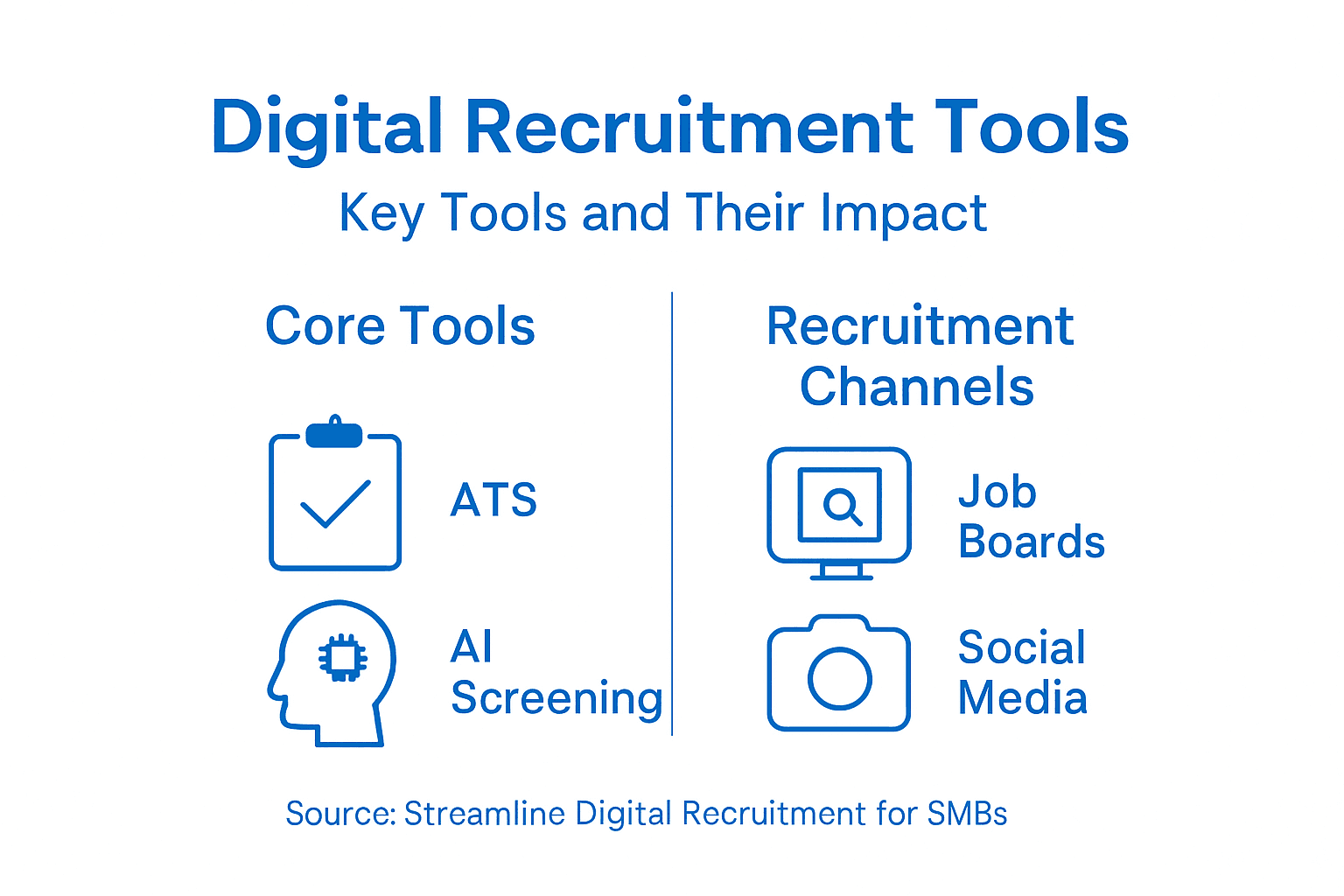
Expand your digital recruitment channels strategically by leveraging social media platforms, professional networking sites, and specialized job boards relevant to your industry. Focus on creating compelling digital job descriptions that highlight your company culture, potential career growth, and unique value proposition. Utilize data analytics to track engagement rates, application quality, and conversion metrics across different channels, allowing you to refine your approach continuously and optimize your recruitment strategy.
Pro tip: Implement a standardized candidate evaluation framework that integrates both automated screening tools and human assessment to balance technological efficiency with nuanced candidate understanding.
Step 3: Launch targeted talent acquisition campaign
Launching a targeted talent acquisition campaign transforms your recruitment approach from passive posting to strategic talent hunting. Your mission is to create a compelling employer brand that attracts top digital professionals who align perfectly with your organizational culture and skill requirements.
Start by developing detailed candidate personas that go beyond generic job descriptions. Talent acquisition strategies require understanding your ideal candidates demographic characteristics, professional motivations, and career aspirations. Use data analytics to map out precise targeting parameters on digital platforms, including professional networking sites, industry specific forums, and social media channels where your target talent actively engages. Craft personalized messaging that speaks directly to their career goals, highlighting unique opportunities for professional growth and meaningful work within your organization.
Implement a multi channel recruitment marketing approach that combines employer branding content, targeted digital advertising, and strategic outreach. Develop engaging multimedia content that showcases your company culture, technological infrastructure, and potential career trajectories. Leverage employee testimonials, behind the scenes glimpses of your work environment, and clear value propositions to differentiate your organization from competitors. Monitor campaign performance using advanced analytics tools to track engagement rates, application quality, and conversion metrics, allowing continuous refinement of your talent acquisition strategy.
Pro tip: Create a talent pipeline by maintaining consistent engagement with potential candidates, even when you are not actively hiring, to ensure a steady stream of qualified professionals ready to join your team.
Step 4: Screen and qualify digital applicants effectively
Screening and qualifying digital applicants requires a strategic approach that balances technological efficiency with nuanced human assessment. Your objective is to develop a robust evaluation process that identifies top talent while maintaining a positive candidate experience.
Candidate screening techniques leverage advanced applicant tracking systems and AI powered tools to streamline initial evaluation stages. Begin by establishing clear screening criteria that align with your specific role requirements, including technical skills, professional experience, and cultural compatibility. Utilize automated resume parsing technologies to quickly filter candidates based on predefined qualifications such as educational background, technical certifications, and relevant work history. Implement structured online assessments that evaluate both hard and soft skills, providing a comprehensive view of each candidate beyond traditional resume screening.
Develop a multi stage screening process that combines automated filtering with human evaluation. Create standardized scoring rubrics that allow objective comparison across candidate profiles, ensuring fair and consistent assessment. Conduct initial video interviews to assess communication skills, professional demeanor, and potential cultural alignment. Pay close attention to candidates demonstrating adaptability, problem solving abilities, and genuine passion for their professional domain. Use collaborative evaluation approaches that involve multiple team members to reduce individual bias and ensure a holistic candidate assessment.
Pro tip: Design a candidate evaluation scorecard with weighted criteria that balance technical competencies, soft skills, and cultural fit to create a comprehensive and objective screening methodology.
Step 5: Verify fit and finalize digital hiring process
Finalizing your digital hiring process requires a comprehensive approach that ensures candidate compatibility, validates professional credentials, and confirms organizational alignment. Your ultimate goal is to transform potential talent into confirmed team members who will drive your company forward.
Digital identity verification plays a critical role in confirming candidate qualifications and reducing potential hiring risks. Begin by conducting thorough background checks that include professional reference verification, academic credential confirmation, and professional certification validation. Utilize digital platforms that enable secure document cross referencing and biometric authentication to streamline the verification process. Request candidates to submit digital portfolios or work samples that demonstrate their actual capabilities beyond traditional resume information.
Conduct final integrative interviews that assess both technical competencies and cultural fit. Develop a structured interview approach involving multiple team members to gain comprehensive insights into the candidate potential. Use behavioral and situational assessment techniques that reveal problem solving skills, communication effectiveness, and adaptability. Create a transparent communication channel that keeps candidates informed about their application status and provides clear expectations about next steps. Prepare comprehensive onboarding documentation that outlines role expectations, company culture, and initial performance benchmarks to ensure smooth transition and early engagement.
Pro tip: Implement a 30 60 90 day performance planning framework during final hiring stages to set clear expectations and create an immediate pathway for candidate success.
Below is a quick summary detailing key steps and the primary focus at each digital hiring stage:
| Step | Main Focus | Value Added |
|---|---|---|
| Define Candidate Profile | Identify skills and culture fit | Targets ideal talent |
| Set Up Recruitment Tools | Implement tech solutions | Streamlines workflow |
| Launch Acquisition Campaign | Personalize outreach and employer branding | Engages top talent |
| Screen Applicants | Blend automation with human assessment | Ensures fair selection |
| Verify & Finalize Hiring | Confirm fit and onboard efficiently | Boosts retention and ROI |
Simplify Your Digital Recruitment and Grow Smarter
Struggling to streamline your digital hiring process for your SMB? This article highlights common pain points like setting up the right recruitment tools, crafting a clear candidate profile, and screening applicants efficiently. These challenges can cost you valuable time and lead to missed opportunities when finding the right digital professionals. Go Online Now-Connect addresses these exact issues by offering an all-in-one platform that combines marketing automation, CRM, and powerful digital recruitment solutions designed with SMBs in mind.
Take control of your talent acquisition with Go Online Now-Connect, where our affordable system simplifies candidate management while boosting your marketing and growth efforts. Whether you want to enhance your digital marketing campaigns or streamline your recruitment workflow, our platform has you covered. Visit Digital Marketing Archives – Go Online Now and explore how combining marketing automation with recruitment delivers results. Ready to transform your hiring process? Get started today at Go Online Now and experience the difference of a truly integrated growth partner.
Frequently Asked Questions
How can I define an ideal digital candidate profile for my SMB?
To define an ideal digital candidate profile, identify the specific technical skills and soft skills necessary for the role. Consider using a weighted scoring matrix to evaluate candidates comprehensively, balancing technical abilities, cultural fit, and emotional intelligence.
What digital recruitment tools should I set up for streamlining hiring?
Integrate Applicant Tracking Systems (ATS) and AI screening tools to automate resume screening and improve candidate management. These tools can enhance your hiring process by reducing manual effort and increasing the accuracy of candidate evaluations significantly.
How can I launch a targeted talent acquisition campaign for my SMB?
Develop detailed candidate personas and utilize data analytics to target appropriate digital platforms. Focus on creating personalized messaging that speaks to candidates’ career goals and showcases your company’s unique culture and growth opportunities.
What are effective methods to screen and qualify digital applicants?
Implement a multi-stage screening process that combines automated filtering with human evaluations, using structured rubrics for consistency. Conduct initial video interviews to assess communication skills and cultural alignment, ensuring a thorough understanding of each candidate.
How can I verify candidate fit before finalizing the hiring process?
Conduct comprehensive background checks, including professional references and credential verification, to confirm qualifications. Additionally, hold final integrative interviews that assess both technical skills and cultural fit, providing a complete evaluation of the candidate’s potential.
What practical steps can I take to enhance the onboarding process for new hires?
Establish a 30-60-90 day performance plan during the hiring stages to clarify expectations and create a pathway for candidate success. This approach can lead to improved retention rates and quicker ramp-up times for new employees.
Recommended
- Digital Recruitment in SMEs: Driving Smarter Hiring – Go Online Now
- How Digital Recruitment Works: Complete Guide for SMBs – Go Online Now
- Digital Recruitment Solutions Explained: Complete Guide – Go Online Now
- Complete Guide to Digital Recruitment Solutions – Go Online Now
- Step by Step Website Launch Guide for Business Growth – Lind Creative