

Over eighty percent of American small businesses report that digital marketing is now essential for reaching new customers. In a world where every online impression can influence a sale, getting digital marketing right is no longer just an option. This guide breaks down the strategies and tools modern American business owners need to connect, compete, and grow in today’s fast-moving digital environment.
Defining Digital Marketing for SMBs Today
Digital marketing has rapidly transformed from a niche strategy to a fundamental business necessity for small and mid-sized businesses. Recent empirical research exploring digital marketing strategies reveals that modern SMBs must embrace digital platforms to remain competitive and strategically position themselves in an increasingly digital marketplace.
At its core, digital marketing represents a comprehensive approach to connecting with potential customers through online channels. This includes strategic use of websites, search engines, social media platforms, email, and mobile applications to reach and engage target audiences. Unlike traditional marketing methods, digital marketing offers unprecedented precision in targeting, real-time performance tracking, and cost-effective scaling for businesses with limited budgets.
Key components of effective digital marketing for SMBs include:
- Search Engine Optimization (SEO): Improving online visibility and website rankings
- Content Marketing: Creating valuable, relevant content to attract and retain customers
- Social Media Marketing: Leveraging platforms to build brand awareness and engage directly with audiences
- Email Marketing: Nurturing leads and maintaining customer relationships
- Pay-Per-Click Advertising: Targeted online advertising with measurable results
Understanding digital growth strategies requires recognizing that digital marketing is not just about technology, but about creating meaningful connections. By integrating these strategies thoughtfully, SMBs can transform their digital presence from passive online listings to dynamic, interactive brand experiences that drive genuine business growth.
Marketing Automation Software Explained
Marketing automation software represents a transformative technological solution for small and mid-sized businesses seeking to streamline their digital marketing efforts. Marketing automation platforms automate repetitive marketing tasks and consolidate multi-channel interactions across email, social media, websites, and other digital channels, enabling businesses to work smarter and more efficiently.

At its core, marketing automation software functions as a comprehensive tool that removes manual workflow bottlenecks. By integrating customer relationship management (CRM) capabilities, these platforms enable businesses to track customer interactions, score leads, manage campaigns, and generate detailed performance reports. Small businesses can leverage these technologies to create personalized marketing experiences without requiring extensive manual intervention, effectively competing with larger organizations that have more extensive marketing resources.
Key features of marketing automation software typically include:
- Email Campaign Management: Automated email sequences and personalized targeting
- Lead Scoring: Ranking potential customers based on engagement and interactions
- Customer Segmentation: Dividing audiences into specific groups for targeted messaging
- Analytics and Reporting: Comprehensive tracking of marketing performance metrics
- Multi-Channel Integration: Connecting various digital marketing platforms seamlessly
Selecting the right marketing automation software requires careful consideration of your specific business needs, scalability requirements, and budget constraints. By understanding these tools as strategic investments rather than mere technological solutions, SMBs can transform their marketing approaches and achieve more sophisticated, data-driven customer engagement strategies.
All-in-One CRM and Lead Management Benefits
All-in-one CRM and lead management solutions represent a game-changing approach for small and mid-sized businesses looking to streamline their customer relationship strategies. Marketing automation solutions provide comprehensive functionalities for campaign analysis, lead generation, and relationship marketing, enabling businesses to transform complex customer interactions into systematic, data-driven processes.
The core advantage of integrated CRM and lead management systems lies in their ability to consolidate critical business intelligence into a single, accessible platform. These systems eliminate the traditional silos that fragment customer data across multiple tools, creating a unified view of customer interactions, preferences, and potential opportunities. Small businesses can now track customer journeys from initial contact through conversion, understanding nuanced behavioral patterns that previously required extensive manual tracking and analysis.
Key benefits of all-in-one CRM and lead management platforms include:
- Unified Customer Data: Centralized information repository for comprehensive customer insights
- Automated Lead Scoring: Intelligent ranking of potential customers based on engagement levels
- Seamless Communication Tracking: Comprehensive record of all customer touchpoints and interactions
- Predictive Analytics: Advanced forecasting of customer behavior and potential sales opportunities
- Efficient Workflow Automation: Reducing manual tasks and minimizing human error
Implementing a robust lead management process requires strategic thinking and careful evaluation of your specific business needs. By treating these systems as strategic investments rather than mere technological tools, SMBs can unlock unprecedented insights, improve customer relationships, and drive more targeted, efficient growth strategies.
Essential Email and SMS Automation Tactics
Email and SMS automation have revolutionized how small and mid-sized businesses communicate with their customers, transforming traditional marketing approaches into sophisticated, personalized engagement strategies. Marketing automation platforms enable companies to target customers with automated marketing messages across multiple communication channels, allowing businesses to deliver the right message at precisely the right moment.
The power of automated email and SMS tactics lies in their ability to create highly targeted, contextually relevant communications without requiring constant manual intervention. By leveraging customer data, behavior tracking, and predefined triggers, businesses can develop intricate communication workflows that respond dynamically to individual customer interactions. This approach goes beyond simple batch messaging, creating personalized experiences that feel authentic and timely, ultimately driving higher engagement and conversion rates.
Key strategic tactics for effective email and SMS automation include:
- Segmentation: Divide customer lists based on demographics, behavior, and engagement history
- Triggered Messaging: Create automated responses based on specific customer actions
- Personalization: Customize content using individual customer data and preferences
- Behavioral Targeting: Send messages aligned with customer journey stages
- Performance Tracking: Continuously monitor and optimize communication effectiveness
Automating marketing tasks strategically requires a nuanced understanding of your specific business goals and customer expectations. By implementing these automation tactics thoughtfully, small businesses can create more meaningful connections, reduce operational overhead, and deliver exceptional customer experiences that drive sustainable growth.
Common Pitfalls in SMB Digital Marketing
Digital marketing challenges plague small and mid-sized businesses, often preventing them from achieving their full online potential. Digital marketing strategies for small businesses reveal critical limitations, including constrained financial investments and time management issues, creating significant barriers to effective online growth and customer engagement.
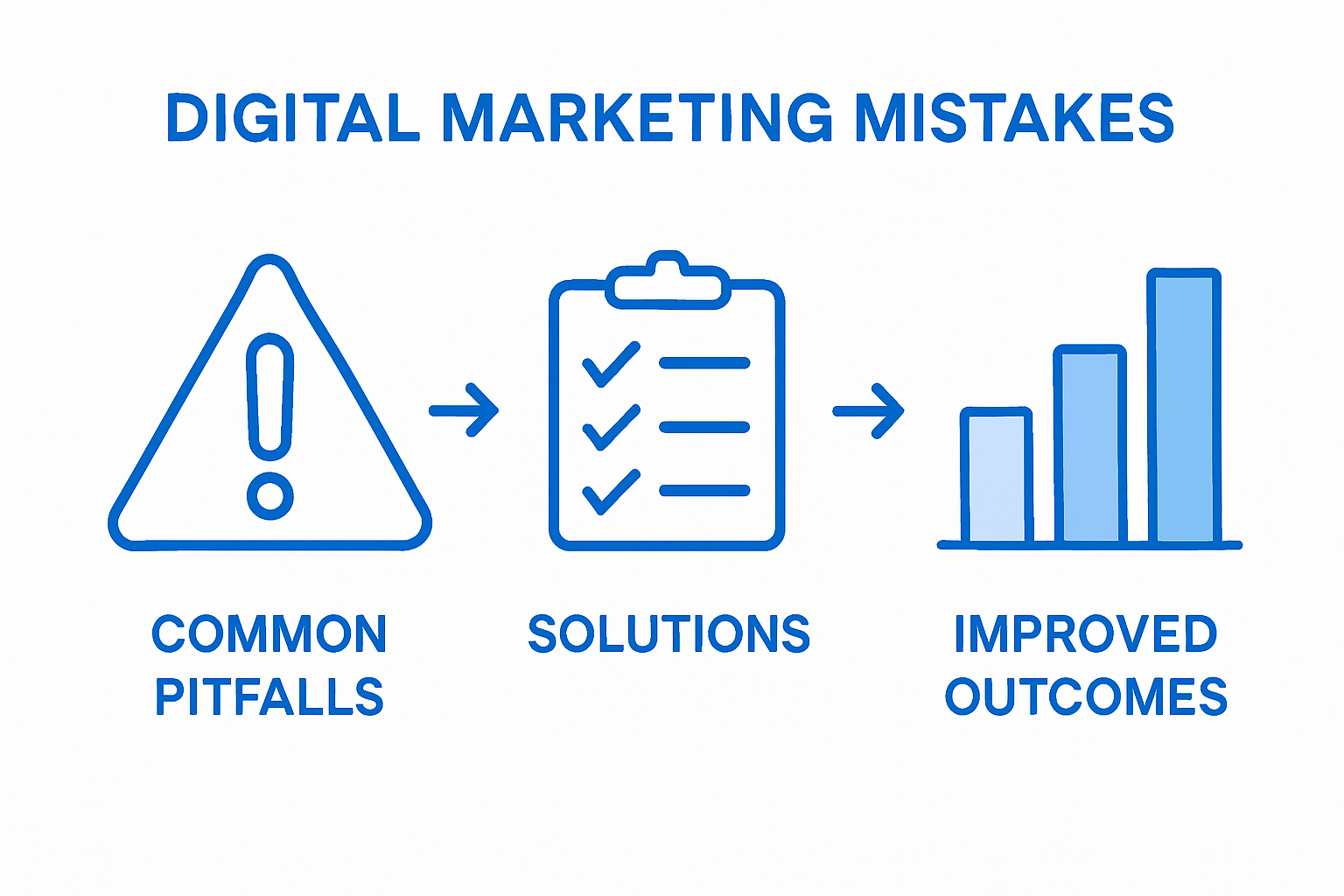
The most prevalent pitfalls stem from fundamental misunderstandings about digital marketing’s complexity and strategic requirements. Many SMBs approach digital marketing as a one-size-fits-all solution, failing to recognize the nuanced approach required for meaningful customer connections. They frequently underestimate the need for consistent, targeted messaging, comprehensive audience research, and adaptive strategies that respond to changing digital landscapes.
Common digital marketing mistakes for SMBs include:
- Inconsistent Branding: Scattered messaging across different platforms
- Neglecting Mobile Optimization: Ignoring smartphone and tablet user experiences
- Lack of Clear Analytics Tracking: Failing to measure marketing performance
- Random Content Creation: Publishing content without strategic purpose
- Ignoring Customer Segmentation: Treating all audiences as identical
Digital marketing tips can help SMBs navigate these challenges by providing structured approaches to overcoming common obstacles. Successful digital marketing requires thoughtful planning, continuous learning, and a willingness to adapt strategies based on real-world performance and emerging technological trends.
Unlock Smarter Growth with All-in-One Digital Marketing Solutions for SMBs
Small and mid-sized businesses face many challenges highlighted in “SMB Digital Marketing Essentials for Smarter Growth” including juggling inconsistent branding, managing complex lead nurturing, and lacking tools that unite marketing automation with CRM and lead management. The article underscores the need for precise strategies like email marketing automation and integrated lead scoring to transform scattered efforts into data-driven growth.
At Go Online Now-Connect, we understand these pain points and deliver a simple yet powerful all-in-one platform tailored to SMBs. Our marketing automation software combines email, SMS, funnels, and reputation management with a unified CRM to streamline customer relationships and nurture leads effectively. Backed by a skilled team offering digital marketing services, we help you stand out with consistent branding and targeted campaigns without the burden of expensive or complicated tools.
Ready to overcome common digital marketing pitfalls and turn your marketing strategy into smart growth? Visit Digital Marketing Archives – Go Online Now for tips, discover how our platform simplifies lead management and automation, or jump straight to Go Online Now to start your journey today.
Take control of your digital marketing with the most affordable and user-friendly marketing automation software designed specifically for SMBs. Get started now at Go Online Now and experience real human support, done-for-you setup, and proven results that help you grow smarter, not harder.
Frequently Asked Questions
What is digital marketing for small and mid-sized businesses?
Digital marketing for SMBs encompasses strategies to connect with potential customers through online channels like websites, social media, email, and search engines, enabling precise targeting and real-time performance tracking.
What are the key components of effective digital marketing for SMBs?
Key components include Search Engine Optimization (SEO), Content Marketing, Social Media Marketing, Email Marketing, and Pay-Per-Click Advertising, all aimed at increasing visibility and engagement with target audiences.
How can marketing automation software benefit SMBs?
Marketing automation software streamlines marketing efforts by automating repetitive tasks, integrating customer relationship management (CRM), and providing insights into customer interactions, which helps businesses work more efficiently and personalize marketing strategies.
What are common pitfalls small businesses face in digital marketing?
Common pitfalls include inconsistent branding, neglecting mobile optimization, lack of clear analytics tracking, random content creation, and ignoring customer segmentation, all of which can hinder effective online growth.