

TL;DR:
- Digital marketing channels include owned, paid, earned, and partnership platforms that help businesses reach customers. Small and mid-sized businesses should focus on 2–3 key channels like email, SEO, and paid search for better results. Building integrated ecosystems and tracking key metrics like CAC, LTV, and ROAS optimize marketing efforts and growth.
Digital marketing channels are the online platforms and methods businesses use to reach, engage, and convert customers. For small to mid-sized business owners, understanding these channels is not optional. It is the foundation of every dollar you spend online. This article explains the main types of digital marketing channels, how they work together, and how to pick the right ones for your business goals in 2026. Whether you are just starting out or refining your approach, this guide gives you the clarity to act with confidence.
What are the main digital marketing channels?

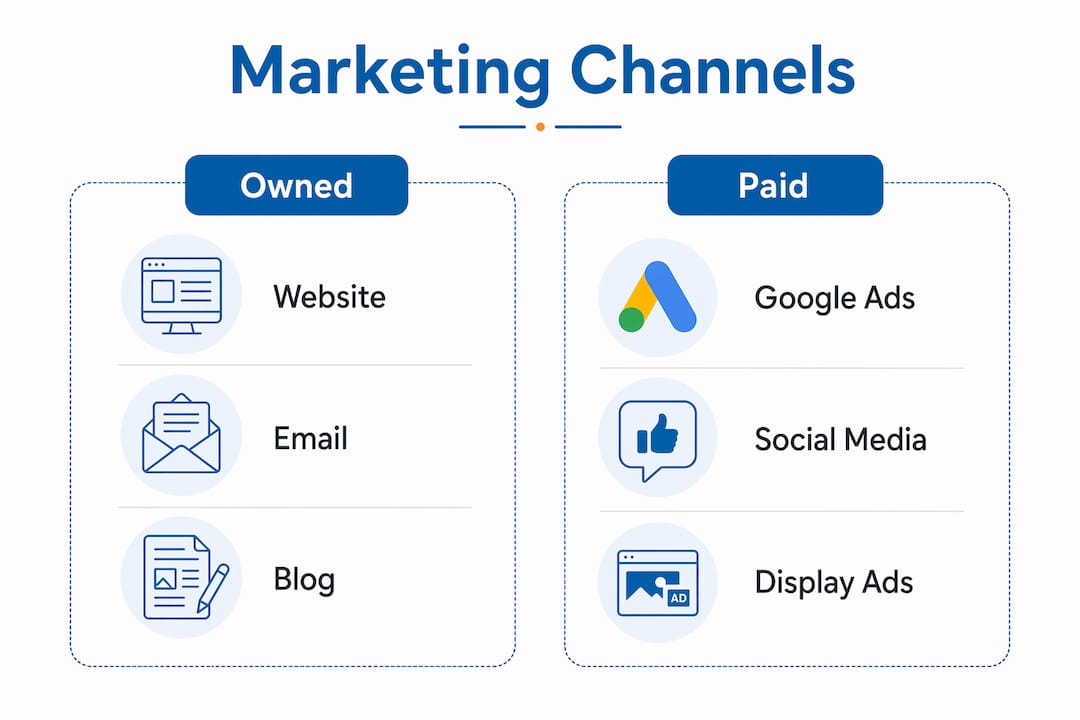
Digital marketing channels fall into four strategic categories: Owned, Paid, Earned, and Partnership. Each category requires different resources and delivers different results. Knowing the difference helps you spend smarter and grow faster.
| Channel Category | Examples | Cost Model | Speed to Results |
|---|---|---|---|
| Owned | Website, email list, blog | Fixed (hosting, tools) | Medium to long term |
| Paid | Google Ads, Facebook Ads, display | Pay per click or impression | Immediate |
| Earned | Organic search, PR, word-of-mouth | Time and effort | Long term |
| Partnership | Affiliate marketing, influencer deals | Performance-based | Medium term |
Owned channels
Owned channels are platforms you control completely. Your website, email list, and blog all belong to this category. The upside is full control over messaging and no ongoing ad spend. The downside is that building an audience takes time and consistent effort.
Paid channels
Paid channels like Google Ads and social media advertising deliver traffic immediately. You pay for every click or impression, which means results are fast but stop the moment your budget runs out. Paid channels work best when you have a clear offer and a tested landing page ready to convert visitors.
Earned channels
Earned channels include organic search rankings, press coverage, and customer referrals. These are the most credible forms of visibility because a third party, whether Google or a happy customer, is doing the endorsing. Organic social media builds community and brand awareness effectively but has limited reach without paid amplification on legacy platforms like Facebook.
Partnership channels
Partnership channels cover affiliate marketing and influencer collaborations. Costs are typically performance-based, meaning you pay only when a sale or lead is generated. This makes them low-risk for SMBs testing new audiences without committing to large upfront budgets.
Which digital marketing channels work best for SMBs?
The most effective channel mix for small to mid-sized businesses depends on budget, industry, and where your buyers spend their time. That said, the data points clearly in a few directions.
91% of marketers use social media as a digital marketing channel, making it the most widely adopted option globally. That adoption rate reflects how accessible social platforms are, not necessarily how profitable they are for every business. Popularity and profitability are two different things.
The channels SMBs consistently get the most value from include:
- Email marketing: High return on investment, direct access to subscribers, and full ownership of the list.
- Search engine optimization (SEO): Builds long-term organic traffic without ongoing ad spend.
- Paid search (Google Ads): Captures buyers who are already searching for what you sell.
- Organic social media: Builds brand personality and community, especially on Instagram, LinkedIn, and TikTok.
- Content marketing: Blog posts, videos, and guides that attract and educate potential customers.
The biggest mistake SMBs make is spreading effort across too many channels at once. Focusing on 2–3 reinforcing channels targeting specific buyer intent stages yields better results and more efficient budgets than trying to be everywhere simultaneously.
Professionele tip: Match your channel to your buyer’s mindset. Someone searching “best accountant near me” on Google is ready to hire. Someone scrolling Instagram is not. Use paid search to capture demand and social media to build it.
You can also use a digital marketing checklist to prioritize which channels deserve your attention first based on your specific business goals.
How do digital marketing channels work as an ecosystem?
The biggest shift in understanding digital marketing strategies today is moving from thinking about channels as separate tools to seeing them as an interconnected system. Channel outputs feed into other channels as inputs. A blog post improves your SEO ranking, which drives organic traffic, which you then capture via an email opt-in, which you nurture through automated email sequences.
This is not a checklist. It is a cycle.
AI orchestration serves as the connective layer, linking paid, SEO, content, email, and social channels to create compounding impact rather than disconnected efforts. For an SMB owner, this means your marketing gets smarter over time rather than starting from zero with every campaign.
Key metrics that guide channel investment
Tracking the right numbers tells you which channels are actually driving revenue. The three metrics every SMB should monitor are:
| Metric | What It Measures | Why It Matters |
|---|---|---|
| CAC (Customer Acquisition Cost) | Total spend divided by new customers gained | Shows which channels bring customers most affordably |
| LTV (Lifetime Value) | Total revenue a customer generates over time | Reveals whether your CAC is sustainable |
| ROAS (Return on Ad Spend) | Revenue generated per dollar of ad spend | Identifies which paid channels are profitable |
CAC, LTV, and ROAS guide profitable channel investment by showing you where to scale and where to cut. Without these numbers, you are guessing.
An integrated CRM tied to attribution tracking helps you trace revenue back to individual channel touchpoints. That connection between data and decisions is what separates businesses that grow from those that spin their wheels. Goonlinenow builds this kind of CRM and attribution setup directly into its platform, so you get the full picture without needing a data analyst.
Professionele tip: Set up UTM parameters on every link you share across channels. This simple step lets Google Analytics or your CRM show you exactly which channel drove each conversion, so you stop funding underperformers.
What are best practices for using digital marketing channels in 2026?
Selecting the right channels is only half the job. How you use them determines whether you see results. These best practices reflect what actually works for SMBs right now.
- Match channel to intent. Search channels like Google Ads capture demand that already exists. Social channels like Instagram and LinkedIn create demand by interrupting and engaging audiences. Use each for what it does best.
- Invest in creative for paid social. Paid social requires more creative effort to engage audiences compared to paid search, which succeeds by matching user intent with relevant answers. A weak ad image on Facebook will kill your campaign before your budget does.
- Build your owned channels first. Your email list and website are assets you control. Social platforms change their algorithms constantly. A strong owned base protects you from those shifts.
- Test before you scale. Run small budget tests on new channels before committing significant spend. Let data confirm a channel works for your specific audience before increasing investment.
- Use partnerships to extend reach efficiently. Affiliate programs and influencer collaborations let you access new audiences without building them from scratch. Pay for results, not exposure.
- Review your channel mix quarterly. Buyer behavior shifts. A channel that worked well last year may underperform today. Build a habit of reviewing performance data every 90 days and adjusting accordingly.
For a deeper look at how to put these principles into practice, the 2026 strategies for small businesses guide from Digital Marketing All offers useful third-party perspective on channel prioritization.
You can also explore effective online marketing strategies tailored specifically for SMBs to see how these principles apply in real business scenarios.
What I have learned about digital channels after working with hundreds of SMBs
Most SMBs I work with come in thinking they need more channels. What they actually need is more depth in fewer channels.
The shift from isolated campaigns to integrated systems is the most important change in digital marketing right now. Businesses using integrated channel ecosystems with AI orchestration see improved revenue impact compared to isolated campaigns. That is not a coincidence. When your email, SEO, paid ads, and social all share data and reinforce each other, every channel performs better.
The other pattern I see constantly is SMBs chasing vanity metrics. Follower counts, impressions, and page views feel good but rarely tell you whether your marketing is making money. The businesses that grow consistently are the ones tracking CAC, LTV, and ROAS and making decisions based on those numbers.
My honest advice: pick two channels you can execute well, build the measurement infrastructure to know what is working, and then add a third channel once the first two are profitable. That sequence is slower than trying everything at once, but it produces real, compounding results. Channel overload is one of the most common and most expensive mistakes I see SMB owners make.
— Go
How Goonlinenow helps SMBs manage digital channels in one place
Running multiple digital marketing channels is manageable when you have the right system behind you. Without one, it becomes a full-time job just keeping track of what is working.
Goonlinenow is built specifically for SMBs that want to grow without the complexity of overpriced platforms. The platform combines marketingautomatiseringssoftware with an all-in-one CRM, so your email campaigns, lead nurturing, social follow-ups, and pipeline tracking all live in one place. You get done-for-you setup, real human support, and attribution tracking that shows you exactly which channels are driving revenue. No scattered tools. No hidden fees. Just a clear system that works.
Veelgestelde vragen
What is a digital marketing channel?
A digital marketing channel is any online platform or method a business uses to reach and engage customers, including email, social media, search engines, and paid advertising.
How many digital marketing channels should an SMB use?
The most successful SMB strategies focus on 2–3 reinforcing channels targeting specific buyer intent stages rather than spreading effort across many channels at once.
What is the difference between owned, paid, and earned channels?
Owned channels are platforms you control, like your website and email list. Paid channels require ad spend for immediate reach. Earned channels, like organic search and word-of-mouth, are built through effort and credibility over time.
Which digital marketing channel has the highest return for small businesses?
Email marketing consistently delivers high returns for SMBs because it reaches subscribers directly, costs relatively little, and the list is an asset you own regardless of platform algorithm changes.
How do I measure which digital marketing channels are working?
Track Customer Acquisition Cost (CAC), Lifetime Value (LTV), and Return on Ad Spend (ROAS) for each channel. An integrated CRM with attribution tracking connects revenue back to individual channel touchpoints so you can make data-driven decisions.