

TL;DR:
- Small businesses can effectively reach their ideal customers with measurable online advertising on platforms like Google and Meta. Success requires a clear offer, a dedicated landing page, proper conversion tracking, and social proof before launching campaigns. Optimal platform choice depends on customer behavior, with Google Search Ads and Google Business Profile ideal for local service providers.
Online advertising for small business is the fastest, most measurable way to reach your ideal customers and drive sales without a massive budget. Platforms like Google Ads and Meta (Facebook and Instagram) put your offer in front of people who are actively searching or likely to buy. Most small businesses spend between $300 and $1,500 per month on digital ads and see real results when campaigns are set up correctly. This guide walks you through everything: prerequisites, platform selection, campaign launch, and performance optimization.
What does online advertising for small business actually require first?
You cannot run profitable ads without the right foundation in place. Skipping this step is the single biggest reason small business ad budgets disappear without results.
Before you spend a dollar on paid traffic, confirm you have these four assets ready:
- A specific, clear offer. Vague offers like “quality service” do not convert. A concrete offer like “Free 30-minute consultation for new clients this month” gives people a reason to click and act.
- A converting landing page. Your homepage is not a landing page. Build a dedicated page with one goal, one call to action, and no distractions. Tools like Unbounce or even a well-built page in WordPress work well for this.
- Conversion tracking. Install Google Analytics 4 and the Meta Pixel before your first campaign goes live. Without tracking setup, ad spend fails to scale and you cannot identify what is working.
- Social proof. At least three to five customer testimonials on your landing page reduce skepticism and increase conversions. Google Reviews and screenshots from real clients both work.
| Prerequisite | Recommended tool | Why it matters |
|---|---|---|
| Offer clarity | Your own copy | Drives click-through and conversion |
| Landing page | Unbounce, WordPress | Captures leads without distraction |
| Conversie bijhouden | Google Analytics 4, Meta Pixel | Measures real ROI |
| Social proof | Google Reviews, Trustpilot | Builds trust before the click |
Professionele tip: Test your offer on your existing email list or website visitors before paying for traffic. As DIY Marketers founder Ivana Taylor advises, if an offer fails to convert people who already know you, it will fail with cold paid traffic too.

How do you choose the best online advertising platforms for your goals?
Platform choice is not about popularity. It is about matching your customer’s behavior to where they spend time and what they are ready to do.
The two dominant platforms for small businesses are Google Search Ads and Meta Ads. They work differently and serve different purposes. Google Search Ads target high-intent searchers who are actively looking for your service right now. Meta Ads build awareness among broader audiences who are not yet searching but can be persuaded. Google delivers calls and leads within 48–72 hours when tracking is correct. Meta typically takes 2–4 weeks to stabilize as its algorithm learns your audience.
Here is how the major platforms compare:
| Platform | Best for | Minimum monthly budget | Time to results |
|---|---|---|---|
| Google Search Ads | Service businesses, high-intent leads | $500+ | 48–72 hours |
| Meta Ads (Facebook/Instagram) | Retail, ecommerce, brand awareness | $300+ | 2–4 weeks |
| Google Bedrijfsprofiel | Local businesses, free visibility | Free | Ongoing |
| Google Shopping | Ecommerce, product-based businesses | $300+ | 1–2 weeks |
| LinkedIn Ads | B2B, professional services | $500+ | 2–4 weeks |
| Streaming TV Ads | Local brand awareness | $50+ | 2–4 weeks |
Local businesses get the best results by combining Google Ads with a fully optimized Google Business Profile. Retail and ecommerce businesses perform better pairing Facebook and Instagram ads with Google Shopping. Streaming TV advertising is now accessible to small businesses starting at around $50 per month, with CPM averaging about $25 for local campaigns. That makes it a real option for building local brand recognition without a television production budget.
Professionele tip: Start with Google Search Ads to capture existing demand. Once you have conversion data from campaigns, use it to build lookalike audiences on Meta for lower-cost awareness at scale. This sequence saves money and produces better results than running both platforms blind from day one.
For a deeper look at social platform options, the social media advertising guide from Goonlinenow covers Facebook, Instagram, and LinkedIn in detail.
How to launch your first small business ad campaign step by step
A structured launch prevents the most common and costly mistakes. Follow these seven steps in order.
-
Define your goal and KPIs. Decide what success looks like before you build anything. Cost per lead (CPL), cost per sale, and return on ad spend (ROAS) are the three metrics that matter most for small businesses. Pick one primary KPI and track it from day one.
-
Test your offer first. Send your offer to your email list or post it organically on social media. If it gets no response from people who already trust you, revise it before spending on ads. This step alone saves most small businesses hundreds of dollars. The tested-before-deployed methodology is one of the most effective ways to eliminate wasted ad spend before campaigns go live.
-
Set up conversion tracking. Install Google Analytics 4 and configure goal completions. Add the Meta Pixel to your website. Confirm both are firing correctly using Google Tag Assistant and Meta’s Pixel Helper browser extensions. Do not skip this step.
-
Create your ad creative and copy. Write headlines that speak directly to your customer’s problem. Use real photos of your business or team rather than stock images. Authentic visuals consistently outperform polished stock photography in small business ads.
-
Configure your campaign settings. Set your daily budget, geographic targeting, and bidding strategy. For Google Search Ads, start with manual CPC or Enhanced CPC to maintain control. For Meta, use the Advantage+ audience feature to let the algorithm find your best customers within a defined interest set.
-
Launch with the right minimum budget. Median SMB ad spend runs $1,000–$3,000 per month across categories. For local service businesses, a combined budget of $800–$1,200 per month across Google and Meta gives the algorithm enough data to optimize. Spending less than $300 per channel generates insufficient data and reduces ad effectiveness significantly.
-
Monitor the first 30 days closely. Check performance every three to five days, not daily. Look for keywords or ad sets burning budget without conversions. Pause those immediately. Identify what is working and shift budget toward it. Your first campaign is a learning investment, not a guaranteed profit machine.
Professionele tip: When running Google Search Ads on a tight budget, use exact match and phrase match keywords only. Broad match keywords on small budgets attract irrelevant clicks fast. For a detailed breakdown of maximizing Google Ads on $500, the step-by-step approach there is worth reading before you launch.
How to optimize and scale campaigns based on performance data
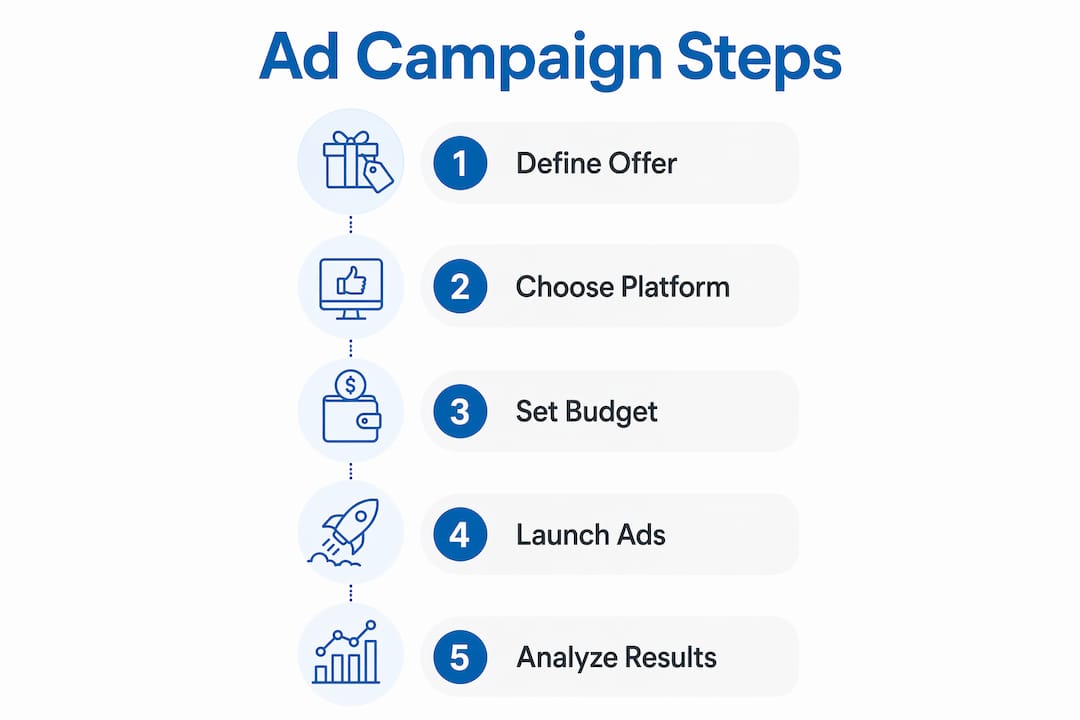
Optimization is where small businesses either grow their ROI or quietly drain their budget. The difference comes down to reading the right numbers and acting on them.
Focus on three core metrics first:
- Click-through rate (CTR). A low CTR means your ad copy or creative is not compelling enough. Test new headlines and images before adjusting anything else.
- Conversion rate. If people click but do not convert, the problem is your landing page, not your ad. Test a new headline, a stronger call to action, or a simpler form.
- Cost per lead (CPL). This is your north star metric. Calculate it weekly. If CPL is dropping, scale budget. If it is rising, diagnose before spending more.
A/B testing is the most reliable way to improve performance. Run two versions of an ad simultaneously, changing only one element at a time: the headline, the image, or the call to action. Wait until each version has at least 100 clicks before drawing conclusions. Changing too many variables at once makes it impossible to know what actually moved the needle.
Use Meta’s Ad Library to research what your competitors are running. It shows active ads from any Facebook page, which gives you real creative inspiration grounded in what is already working in your market. This is free and takes about ten minutes to use effectively.
Common mistakes that stall optimization:
- Increasing budget too fast before the algorithm has stabilized
- Using broad geographic targeting when your customers are local
- Running too many ad variations at once and splitting data too thin
- Ignoring mobile performance when most clicks come from phones
Scaling works simply: double the budget on campaigns where CPL is at or below your target. Cut or pause everything else. Resist the urge to keep underperforming campaigns alive out of hope. Data tells you what to do. Follow it.
What I have learned about sustainable small business advertising
Working with small businesses across coaching, real estate, salons, and professional services has taught me one consistent truth: most owners spend money on ads before they are ready, then blame the platform when results disappoint.
The businesses that win with paid advertising share a common habit. They test their offers on warm audiences first. They set up tracking before they launch. They start with one platform, learn it well, and only expand once they have positive data. That patience is not timidity. It is discipline.
I have also seen owners underestimate the value of free channels running alongside paid ads. A fully optimized Google Business Profile costs nothing and drives high-intent local traffic consistently. Pairing that with even a modest Google Ads budget creates a visibility combination that most competitors are not using effectively.
My honest recommendation: treat your first 60 days of paid advertising as tuition. You are buying data and learning, not just leads. The businesses that approach it that way adjust faster, waste less, and scale sooner. The ones who expect instant returns usually quit before the algorithm has had time to learn. For a broader view of how paid ads fit into your full growth plan, the SMB digital marketing strategy guide from Goonlinenow is worth bookmarking.
— Go
How Goonlinenow helps small businesses get more from every ad dollar
Running ads is only half the equation. What happens after someone clicks your ad determines whether you get a customer or just a visitor.
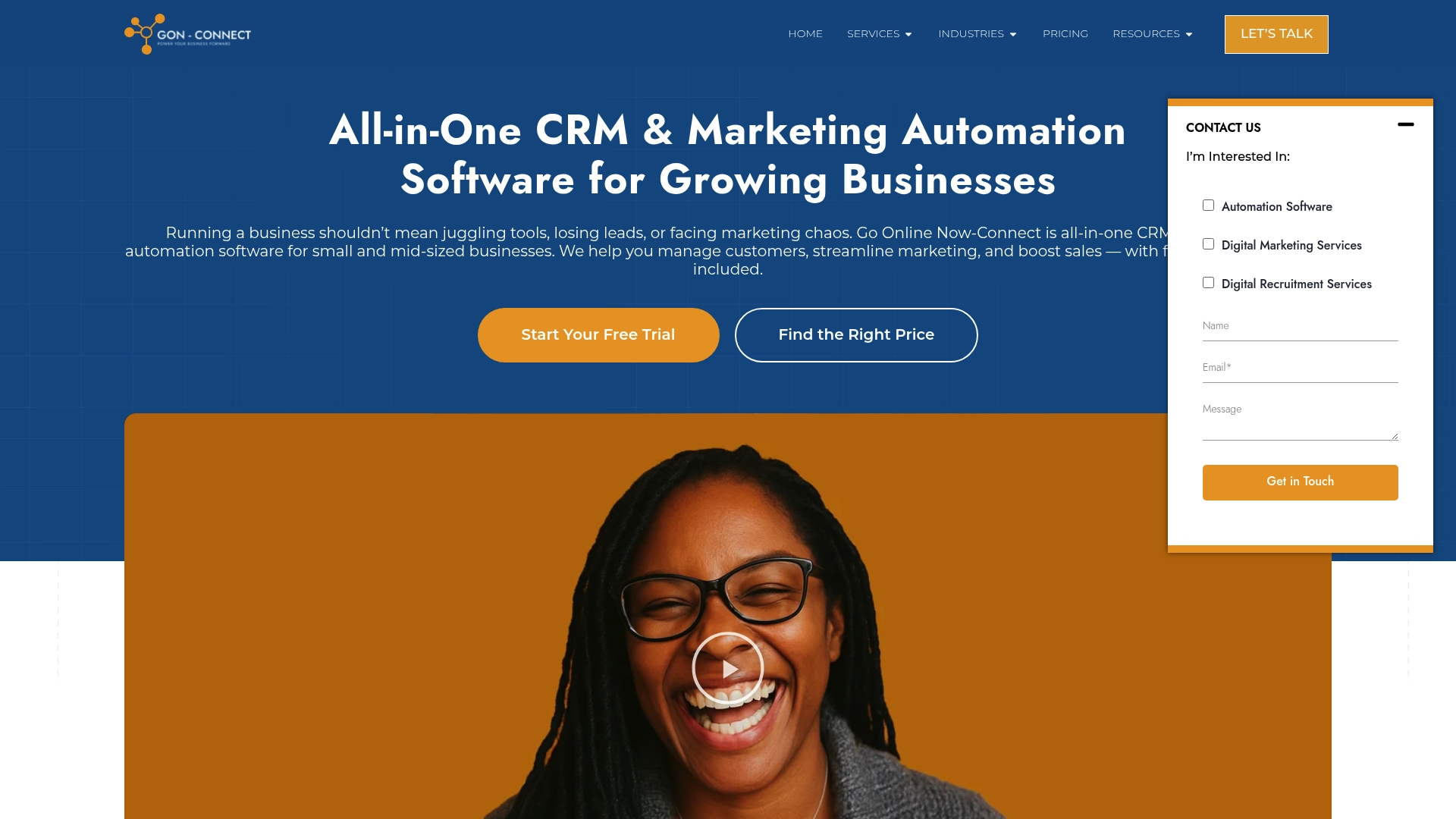
Goonlinenow combines marketing automation for SMBs with an all-in-one CRM so your leads are captured, followed up with, and nurtured automatically. No more leads falling through the cracks because you were busy running your business. Our done-for-you setup means your funnels, email sequences, and pipelines are configured by our team at no extra cost. Clients report up to 85% more conversions and 75% time saved within 90 days. If you are spending money on ads, you need a system that converts those clicks into paying customers. That is exactly what Goonlinenow is built to do.
Veelgestelde vragen
What is a realistic monthly budget for small business online ads?
Most small businesses spend $500–$1,500 per month on online advertising. For meaningful data and results, plan for at least $500 on Google Search Ads or $300 on Meta Ads per month.
Which platform is best for local service businesses?
Google Search Ads combined with an optimized Google Business Profile delivers the highest-intent leads for local service businesses. This combination captures customers who are actively searching for what you offer right now.
How long before I see results from online ads?
Google Search Ads typically deliver leads within 48–72 hours when conversion tracking is set up correctly. Meta Ads take 2–4 weeks to stabilize as the algorithm learns your audience.
Do I need a website to run online ads?
You need at least a dedicated landing page with a clear offer, a call to action, and conversion tracking installed. Sending paid traffic to a generic homepage wastes budget and produces poor results.
What is the biggest mistake small businesses make with online advertising?
The most common mistake is launching paid campaigns before testing the offer on existing audiences. If your offer does not convert warm traffic, it will not convert cold paid traffic either.