

Over 90 percent of American consumers read online reviews before making a purchase, showing just how much reputation can influence business success. For a small or medium-sized business, every comment and rating can build or break trust. Understanding the basics of reputation management empowers you to shape perceptions, attract customers, and avoid costly pitfalls in today’s competitive market.
Reputation Management Basics for SMBs
Online reputation represents the collective digital perception of your business across various platforms, websites, and customer interactions. For small and medium-sized businesses (SMBs), managing this reputation isn’t just optional—it’s a critical strategy for sustainable growth. Digital marketing research reveals that customers increasingly rely on online feedback to make purchasing decisions.
Building a strong online reputation starts with understanding its core components. Reputation management involves actively monitoring, addressing, and shaping how your business is perceived online. According to research from Wharton Online, 93% of shoppers are directly influenced by online reviews, making every digital interaction potentially impactful. This means tracking customer feedback across platforms like Google Reviews, social media, and industry-specific review sites becomes crucial for SMBs.
Effective reputation management requires a proactive approach. Key strategies include:
- Regularly monitoring online mentions and reviews
- Responding promptly and professionally to both positive and negative feedback
- Encouraging satisfied customers to share their experiences
- Addressing negative comments constructively and transparently
- Maintaining consistent brand messaging across all digital channels
By implementing these strategies, SMBs can transform their online reputation from a potential vulnerability into a powerful competitive advantage. Improving online reputation processes can significantly enhance customer trust, attract new business, and create a resilient digital presence that supports long-term growth.
Key Types—Online, Offline, Employee Reviews
Reputation management is a multifaceted approach that extends far beyond digital platforms, encompassing various channels where a business’s image can be shaped and perceived. These different reputation types—online, offline, and employee-driven—each play a critical role in building a comprehensive brand narrative. Value of online reputation management demonstrates how interconnected these reputation channels have become in the modern business landscape.
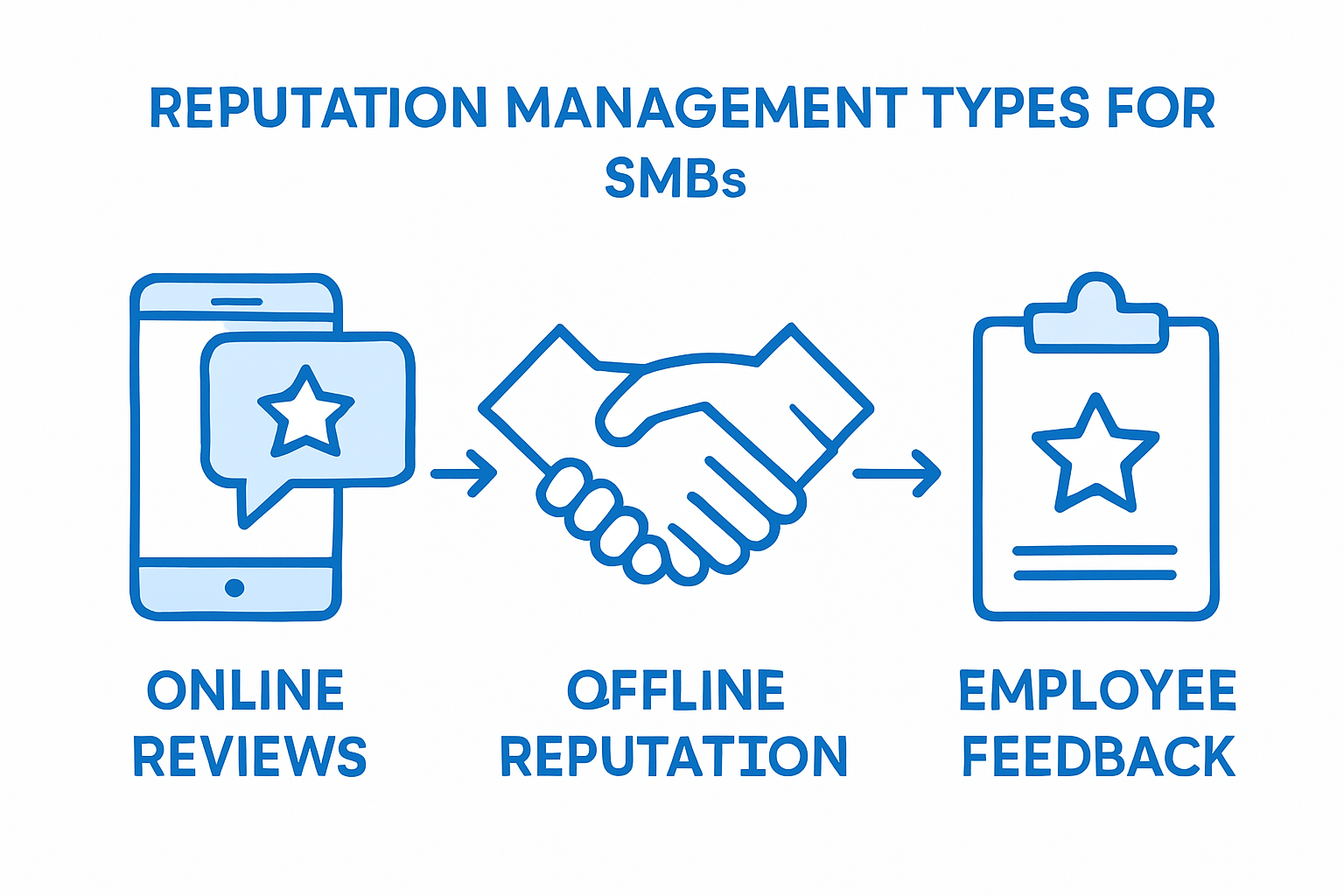
Online reputation represents the digital footprint of a business across websites, social media platforms, review sites, and digital forums. This includes customer reviews, social media mentions, blog posts, and search engine results that collectively form public perception. Offline reputation involves traditional word-of-mouth interactions, community engagement, local networking, and physical customer experiences that continue to hold significant weight in building trust and credibility.
Employee reviews have emerged as a crucial reputation management dimension, especially with the rise of platforms like Glassdoor and LinkedIn. These platforms provide transparent insights into workplace culture, management practices, and employee satisfaction. Key aspects of employee-driven reputation include:
- Internal workplace reviews
- Employee testimonials and experiences
- Professional network recommendations
- Company culture perceptions
- Career development opportunities
By understanding and strategically managing these three interconnected reputation types, small and medium-sized businesses can create a holistic approach to brand perception. Managing your institution’s digital reputation requires consistent effort across all channels, ensuring a unified and positive brand narrative that resonates with customers, potential employees, and stakeholders.
How Reputation Management Drives Business Growth
Reputation management is a strategic catalyst that transforms customer perceptions into tangible business opportunities. Small and medium-sized businesses can leverage their reputation as a powerful growth mechanism, turning positive interactions and trust into sustainable competitive advantage. Digital growth strategies reveal how systematic reputation management directly impacts business expansion and customer acquisition.

Consistent reputation management fundamentally drives business growth by creating trust and credibility. Research highlights that building long-term business trust occurs through demonstrating professionalism and integrity across all customer interactions. When businesses actively engage with feedback, respond transparently, and showcase their commitment to customer satisfaction, they create emotional connections that transcend transactional relationships.
The growth mechanisms of reputation management include several critical components:
- Attracting new customers through positive online visibility
- Increasing customer retention and loyalty
- Reducing customer acquisition costs
- Generating organic word-of-mouth referrals
- Establishing competitive differentiation
By systematically managing their reputation, small businesses can transform customer perceptions into powerful growth engines. Social media’s impact on brand reputation underscores how strategic reputation management can convert digital interactions into meaningful business opportunities, creating a sustainable pathway for expansion and success.
Risks and Costs of Ignoring Reputation
Reputation management is not a luxury but a critical business survival strategy. Small and medium-sized businesses that overlook their online and offline reputation risk substantial financial and operational consequences. Digital marketing strategies emphasize the direct correlation between reputation maintenance and business sustainability.
The potential damages of neglecting reputation management are profound and multifaceted. Strategies to lower business reputation risks warn that ignoring reputation can lead to significant financial setbacks, including stalled business progress and decreased productivity. Research reveals alarming consumer behavior patterns, with negative reviews and social media comments capable of deterring up to 94% of potential customers from engaging with a business.
Specific risks of reputation negligence include:
- Dramatic reduction in customer trust
- Decreased market credibility
- Higher customer acquisition costs
- Potential revenue loss
- Negative word-of-mouth propagation
- Challenges in attracting top talent
- Difficulty securing business partnerships
By understanding these risks, small businesses can proactively develop comprehensive reputation management strategies that protect their brand, maintain customer confidence, and create a resilient business ecosystem. Investing in reputation management is not an expense but a critical investment in long-term business success and growth.
Top Strategies and Tools for SMB Success
Reputation management requires a strategic approach that combines proactive monitoring, engagement, and continuous improvement. Small businesses can leverage powerful strategies and tools to effectively control their digital narrative and build lasting customer trust. Content strategy for SMBs highlights the importance of creating a comprehensive reputation management framework.
Small business online reputation management tips emphasize the critical importance of actively monitoring and responding to online reviews. Successful strategies involve understanding and managing different media types, including:
- Owned Media: Company websites, blogs, and social media channels
- Earned Media: Customer reviews, press mentions, and third-party recommendations
- Shared Media: Social media interactions and user-generated content
- Paid Media: Advertising, sponsored content, and targeted marketing campaigns
Key tools and strategies for effective reputation management include:
- Real-time review monitoring platforms
- Social media listening tools
- Customer feedback management systems
- Review generation and response templates
- Analytics dashboards for tracking sentiment
- Automated alert systems for brand mentions
By implementing these strategic approaches, small businesses can transform reputation management from a reactive task to a proactive growth engine. Digital marketing tips for SMBs reinforce the importance of creating a comprehensive, integrated approach to building and maintaining a strong online reputation.
Elevate Your SMB’s Reputation with All-in-One Solutions
The article highlights the crucial challenge SMBs face in actively managing their online, offline, and employee-driven reputation to build lasting customer trust and drive business growth. At the heart of these challenges is the need for consistent monitoring, timely responses, and unified brand messaging across all digital and traditional channels. The complexity and cost of juggling multiple tools can overwhelm small businesses, leaving their reputation vulnerable to damaging reviews and missed opportunities.
Go Online Now-Connect offers a simple, affordable, and transparent marketing automation software designed specifically to address these exact pain points. Our platform combines essential features like reputation management, CRM, and digital marketing services all under one roof—helping you monitor reviews, engage customers, and maintain a powerful business image without the usual tech headaches. With done-for-you setup and real human support, your SMB can start building a resilient digital presence immediately while saving time and reducing costs.
Are you ready to transform your reputation from a risk into your strongest growth engine?
Discover how our marketing automation software and integrated tools can amplify your SMB’s online credibility and customer loyalty today. Take control of your reputation and growth journey by partnering with a digital growth expert tailored for small and medium businesses. Visit Go Online Now-Connect and get started with proven solutions that work.
Learn more about how reputation management fits seamlessly into digital marketing strategies for SMBs and explore our content strategy guide for SMBs to fuel your brand’s success.
Frequently Asked Questions
What is reputation management and why is it important for SMBs?
Reputation management refers to the strategies and practices that businesses employ to monitor, address, and shape how they are perceived online and offline. For small and medium-sized businesses (SMBs), managing reputation is crucial for building trust, attracting customers, and achieving sustainable growth.
How can SMBs effectively monitor their online reputation?
SMBs can successfully monitor their online reputation by using review monitoring platforms, social media listening tools, and analytics dashboards. These tools help track customer feedback, reviews, and mentions across various digital channels, allowing businesses to respond promptly and maintain a positive image.
What strategies can SMBs use to improve their reputation?
Key strategies for improving reputation include encouraging satisfied customers to leave positive reviews, responding professionally to both positive and negative feedback, maintaining consistency in brand messaging, and addressing any negative comments transparently and constructively.
What are the risks of neglecting reputation management for SMBs?
Neglecting reputation management can lead to severe consequences, including decreased customer trust, increased customer acquisition costs, negative word-of-mouth referrals, and challenges in attracting top talent. These risks can significantly impact a business’s overall growth and sustainability.
Recommended
- Improving Online Reputation Process for Business Growth – Go Online Now
- Value of Online Reputation Management for Business Owners
- Understanding Why Digital Marketing for SMBs Matters – Go Online Now
- Understanding Digital Growth Strategies for SMBs – Go Online Now
- Tech for Small Businesses: Complete Guide for 2025 – Projector Display
- Comprendre le rôle des vidéos pour les PME en Suisse
- How to Enhance Brand Visibility for Small Businesses – Paul Baguley