

Running a service business in Canada or the United States means juggling constant client demands and searching for smarter ways to grow. The difference between missed connections and lasting customer loyalty often lies in choosing the right digital tools. Integrating Customer Relationship Management and Marketing Automation can transform fragmented data into actionable insights, offering a unified approach to building strong relationships and improving conversion rates.
Defining CRM and Marketing Automation
For small business owners navigating the complex world of digital marketing, understanding Customer Relationship Management (CRM) and Marketing Automation is crucial for sustainable growth. These technological tools represent powerful strategies that transform how companies interact with potential and existing customers.
A Customer Relationship Management (CRM) system is fundamentally a comprehensive platform designed to track, manage, and optimize all interactions with current and potential customers. Marketing automation systems reveal strategic market analysis by enabling businesses to systematically capture, organize, and leverage customer data across multiple touchpoints.
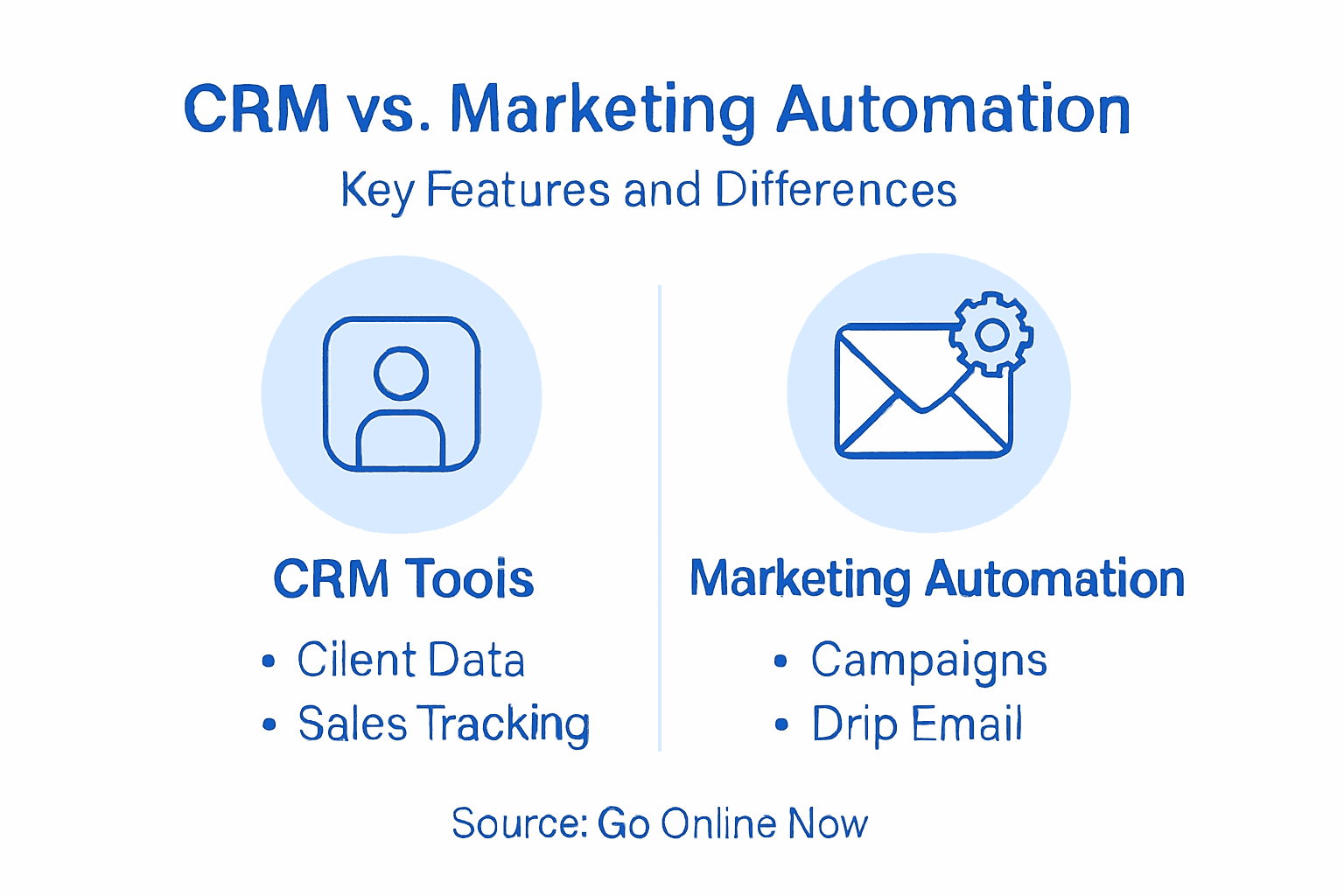
Key distinctions between CRM and Marketing Automation include:
-
CRM Focus:
- Customer data management
- Sales pipeline tracking
- Contact information organization
- Customer interaction history
-
Marketing Automation Focus:
- Lead generation and nurturing
- Email campaign management
- Automated marketing workflows
- Performance tracking and analytics
When integrated effectively, these systems create a seamless experience that allows businesses to understand customer behaviors, personalize interactions, and drive more targeted marketing efforts. Marketing automation supports evolving consumer behaviors by providing sophisticated technological capabilities that adapt to changing market dynamics.
Pro tip: Start by mapping out your current customer interaction processes to identify where CRM and marketing automation can streamline your workflows and improve customer engagement.
Key Benefits of Integration for SMBs
Small and medium-sized businesses (SMBs) face unique challenges in managing customer relationships and marketing efforts efficiently. Integrated CRM and marketing automation systems support effective business decisions by providing comprehensive tools that streamline operations and enhance customer engagement.
The key benefits of integrating CRM and marketing automation for SMBs include:
-
Improved Customer Insights
- Comprehensive view of customer interactions
- Unified data across sales and marketing departments
- Better understanding of customer behavior and preferences
-
Enhanced Operational Efficiency
- Automated repetitive marketing tasks
- Reduced manual data entry
- Seamless communication between sales and marketing teams
-
Personalized Customer Experience
- Targeted marketing campaigns
- Customized communication based on customer data
- More accurate lead scoring and nurturing
Data-Driven Decision Making becomes significantly more powerful when CRM and marketing automation systems work together. Small businesses can leverage integrated analytics to track performance, identify trends, and make strategic decisions that drive growth and improve customer satisfaction.

By breaking down silos between sales and marketing departments, integrated systems enable SMBs to create more cohesive and responsive customer engagement strategies. The ability to track and analyze customer interactions across multiple touchpoints provides a competitive advantage that was previously available only to large enterprises.
Pro tip: Conduct a thorough audit of your current customer interaction processes and identify specific areas where integrated CRM and marketing automation can eliminate redundancies and improve communication.
Types of CRM-Marketing Integrations
Small businesses have multiple options for integrating their CRM and marketing automation systems, each offering different levels of connectivity and strategic advantages. CRM and Marketing Automation integrations vary by technical connectivity and can dramatically transform how organizations manage customer relationships.
The primary types of CRM-Marketing Integrations include:
-
Basic Data Synchronization
- One-way or two-way data transfer
- Limited information sharing
- Minimal customization
- Simple connection between platforms
-
Lead Management Integration
- Shared lead scoring mechanisms
- Automated lead routing
- Real-time data updates
- Collaborative lead nurturing processes
-
Comprehensive Platform Integration
- Unified customer view across departments
- Seamless workflow automation
- Advanced analytics and reporting
- Complete operational alignment
Artificial Intelligence is transforming these integration strategies, enabling more sophisticated approaches to customer relationship management. Advanced systems now leverage machine learning to provide predictive insights, automate complex workflows, and create more personalized customer experiences.
For small businesses, the goal of integration is not just technological connectivity but creating a cohesive ecosystem that enables smarter, more responsive customer engagement. Each integration type offers unique benefits, allowing businesses to choose an approach that matches their specific operational needs and growth objectives.
Here’s a comparison of how different types of CRM-Marketing integrations support business goals:
| Integration Type | Customization Level | Data Sharing Scope | Best For |
|---|---|---|---|
| Basic Data Synchronization | Limited | Core contact details | Simple automation needs |
| Lead Management Integration | Moderate | Lead and activity data | Coordinated sales/marketing |
| Comprehensive Platform | Advanced | All customer interactions | End-to-end business control |
Pro tip: Evaluate your current marketing and sales processes to determine which integration type best matches your business’s complexity and growth stage.
How Combined Tools Streamline Lead Management
For small businesses, managing leads effectively can mean the difference between growth and stagnation. Integrated CRM systems enable seamless lead tracking through the entire customer lifecycle, transforming how organizations approach sales and marketing.
The lead management process becomes dramatically more efficient with combined CRM and marketing automation tools through several key mechanisms:
-
Comprehensive Lead Tracking
- Real-time lead status updates
- Automatic activity logging
- Complete interaction history tracking
- Cross-department visibility
-
Intelligent Lead Scoring
- Automated behavioral scoring
- Predictive engagement metrics
- Priority ranking of potential customers
- Dynamic lead qualification
-
Personalized Lead Nurturing
- Targeted communication workflows
- Customized content delivery
- Segmentation based on interactions
- Automated follow-up sequences
Unified Data Management eliminates traditional information silos that plague disconnected systems. By consolidating lead data across marketing and sales platforms, businesses can create more holistic, responsive customer engagement strategies that adapt in real time.
The ultimate goal of integrated lead management is transforming raw contact information into actionable insights. Advanced systems now use sophisticated algorithms to predict customer behaviors, recommend optimal engagement strategies, and dramatically reduce the time between initial contact and successful conversion.
Pro tip: Map out your current lead management workflow to identify specific points where automation and integration can reduce manual processes and improve response times.
Common Challenges and How to Avoid Them
Implementing combined CRM and marketing automation tools isn’t without potential pitfalls for small businesses. Integration challenges require strategic management approaches that address technological, operational, and human factors comprehensively.
The most critical challenges small businesses encounter include:
-
Data Consistency Issues
- Duplicate customer records
- Inconsistent data formatting
- Incomplete contact information
- Misaligned data fields across platforms
-
Technological Complexity
- Steep learning curves
- Complex system configurations
- Integration compatibility problems
- High technical maintenance requirements
-
Organizational Alignment
- Resistance to process changes
- Misaligned departmental goals
- Communication barriers
- Unclear ownership of customer journey
Change Management becomes crucial when implementing integrated systems. Small businesses must invest time in training, establishing clear communication protocols, and creating a unified vision for how these tools will transform their customer engagement strategies.
Successful implementation requires a holistic approach that goes beyond technological solutions. Business leaders need to foster a culture of continuous learning, encourage cross-departmental collaboration, and maintain flexibility in their technological ecosystems.
This overview highlights common CRM/marketing integration challenges and ways to address them:
| Challenge Area | Typical Causes | Prevention Strategy |
|---|---|---|
| Data Consistency | Manual data entry errors | Automate imports and standardize fields |
| Tech Complexity | Multiple incompatible tools | Use platforms with native integration |
| Org Alignment | Siloed team structures | Cross-department integration training |
Pro tip: Conduct a thorough internal audit of your current systems and processes before integration to identify potential friction points and develop a comprehensive implementation strategy.
Comparing Integrated Solutions vs. Standalone Tools
Small businesses face a critical decision when selecting customer relationship management technologies. Integrated solutions offer comprehensive data management that can dramatically transform operational efficiency and customer engagement strategies.
Key comparison points between integrated and standalone tools include:
-
Integrated Solutions Strengths
- Unified customer data platform
- Seamless workflow automation
- Comprehensive reporting capabilities
- Reduced data inconsistency
- Lower total cost of ownership
-
Standalone Tools Advantages
- Specialized feature sets
- Potentially lower initial investment
- More customization options
- Flexibility in tool selection
- Easier individual tool replacement
-
Performance Trade-offs
- Integration complexity
- Learning curve differences
- Scalability considerations
- Maintenance requirements
- Implementation time
Data Ecosystem Considerations play a crucial role in determining the most appropriate approach. Integrated solutions provide a holistic view of customer interactions, enabling more nuanced marketing and sales strategies that adapt dynamically to changing business needs.
For small businesses, the decision often hinges on balancing immediate operational needs with long-term growth potential. While standalone tools offer granular control, integrated platforms create a more streamlined, interconnected approach to customer relationship management.
Pro tip: Conduct a comprehensive needs assessment that maps your current business processes against potential tool capabilities before making a final technology investment decision.
Unlock Smarter Growth by Combining CRM and Marketing Automation Tools
Many small business owners struggle with managing scattered customer data and inefficient marketing workflows. This article highlights how integrating CRM and marketing automation can solve these challenges by providing a unified customer view and automating repetitive tasks like lead nurturing and campaign management. If you want to avoid data inconsistencies and broken communication between sales and marketing teams, adopting an all-in-one solution is key.
At Go Online Now, we understand the pain points of growing SMBs and SMEs that want to grow smarter not harder. Our platform offers a simple, affordable, and powerful marketing automation software combined with an all-in-one CRM designed to streamline lead management, automate workflows, and deliver personalized customer experiences without technical headaches. You will also benefit from our done-for-you setup and real human support.
Ready to transform your customer relationship management and marketing automation into a seamless growth engine Visit Go Online Now to explore how our combined tools and expert services can save you time increase conversions and eliminate the complexity of multiple standalone systems Get started today and experience why thousands of SMBs choose our platform to power their growth You can also learn more about our virtual assistance and website services that complement your marketing technology stack.
Frequently Asked Questions
What are the main differences between CRM and marketing automation tools?
CRM focuses on managing customer data, sales pipelines, and customer interactions, while marketing automation emphasizes lead generation, email campaign management, and automated marketing workflows.
How can integrated CRM and marketing automation improve customer engagement?
Integration provides unified customer insights, allowing businesses to personalize communication and create targeted marketing campaigns based on comprehensive customer data.
What are the benefits of integrating CRM with marketing automation for small businesses?
Key benefits include improved customer insights, enhanced operational efficiency, personalized customer experience, and data-driven decision-making that supports growth and satisfaction.
What challenges might a small business face when integrating CRM and marketing automation tools?
Common challenges include data consistency issues, technological complexity, and organizational alignment. Addressing these requires a strategic approach to change management and collaboration across departments.
Recommended
- Marketing Automation Software: Complete Guide for SMBs – Go Online Now
- Marketing Automation Software: Complete Guide for SMBs – Go Online Now
- 7 Affordable Marketing Automation Tips for SMB Success – Go Online Now
- Marketing Automation Software: Smarter Growth for SMBs – Go Online Now
- Maximize Your Impact with These SEO Agent Tools – LSA SEO Agency