

Most American small and midsize businesses underestimate the power of reputation management until faced with unexpected setbacks. The truth is, more than 85 percent of consumers trust online reviews as much as personal recommendations, making a business’s reputation its strongest asset or biggest threat. Understanding what reputation management really means—and why common misconceptions persist—can help American business owners protect their brand, attract loyal customers, and thrive in a crowded marketplace.
Reputation Management Defined and Misconceptions
Reputation management represents a strategic approach that small and midsize businesses (SMBs) use to monitor, influence, and control their public perception across digital and traditional platforms. While many business owners misunderstand reputation management as simple damage control, it actually encompasses a proactive system of building, maintaining, and protecting a brand’s credibility.
At its core, reputation management involves systematically tracking how customers, potential clients, and stakeholders perceive a business. Research indicates significant complexity in defining and measuring reputation, with empirical studies showing that even Fortune 500 companies struggle to establish consistent metrics. The practice goes beyond responding to online reviews or managing social media presence – it requires a comprehensive strategy that integrates brand communication, customer experience, and strategic positioning.
Common misconceptions about reputation management often prevent SMBs from implementing effective strategies. Many business owners believe reputation management is only necessary when facing a crisis or negative feedback. In reality, it is an ongoing process that requires consistent attention and proactive engagement. The goal is not just to mitigate potential damage but to actively build a positive, trustworthy brand image that resonates with target audiences. Practitioners recognize reputation management as a nuanced discipline that demands strategic communication and authentic representation of a company’s values and capabilities.
Key elements of effective reputation management for SMBs include:
- Continuous monitoring of online mentions and reviews
- Prompt and professional responses to customer feedback
- Developing a consistent brand narrative across all platforms
- Leveraging positive customer experiences as marketing opportunities
- Implementing transparent communication practices
By understanding reputation management as a dynamic, strategic process, SMBs can transform their approach from reactive problem-solving to proactive brand building.
Core Elements of Modern Reputation Management
Modern reputation management has evolved far beyond traditional public relations strategies, becoming a sophisticated approach that requires strategic thinking and comprehensive digital engagement. Online reputation management involves systematically influencing and controlling a brand’s public perception, encompassing multiple digital and traditional communication channels.
Digital monitoring represents the foundational element of contemporary reputation management. This process involves continuously tracking online mentions, reviews, social media conversations, and search engine results that impact a business’s image. Small and midsize businesses must develop robust systems to capture real-time feedback, identifying potential reputation risks before they escalate. These monitoring efforts go beyond simple reactive measures, instead creating proactive opportunities to address customer concerns and showcase responsive customer service.
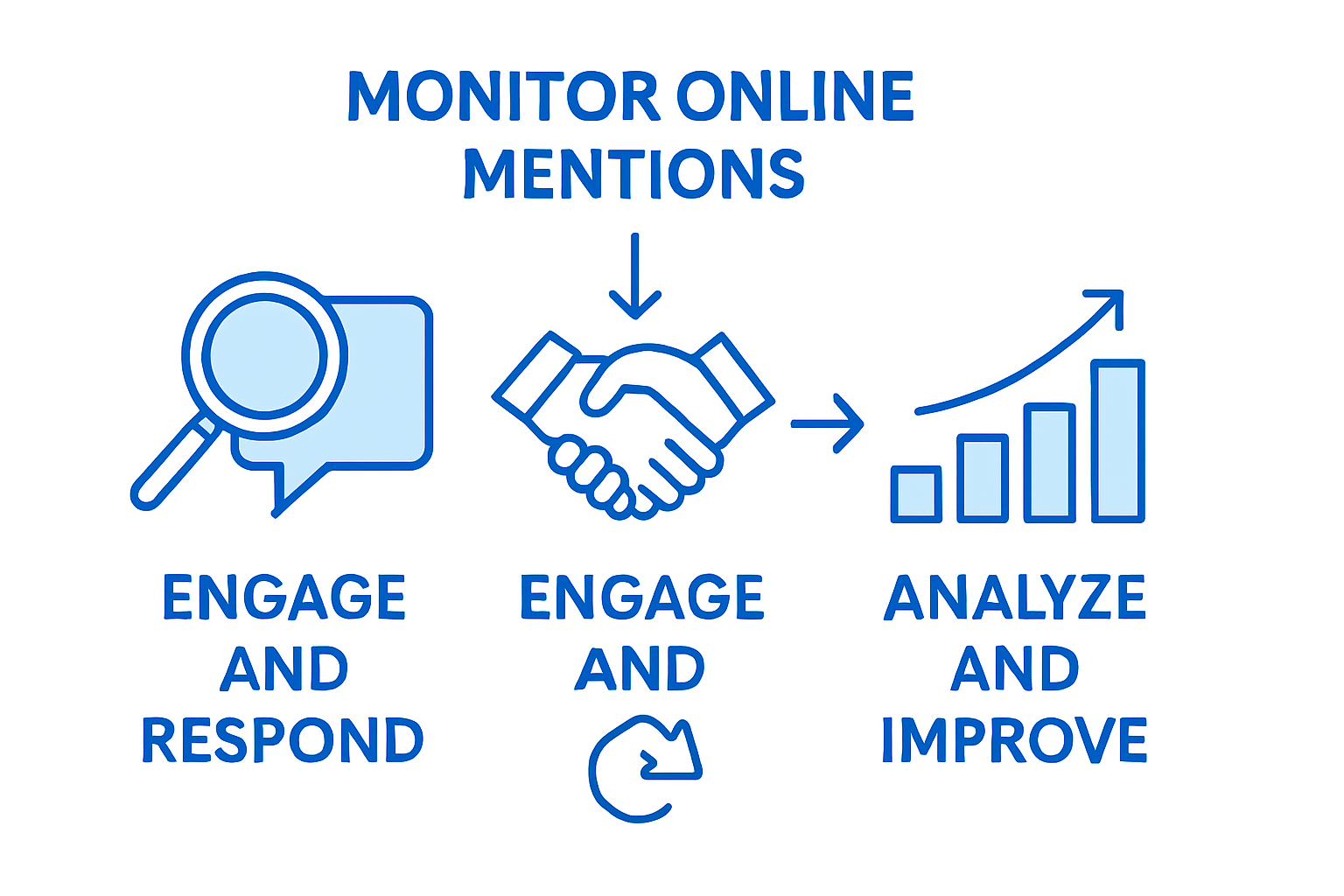
Image restoration strategies play a critical role in managing potential reputation challenges, providing businesses with structured approaches to addressing negative perceptions. These strategies include transparent communication, accountability, corrective action plans, and strategic messaging designed to rebuild trust when reputation challenges emerge. Successful reputation management requires businesses to view potential challenges as opportunities for demonstrating integrity and commitment to customer satisfaction.
Key components of effective modern reputation management include:
- Comprehensive digital monitoring across multiple platforms
- Rapid response protocols for customer feedback
- Consistent brand messaging and communication
- Proactive relationship building with customers and stakeholders
- Transparent and authentic communication strategies
- Regular reputation health assessments
By integrating these core elements, small and midsize businesses can develop a resilient reputation management approach that protects and enhances their brand’s credibility in an increasingly interconnected digital landscape.
Key Benefits for Small-Mid Businesses
Effective reputation management provides small and midsize businesses with a critical competitive advantage in today’s hyper-connected digital marketplace. Unlike large corporations with extensive resources, SMBs must strategically leverage their reputation to build trust, attract customers, and differentiate themselves from competitors. The ability to proactively manage public perception can transform how potential clients view and engage with a business.
Customer trust emerges as the most significant benefit of robust reputation management. Small businesses can navigate digital challenges by implementing strategic communication protocols, mitigating potential reputation risks before they escalate. By consistently demonstrating transparency, responsiveness, and authenticity, SMBs can create a powerful brand narrative that resonates with their target audience and builds long-term loyalty.

Financial implications of reputation management extend far beyond simple image protection. Businesses with strong, positive reputations typically experience higher customer retention rates, increased referral volumes, and more favorable pricing power. When potential customers encounter consistent positive feedback and professional online presence, they are more likely to choose a small business over competitors who lack a compelling reputation strategy.
Key reputation management benefits for SMBs include:
- Enhanced customer credibility and trust
- Improved online visibility and search rankings
- Increased customer acquisition and retention
- Faster resolution of potential reputation challenges
- Higher conversion rates from positive customer experiences
- Competitive differentiation in crowded marketplaces
By investing time and resources into strategic reputation management, small and midsize businesses can transform their digital presence from a potential liability into a significant competitive advantage.
Digital Tools and Platforms for SMBs
Advanced digital technologies have transformed reputation management for small and midsize businesses, providing sophisticated yet accessible solutions to monitor, analyze, and protect their online presence. Modern SMBs can now leverage powerful tools that were previously available only to large enterprises, enabling them to compete effectively in the digital marketplace.
Artificial intelligence has revolutionized reputation management capabilities. Innovative deep learning approaches like BERT-based models offer automated solutions for analyzing social media content, allowing businesses to track brand mentions, sentiment, and potential reputation risks with unprecedented accuracy and speed. These intelligent systems can process vast amounts of online data, providing real-time insights that help SMBs respond quickly to emerging reputation challenges.
Dynamic interaction-based reputation models provide nuanced approaches to understanding online trustworthiness, enabling small businesses to gain deeper insights into customer perceptions without invasive data collection. By analyzing user interactions and behavioral patterns, these advanced platforms help SMBs develop more strategic and authentic reputation management approaches.
Key digital tools for SMB reputation management include:
- Social media monitoring platforms
- Review tracking and management software
- Sentiment analysis tools
- Brand mention tracking systems
- Online review response management platforms
- Automated reputation reporting solutions
By strategically implementing these digital tools, small and midsize businesses can transform reputation management from a reactive challenge into a proactive growth strategy.
Risks of Poor Reputation Management
Poor reputation management presents significant existential risks for small and midsize businesses, potentially undermining years of hard work and strategic growth. In today’s hyperconnected digital landscape, a single negative interaction or unaddressed customer complaint can quickly escalate into a reputation crisis that damages customer trust and market perception.
Financial consequences of ineffective reputation management can be devastating. Unethical practices and inadequate crisis response can lead to substantial customer trust erosion, resulting in decreased sales, reduced customer loyalty, and long-term brand damage. Small businesses are particularly vulnerable, as they lack the extensive resources large corporations use to mitigate reputation challenges.
Situational Crisis Communication Theory demonstrates how inappropriate responses can dramatically amplify reputational damage, highlighting the critical importance of strategic, transparent communication during challenging moments. Businesses that fail to match their crisis response to the specific nature of the reputational threat risk generating more negative public perception than the original issue.
Key risks of poor reputation management include:
- Rapid erosion of customer trust
- Significant revenue and market share loss
- Reduced customer acquisition rates
- Negative word-of-mouth marketing
- Decreased investor and partner confidence
- Potential legal and regulatory challenges
By understanding and proactively addressing these risks, small and midsize businesses can transform potential reputation challenges into opportunities for demonstrating integrity and customer commitment.
Strengthen Your SMB’s Reputation with Smarter Tools and Real Support
The article highlights how effective reputation management is essential to building customer trust, improving online visibility, and standing out in a competitive market. Many small and midsize business owners struggle to keep up with continuous monitoring, quick responses, and maintaining a consistent brand message. These challenges can quickly lead to lost customers and diminished growth if not addressed proactively with comprehensive solutions.
At Go Online Now-Connect, we understand the urgency SMBs face in managing their reputation without the overwhelm of scattered tools or overengineered platforms. Our all-in-one marketing automation software includes robust reputation management features integrated with email, SMS, and lead nurturing — all designed to streamline your customer interactions and keep your brand positively perceived across digital channels. Backed by real human support and done-for-you setup, our platform helps you save time and convert more leads while safeguarding your business’s credibility.

Ready to shift from reactive damage control to proactive brand building? Discover how Go Online Now-Connect delivers simple, affordable solutions crafted specifically for SMBs like yours. Start growing smarter today by exploring our platform at Go Online Now and learn why businesses trust us for reliable reputation management and marketing automation.
See how our all-in-one CRM and reputation tools empower your digital growth strategy. Don’t wait until reputation risks become revenue losses. Take control now.
Frequently Asked Questions
What is reputation management and why is it important for SMBs?
Reputation management is a strategic approach that SMBs use to monitor and influence their public perception. It’s essential because it helps build trust, attract customers, and differentiate from competitors in a crowded marketplace.
How can SMBs effectively manage their reputation online?
SMBs can manage their reputation online by continuously monitoring brand mentions, promptly responding to customer feedback, maintaining consistent brand messaging, and leveraging positive customer experiences as marketing opportunities.
What are the financial benefits of solid reputation management?
Effective reputation management can lead to higher customer retention rates, increased referrals, and favorable pricing power, ultimately contributing to overall business revenue and profitability.
What risks do SMBs face if they neglect reputation management?
Neglecting reputation management can result in rapid erosion of customer trust, significant revenue loss, negative word-of-mouth, reduced customer acquisition rates, and potential legal challenges.
Recommended
- Value of Online Reputation Management for Business Owners
- Improving Online Reputation Process for Business Growth – Go Online Now
- Understanding Why Digital Marketing for SMBs Matters – Go Online Now
- Boost Sales: Top Marketing Tips for SMBs Success – Go Online Now
- Discover the True Value of Local HVAC Company in 2025 – HVAC Service and Repair | Louisville, KY | Project Heating & Cooling
- Comprendre le rôle des vidéos pour les PME en Suisse
- How to Enhance Brand Visibility for Small Businesses – Paul Baguley