

Most American businesses overlook a simple tactic that can boost email marketing revenue by up to 760 percent. Segmenting your contact list and automating targeted messages are proven ways to reach the right audience at the right time. When you put these strategies into practice, you do more than increase open rates. You unlock real connections and measurable results that can set your campaigns apart from the competition.
Step 1: Assess and segment your contact list
Turning your email contact list into a powerful marketing tool starts with strategic segmentation. By dividing your contacts into meaningful groups, you can dramatically improve your campaign effectiveness. Research shows that segmented email campaigns can generate up to 760% more revenue, with marketers experiencing 39% better open rates and 24% increased sales leads.
To begin segmenting effectively, review your existing contact database and identify key characteristics that distinguish different groups. These might include demographic information like age, location, or industry. Look at behavioral data such as past purchase history, website interactions, or engagement levels with previous email campaigns. For instance, you could create segments like new leads, repeat customers, inactive subscribers, or contacts based on specific interests. Using your customer relationship management (CRM) system, apply filters and tags that help you organize contacts systematically.

Pro tip: Start small and focus on 3-5 core segments rather than overcomplicating your approach. As you gain insights, you can progressively refine your segmentation strategy. Your next step will involve designing targeted email content that speaks directly to each group’s unique needs and preferences.
Step 2: Set up your marketing automation software
Setting up your marketing automation software is a critical step that will transform how you engage with potential customers. Effective workflows can capture leads, nurture them across multiple channels, and personalize communication touchpoints strategically and efficiently.
Start by carefully mapping out your marketing goals and identifying the key processes you want to automate. This means understanding your customer journey and pinpointing where automation can streamline interactions. Implement triggers that respond to specific customer behaviors, such as website visits, email opens, or form submissions. Configure your software to automatically send targeted follow-up messages, assign lead scores, or trigger specific nurturing sequences based on these interactions. Pay attention to integrating your existing tools like CRM systems, email platforms, and analytics dashboards to create a seamless workflow.
Pro tip: Begin with simple automation sequences and gradually build complexity. Avoid overwhelming your system with too many complicated workflows at once. Start with core processes like welcome emails, lead scoring, and basic segmentation. As you gain confidence and insights, you can progressively refine and expand your automation strategy. Your next step will involve creating compelling content that speaks directly to each segment of your audience.
Step 3: Craft engaging automated email content
Creating compelling automated email content transforms routine communications into powerful engagement tools that connect with your audience on a deeper level. Advanced research demonstrates how strategic email content can predict and enhance customer interactions, making every message an opportunity to build meaningful relationships.
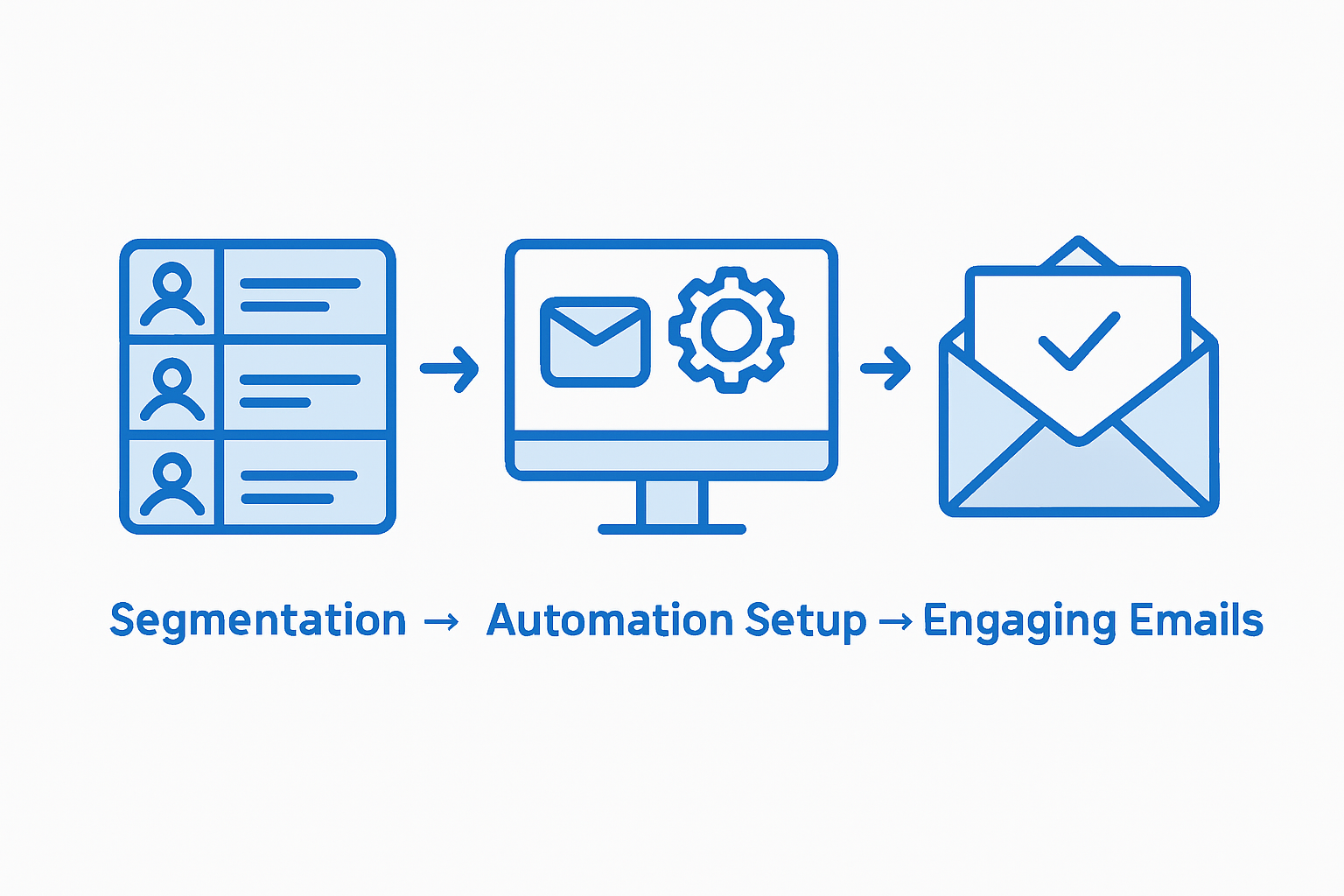
Personalized email communities reveal that grouping content based on communication patterns dramatically improves audience resonance. Start by developing email templates that speak directly to different customer segments. Consider their unique characteristics, preferences, and stages in the buying journey. Write subject lines that spark curiosity and body content that provides genuine value. Focus on creating conversational language that feels authentic rather than robotic. Use dynamic content blocks that automatically adjust based on recipient data such as past purchases, browsing history, or demographic information.
Pro tip: Always test your automated emails before launching full campaigns. Create small pilot groups to validate content effectiveness, open rates, and engagement metrics. Remember that automation should feel personal, not mechanical. Your next step involves setting up sophisticated tracking to continuously refine and improve your email communication strategy.
Step 4: Configure triggers and workflow automations
Configuring triggers and workflow automations is the strategic backbone of your marketing automation system, allowing you to create intelligent communication pathways that respond automatically to your customers behaviors and interactions. This critical step transforms your marketing from reactive to proactively engaging.
Workflow automation enables you to design precise sequences that guide prospects through your sales funnel with minimal manual intervention. Begin by mapping out your customer journey and identifying key interaction points where automated triggers can enhance engagement. These triggers might include actions like website visits, email opens, form submissions, or specific purchase behaviors. Create conditional workflows that automatically send personalized follow up messages, assign lead scores, or move contacts between different communication streams based on their specific actions. For example, a new website visitor might receive a welcome sequence, while a repeat customer could trigger a loyalty reward communication.
Pro tip: Start with simple trigger logic and gradually build complexity. Implement a few core automation sequences first, then progressively refine your workflows as you gain insights into customer behavior. Monitor your automation performance closely and be prepared to adjust your triggers based on real world results. Your next step involves testing and optimizing these automated workflows to ensure maximum effectiveness and engagement.
Step 5: Test campaigns and monitor key metrics
Testing and monitoring your email marketing campaigns is crucial for understanding and improving your automation strategy. Tracking key metrics will help you systematically evaluate the performance of your marketing automation efforts, ensuring you continuously refine your approach for maximum impact.
Start by setting up comprehensive tracking across multiple key performance indicators. Focus on metrics like open rates, click through rates, conversion rates, unsubscribe rates, and revenue generated per campaign. Create comparative tests using A B split testing techniques to understand which email variations resonate most with your audience. Pay close attention to how different subject lines, content structures, send times, and personalization approaches influence your results. Utilize your marketing automation platforms reporting tools to generate detailed insights that reveal precise audience engagement patterns.
Pro tip: Establish a consistent review cycle for your campaign metrics. Schedule weekly or monthly deep dive analysis sessions where you critically examine your performance data. Look beyond surface level numbers to understand the underlying trends and behavioral signals. Be prepared to make swift adjustments to your automation workflows based on these insights. Your ultimate goal is creating a dynamic marketing system that continuously learns and improves its effectiveness.
Accelerate Your SMB Growth with Smarter Email Marketing Automation
If you found value in learning how to automate email marketing for fast SMB growth, then you understand the challenge of managing complex workflows, segmented contact lists, and personalized campaigns all at once. The article highlights the need to streamline automation setup, craft engaging content, and monitor performance without getting overwhelmed. Many small business owners struggle with time-consuming tools and disjointed systems that slow down growth and waste resources.
Go Online Now-Connect offers an all-in-one marketing automation software designed specifically to solve these pain points. Our platform simplifies email marketing automation, CRM management, and lead nurturing into a single affordable system built for SMBs. With done-for-you setup and ongoing human support, you can save time and boost your conversions without the steep learning curve or high costs of major platforms.
Unlock the full potential of your campaigns and lead management by exploring our comprehensive solutions at the Automation Archives – Go Online Now and dive deeper into powerful strategies through our Digital Marketing Archives – Go Online Now.
Ready to grow smarter and faster with proven marketing automation tools tailored for small business success Take the next step today by visiting Go Online Now and discover how our all-in-one system can transform your email marketing results with less hassle and more impact.
Frequently Asked Questions
How can I assess and segment my email contact list effectively?
To assess and segment your email contact list effectively, start by reviewing your existing database and identifying key characteristics like demographics, past purchase history, and engagement levels. Create 3-5 core segments that represent different groups, such as new leads or repeat customers, to improve your campaign effectiveness.
What is the best way to set up marketing automation software for email marketing?
To set up marketing automation software effectively, begin by mapping out your marketing goals and the key processes to automate. Implement triggers that respond to specific customer behaviors, such as email opens or form submissions, to facilitate seamless interactions and improve lead nurturing.
How do I craft engaging automated email content for my audience?
To create engaging automated email content, develop templates tailored to your customer segments, focusing on their preferences and buying journey stages. Use personalized subject lines and conversational language to ensure your emails resonate, making sure they provide genuine value to the reader.
What triggers should I configure for my email marketing workflows?
Configure triggers based on significant customer interactions, like website visits or email opens, to create effective automated workflows. Start with simple triggers, such as welcome emails for new visitors, and gradually refine them as you learn more about customer behavior.
How can I test my email campaigns and monitor their success?
Test your email campaigns by setting up comprehensive tracking across key performance indicators like open rates and conversion rates. Regularly review your metrics and conduct A/B testing to identify what works best, making adjustments to improve your campaigns continuously.
How can I ensure my automated email marketing stays personal and not mechanical?
To keep your automated email marketing personal, focus on creating dynamic content that adapts based on recipient data, like browsing history and past purchases. Use a conversational tone and test your emails with small groups to validate engagement before launching full campaigns.
Recommended
- Marketing Automation Software: Complete Guide for SMBs – Go Online Now
- Marketing Automation Software: Complete Guide for SMBs – Go Online Now
- 7 Affordable Marketing Automation Tips for SMB Success – Go Online Now
- How to Automate Marketing Tasks for SMB Growth Success – Go Online Now
- Bästa e-postmarknadsföringstjänster 2025 – Expert Jämförelse – iMarketing