

More than 60 percent of American service-based businesses say poor email engagement limits their growth. If you manage marketing for a small or midsize company in the US or UK, you know client communication is vital but affordability always matters. This practical guide shows how to set up and run an email marketing system that fits your budget while increasing conversions and building stronger customer connections.
Step 1: Set Up Your Email Marketing Platform
Setting up your email marketing platform is the foundational step that determines the success of your communication strategy. You will select a platform that allows robust email marketing automation to streamline your customer engagement efforts.
Begin by evaluating platforms that offer comprehensive features like contact management, campaign scheduling, and performance tracking. Look for solutions that provide intuitive interfaces and integration capabilities with your existing business tools. The right platform should support segmentation, allowing you to create targeted campaigns that speak directly to different audience groups. When comparing options, prioritize platforms that offer easy list management, customizable templates, and advanced analytics to track open rates, click throughs, and conversion metrics.

Your platform selection should also consider compliance requirements. Ensure the system supports international email regulations and provides built-in tools for managing subscriber consent and opt-out preferences. This protects your business and maintains professional communication standards.
Pro tip: Test multiple platforms using free trials to understand which interface and feature set best matches your specific marketing workflow and business needs.
Step 2: Build and Segment Your Contact Lists
Building and segmenting your contact lists is a critical strategy for creating targeted email marketing campaigns that truly resonate with your audience. By carefully organizing your subscribers, you can dramatically improve engagement and conversion rates through precise email segmentation techniques.
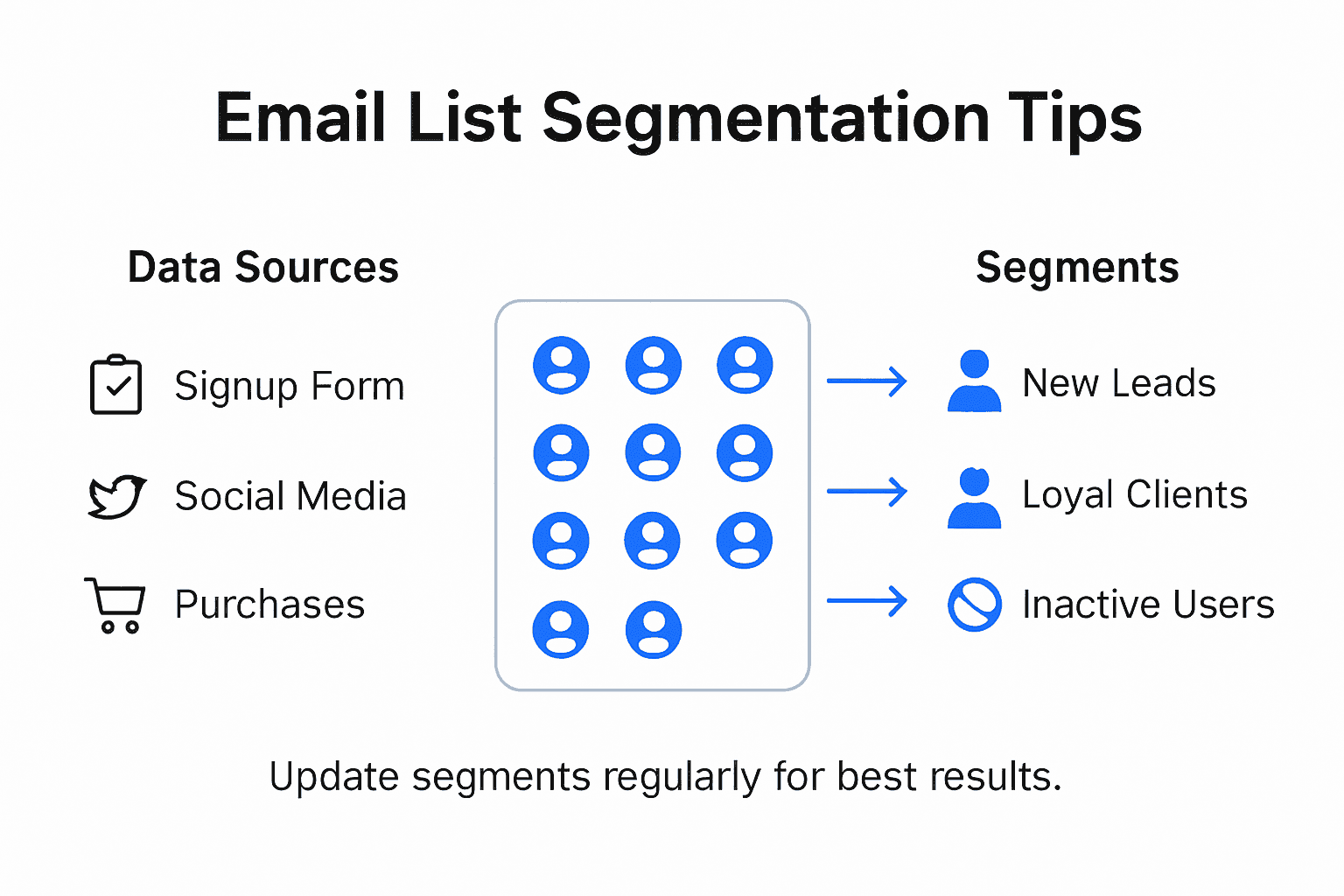
Start by collecting contact information through multiple channels such as website signup forms, social media lead generation, and in person events. Ensure you have explicit consent from each contact and include clear options for subscribers to manage their preferences. When gathering data, collect strategic information that will help you create meaningful segments such as industry, job role, previous purchase history, engagement level, and geographic location. Modern email marketing platforms allow you to create dynamic segments that automatically update based on specific conditions, enabling you to craft highly personalized communication strategies.
Implement segmentation filters that go beyond basic demographics. Consider behavioral triggers like website interactions, email engagement rates, and purchase patterns. For instance, you might create segments for new subscribers, loyal customers, at risk contacts, or potential upsell opportunities. By tailoring your messaging to each group’s specific characteristics and needs, you increase the likelihood of meaningful interactions and long term customer relationships.
Pro tip: Regularly clean and update your contact lists by removing inactive subscribers and ensuring data accuracy to maintain high deliverability rates and engagement.
Step 3: Craft Compelling Email Campaigns
Crafting compelling email campaigns is an art that combines strategic messaging, design, and psychological insight to capture your audience’s attention and drive meaningful action. Your goal is to create email content that resonates emotionally and intellectually with your target audience.
Start by developing a clear, benefit-driven narrative that speaks directly to your audience’s needs and aspirations. Your subject line is the first critical touchpoint that determines whether your email gets opened or ignored. Make it concise, intriguing, and value-oriented. Within the email body, focus on creating a logical flow that guides readers from initial interest to a specific call to action. Use persuasive language that highlights the unique benefits of your offering, addressing potential pain points and demonstrating how your solution can transform their business or personal experience.
Pay careful attention to visual design and layout. Your email should be easy to read across different devices, with a clean design that uses white space effectively and incorporates visually engaging elements. Break up text with subheadings, use bullet points to highlight key benefits, and include high-quality images or graphics that support your message. Ensure your call to action stands out with contrasting colors and clear, action-oriented language that compels readers to take the next step.
Pro tip: Always A/B test different subject lines, content layouts, and call to action designs to continuously optimize your email campaign performance.
Step 4: Automate and Schedule Email Sends
Automating and scheduling your email sends transforms your marketing strategy from manual effort to a streamlined, intelligent system that reaches customers at the most opportune moments. By implementing strategic email automation workflows, you can ensure consistent communication without constant manual intervention.
Start by mapping out your customer journey and identifying key trigger points for automated email sequences. These might include welcome emails for new subscribers, follow up messages after purchases, birthday greetings, or re-engagement campaigns for inactive contacts. Configure your email marketing platform to create rules that automatically send emails based on specific conditions such as user behavior, segment membership, or predefined time intervals. This approach allows you to deliver personalized content precisely when your audience is most likely to be receptive.
Choose automation triggers that align with your marketing objectives. For example, set up drip campaigns that progressively nurture leads, schedule monthly newsletters to keep your audience informed, or create re-engagement sequences for contacts who havent interacted with your content recently. Most modern email marketing platforms offer visual workflow builders that make it easy to design complex automation sequences without requiring advanced technical skills.
Here’s a comparison of common email automation workflows and their outcomes:
| Workflow Type | Trigger Event | Typical Goal |
|---|---|---|
| Welcome Series | New subscriber signup | Nurture brand awareness |
| Abandoned Cart | Unfinished purchase | Recover lost sales |
| Re-engagement | Extended inactivity | Revive dormant contacts |
| Post-Purchase Follow Up | Completed order | Encourage repeat buying |
Pro tip: Monitor your automated email performance regularly and adjust triggers and content to maintain high engagement rates and relevance.
Step 5: Analyze Campaign Performance
Analyzing your email marketing campaign performance is crucial for understanding what truly resonates with your audience and continuously improving your strategy. By tracking key metrics that reveal audience engagement, you can transform raw data into actionable insights that drive better results.
Focus on core performance indicators that provide meaningful insights into your email marketing effectiveness. Start with fundamental metrics like open rates, which reveal how compelling your subject lines are, and click through rates that show how engaging your email content appears to recipients. Dive deeper by examining conversion rates to understand how many subscribers are taking desired actions after reading your emails. Pay attention to unsubscribe rates as a critical signal of content relevance and list health. Compare these metrics across different campaigns to identify patterns and trends that can inform future email strategies.
Here’s a summary of essential email marketing metrics and their significance:
| Metric | What It Measures | Why It Matters |
|---|---|---|
| Open Rate | Percentage of recipients who open emails | Indicates subject line effectiveness |
| Click-Through Rate | Percentage clicking links in the email | Reveals content engagement level |
| Conversion Rate | Percentage completing desired actions | Measures campaign ROI |
| Unsubscribe Rate | Percentage opting out from your list | Signals content relevancy issues |
| Bounce Rate | Percentage not delivered to inboxes | Highlights list quality problems |
Utilize advanced analytics tools to segment your performance data and gain granular insights. Look beyond surface level numbers to understand subscriber behavior such as optimal send times, most effective content types, and which audience segments respond most positively to specific messaging approaches. Create comparative reports that track your performance over time, allowing you to benchmark improvements and identify areas requiring strategic adjustments.
Pro tip: Set up automated reporting dashboards that compile your key metrics weekly to streamline performance tracking and ensure consistent monitoring.
Boost Your Email Marketing with Smarter Automation Solutions
If you want to overcome the common challenges of managing email campaigns from list segmentation to automation, Go Online Now-Connect offers a simple, affordable all-in-one platform designed specifically for SMEs. This software combines marketing automation tools, email marketing automation, and an all-in-one CRM so you can streamline your contact management, nurture leads, and schedule targeted campaigns without juggling multiple complex systems.
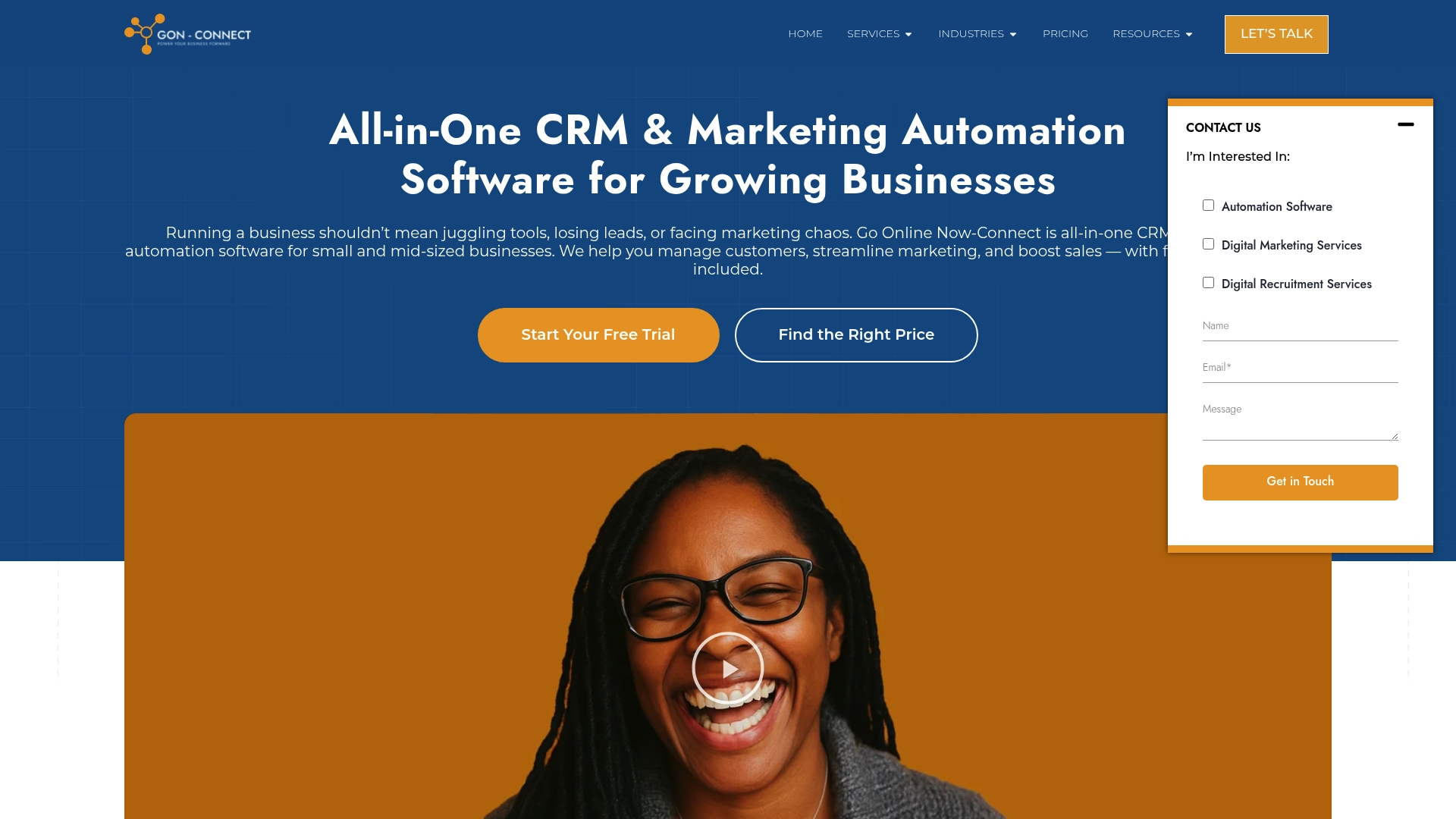
Take control of your email marketing strategy today by partnering with Go Online Now. Our done-for-you setup ensures your automations, funnels, and CRM are expertly configured so you can start seeing up to 85% more conversions while saving valuable time. Explore more about our digital marketing solutions and discover how we can support your growth from strategy to execution. Ready to grow smarter, not harder Visit Go Online Now and make your marketing automation work for you.
Frequently Asked Questions
How do I select the right email marketing platform for my SME?
Choosing the right email marketing platform involves evaluating features like contact management, campaign scheduling, and reporting tools. Look for a user-friendly interface and ensure it integrates with your existing business systems. Test multiple platforms using free trials to find the best fit for your marketing needs.
What are effective ways to segment my email contact lists?
To effectively segment your email contact lists, gather information about your subscribers through signup forms and identify criteria such as industry, job role, and engagement level. Use these insights to create targeted segments, like new subscribers or loyal customers, that allow for personalized communication. Regularly update your lists by removing inactive subscribers to maintain engagement.
What elements should I include in a compelling email campaign?
A compelling email campaign should include a clear subject line, engaging body content, and a strong call to action. Focus on benefits relevant to your audience and use visuals to enhance readability. Test different layouts and content to see what resonates best with your recipients.
How can I automate my email marketing process?
You can automate your email marketing by creating workflows that trigger emails based on specific user actions, like signing up or making a purchase. Identify automation opportunities in your customer journey, such as welcome emails and re-engagement messages. Set these up to ensure timely and relevant communication without extra manual work.
What metrics should I focus on when analyzing my email campaigns?
Key metrics to analyze include open rates, click-through rates, and conversion rates. These indicators reveal how effective your subject lines and content are. Focus on improving these metrics by tracking them regularly and adjusting your strategy based on performance data, ideally with automated reporting dashboards for ease.
How often should I clean and update my email contact lists?
You should aim to clean and update your email contact lists at least once every few months. Regularly remove inactive subscribers to enhance deliverability and improve engagement rates. By maintaining a healthy list, you can expect to see better performance in your email campaigns.