

Most American small businesses risk falling behind as digital marketing language grows more complex every year. With new terms emerging faster than ever, mastering the latest vocabulary is vital for making smart marketing decisions and outperforming competitors. Understanding how strategies like predictive personalization and conversational marketing are shaping 2025 helps you avoid confusion and recognize the real meaning behind the jargon. Nearly half of American business owners admit to feeling overwhelmed by marketing terminology, underlining why building vocabulary is no longer optional.
Defining Digital Marketing Terminology 2025
The digital marketing landscape continues to evolve at an unprecedented pace, transforming how small and midsize businesses (SMBs) connect with their audiences. Understanding the emerging terminology is no longer optional – it’s a strategic imperative. From artificial intelligence driven marketing techniques to sophisticated data analytics frameworks, the digital marketing terminology in 2025 represents a complex ecosystem of interconnected strategies and technologies.
Key terminologies emerging in 2025 include predictive personalization, conversational marketing, and zero-party data collection. These concepts represent sophisticated approaches that go beyond traditional marketing methods. Predictive personalization uses advanced machine learning algorithms to anticipate customer preferences before they explicitly express them. Conversational marketing leverages AI chatbots and interactive platforms to create real-time, personalized communication channels. Zero-party data collection emphasizes transparent, consent-based information gathering where customers voluntarily share their preferences.

The technological foundations of digital marketing are increasingly driven by machine learning and automated intelligence. Computational studies in influencer marketing suggest that micro-targeting and algorithmic content distribution will become more nuanced and precise. SMBs must understand emerging concepts like algorithmic reach, sentiment analysis, and contextual targeting to remain competitive. These technologies allow businesses to create hyper-personalized marketing experiences that resonate with specific audience segments.
Pro Tip for Digital Marketing Mastery: Continuously update your digital marketing vocabulary by dedicating 30 minutes weekly to reading industry publications, attending webinars, and following thought leaders in digital marketing innovation. This proactive approach will help you stay ahead of emerging terminologies and technological shifts.
Types of Digital Marketing Channels Explained
In 2025, digital marketing channels have become increasingly sophisticated, offering small and midsize businesses (SMBs) unprecedented opportunities to connect with their target audiences. Digital marketing channels represent diverse platforms and strategies designed to engage potential customers through multiple touchpoints, each with unique strengths and targeting capabilities.
The primary digital marketing channels can be categorized into several key areas: search engine marketing, social media marketing, email marketing, content marketing, and programmatic advertising. Search engine marketing focuses on increasing visibility through paid and organic search results. Social media marketing leverages platforms like Facebook, Instagram, LinkedIn, and TikTok to create targeted campaigns. Email marketing remains a powerful direct communication tool, allowing personalized messaging at scale. Content marketing involves creating valuable, relevant content to attract and retain a specific audience, while programmatic advertising uses automated technology to purchase digital advertising space.
Large language models are transforming digital advertising channels, enabling more intelligent and precise targeting strategies. These advanced technologies allow SMBs to create hyper-personalized marketing experiences that adapt in real-time to user behaviors and preferences. Emerging channels like voice search optimization, augmented reality marketing, and AI-driven chatbot interactions are becoming increasingly important, providing innovative ways to engage potential customers beyond traditional digital marketing approaches.
Here’s a comparison of key digital marketing channels and their main business advantages:
| Channel | Primary Purpose | Business Advantage |
|---|---|---|
| Search Engine Marketing | Improve search visibility | Attracts high-intent traffic |
| Social Media Marketing | Engage on social platforms | Builds brand communities |
| Email Marketing | Direct personalized outreach | Drives customer retention |
| Content Marketing | Provide valuable information | Positions brand as authority |
| Programmatic Advertising | Automated ad buying | Increases targeting efficiency |
| Voice Search Optimization | Capture voice-based queries | Adapts to emerging user behaviors |
| Augmented Reality Marketing | Interactive experiences | Boosts product engagement |
| AI-driven Chatbots | Real-time conversations | Improves customer service quality |
Pro Tip for Channel Selection: Prioritize digital marketing channels based on your specific audience demographics, testing and measuring performance through robust analytics to optimize your marketing investment and maximize return.
Key Marketing Automation and CRM Terms
In the rapidly evolving digital landscape of 2025, marketing automation and customer relationship management (CRM) have become essential strategic tools for small and midsize businesses. Marketing automation terminology reflects sophisticated technological capabilities that enable businesses to streamline complex customer interaction processes with unprecedented precision and efficiency.
Key marketing automation and CRM terms that SMBs must understand include lead scoring, customer segmentation, trigger-based marketing, predictive analytics, and omnichannel engagement. Lead scoring assigns numerical values to potential customers based on their interactions and likelihood of conversion. Customer segmentation involves categorizing customers into distinct groups based on specific behaviors, demographics, or preferences. Trigger-based marketing automatically initiates targeted communication when customers perform specific actions. Predictive analytics uses historical data to forecast future customer behaviors, while omnichannel engagement ensures consistent customer experiences across multiple platforms and touchpoints.
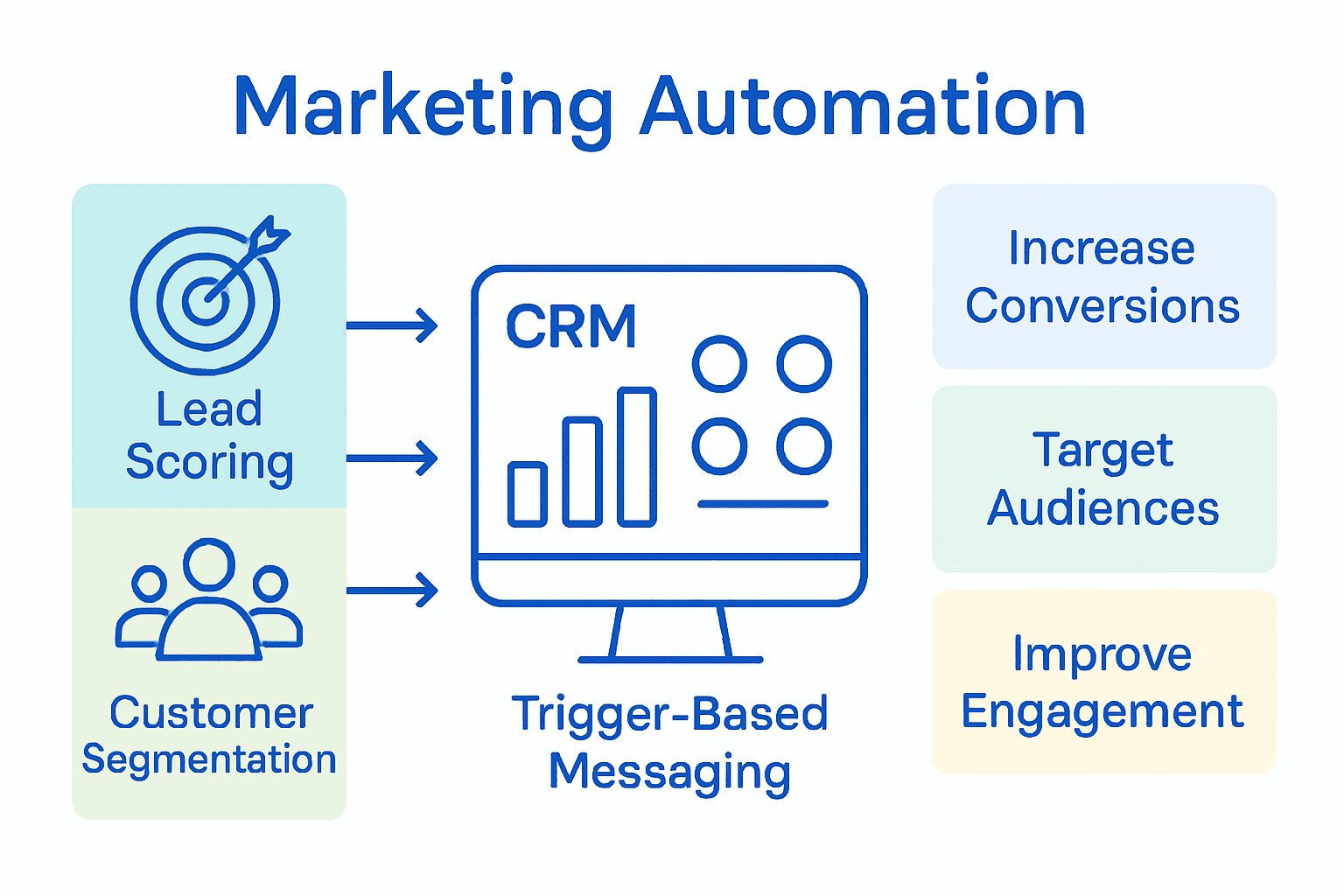
AI-driven frameworks are transforming marketing automation strategies, enabling hyper-personalized interactions that adapt in real-time to individual customer behaviors. Advanced CRM systems now incorporate machine learning algorithms that can predict customer needs, recommend personalized content, and automate complex communication workflows. Emerging technologies are making marketing automation more intelligent, allowing businesses to create more nuanced, responsive, and contextually relevant customer experiences that go far beyond traditional linear marketing approaches.
Pro Tip for Marketing Automation Mastery: Regularly audit and update your marketing automation workflows, ensuring that your technological capabilities align with evolving customer expectations and emerging technological trends.
This summary highlights how emerging marketing automation and CRM concepts impact SMB marketing effectiveness:
| Term | What It Enables | Impact on SMBs |
|---|---|---|
| Lead Scoring | Rank prospects by conversion | Focuses sales on best opportunities |
| Customer Segmentation | Group by shared traits | Tailors messages for better results |
| Trigger-based Marketing | Actions drive tailored outreach | Increases conversion on key actions |
| Predictive Analytics | Anticipate future behaviors | Improves campaign personalization |
| Omnichannel Engagement | Syncs across all platforms | Delivers seamless brand experience |
Emerging Trends Shaping SMB Marketing Vocabulary
The digital marketing landscape for small and midsize businesses continues to evolve at an unprecedented pace, driving significant transformations in marketing terminology and strategic approaches. Emerging marketing trends are fundamentally reshaping how SMBs communicate and engage with their target audiences, introducing a new lexicon that reflects technological innovation and changing consumer behaviors.
Key emerging trends are introducing sophisticated marketing vocabulary centered around contextual intelligence, predictive personalization, zero-party data, generative content, and adaptive marketing ecosystems. Contextual intelligence describes marketing strategies that understand and respond to real-time consumer context. Predictive personalization leverages advanced algorithms to anticipate customer preferences before explicit expression. Zero-party data represents voluntary consumer information shared transparently, contrasting with traditional data collection methods. Generative content involves AI-powered content creation that adapts dynamically to audience interactions, while adaptive marketing ecosystems represent interconnected technological platforms that continuously optimize marketing strategies.
Experimental AI tools are revolutionizing marketing language and capabilities, enabling small businesses to generate sophisticated marketing content and strategies with unprecedented speed and precision. These technological advancements are creating a new marketing vocabulary that emphasizes agility, personalization, and data-driven decision making. SMBs are increasingly adopting terminology that reflects a more intelligent, responsive approach to customer engagement, moving beyond traditional linear marketing communication models.
Pro Tip for Marketing Language Mastery: Continuously educate yourself and your team on emerging marketing technologies, dedicating at least one hour weekly to understanding new terminologies and technological capabilities that can transform your marketing approach.
Common Misconceptions and Costly Mistakes
Digital marketing for small and midsize businesses (SMBs) is fraught with potential pitfalls that can drain resources and undermine strategic efforts. The complexity of modern digital advertising platforms creates significant challenges for businesses, leading to numerous misconceptions that can result in substantial financial and strategic missteps.
Common misconceptions that can derail digital marketing efforts include believing more channels means better results, assuming technology solves everything, and neglecting data-driven decision making. Many SMBs mistakenly invest in multiple marketing platforms without a cohesive strategy, leading to fragmented communication and wasted resources. The fallacy that simply purchasing advanced technology will automatically improve marketing performance is particularly dangerous. Businesses often overlook the critical need for strategic implementation, proper training, and continuous performance analysis. Technology is a tool, not a magic solution – it requires thoughtful integration and ongoing optimization.
Technology adoption challenges continue to plague SMBs seeking growth opportunities, with cost and uncertainty about return on investment creating significant barriers. The most critical mistakes stem from a lack of strategic planning and an insufficient understanding of technological capabilities. SMBs frequently make costly errors by implementing technologies without clear objectives, failing to align digital tools with specific business goals, and not investing enough in team training and skill development. Successful digital marketing requires a holistic approach that balances technological investment with strategic thinking, continuous learning, and adaptive implementation.
Pro Tip for Avoiding Marketing Mistakes: Conduct a comprehensive quarterly audit of your digital marketing strategies, critically evaluating each tool, channel, and campaign against clear, measurable business objectives.
Master the Language of Digital Marketing with Go Online Now
Navigating the complex digital marketing terminology of 2025 can be overwhelming for SMBs striving to keep up with predictive personalization, marketing automation, and omnichannel engagement. If you feel challenged by scattered tools, costly platforms, or confusing jargon that slows down your growth, you are not alone. Small and midsize businesses need a simple, integrated solution that speaks their language and delivers real results.
Unlock the power of an all-in-one marketing automation software built just for SMBs. At Go Online Now, we combine marketing automation, CRM, digital marketing services, and recruitment in one affordable, easy-to-use platform with done-for-you setup and real human support. See why entrepreneurs and service providers trust us to replace complicated systems like HubSpot or Salesforce with a single solution that saves time, drives conversions, and grows their business smarter. Explore our Digital Marketing Archives – Go Online Now for insights and solutions. Start mastering marketing automation with confidence today. Visit https://goonlinenow.co and transform your approach to digital marketing now.
Frequently Asked Questions
What are some key digital marketing terms to know in 2025?
Important terms include predictive personalization, conversational marketing, and zero-party data collection, which emphasize advanced techniques that enhance customer engagement and data transparency.
How does predictive personalization work in digital marketing?
Predictive personalization uses machine learning algorithms to anticipate customer preferences and needs, allowing businesses to offer more relevant and tailored marketing messages before customers explicitly express them.
What is zero-party data, and why is it important for SMBs?
Zero-party data refers to information that customers voluntarily share with businesses, providing insights into their preferences and needs, which can lead to more effective marketing strategies and improved customer relationships.
How can small and midsize businesses benefit from AI in digital marketing?
AI can enhance targeting strategies, automate processes, and create hyper-personalized marketing experiences, allowing SMBs to engage customers more effectively and efficiently than traditional methods.