

Over 60 percent of American businesses report unclear goals as their top digital marketing hurdle. Without direction, even the most creative campaigns can struggle to deliver meaningful results. Whether you are building a brand or looking to drive more sales, understanding how to set clear objectives and target the right audience will set your strategy apart and help you outpace the competition.
Step 1: Define your business objectives
Defining clear business objectives is your strategic roadmap for digital marketing success. Your objectives transform vague aspirations into actionable, measurable targets that drive meaningful growth.

The SOSTAC framework provides an excellent approach for systematically establishing your business objectives. Start by aligning your digital marketing goals with your overall business strategy. Ask yourself critical questions: What specific outcomes do you want to achieve? Are you seeking to increase brand awareness, generate more leads, boost online sales, or improve customer engagement?
Using the OGSM framework, break down your objectives into clear components. Identify qualitative ambitions first, then translate them into quantitative targets. For instance, instead of saying “grow online presence,” specify “increase website traffic by 35% and convert 15% more leads within six months.” This precision transforms abstract goals into concrete milestones you can track and measure.
Pro Tip: Develop objectives that are SMART – Specific, Measurable, Achievable, Relevant, and Time-bound. This approach ensures your digital marketing strategy remains focused and results-oriented.
Here is a comparison of the SOSTAC and OGSM frameworks to help guide your digital marketing planning:
| Framework | Main Focus | Key Components | Ideal Use Case |
|---|---|---|---|
| SOSTAC | Strategic Planning | Situation, Objectives, Strategy, Tactics, Action, Control | Structuring comprehensive plans |
| OGSM | Goal Breakdown | Objectives, Goals, Strategies, Measures | Defining clear objectives and KPIs |
Step 2: Identify your ideal target audience
Identifying your ideal target audience is a critical step in developing an effective digital marketing strategy. This process allows you to focus your resources precisely where they will generate the most significant impact and return on investment.
Research demonstrates that advanced user targeting approaches can dramatically improve marketing effectiveness by helping businesses select the most promising audience segments. Start by developing a comprehensive audience profile that goes beyond basic demographics. Consider psychographic elements like values, interests, behaviors, pain points, and aspirations. Analyze your existing customer base to understand their common characteristics and preferences.
The probability density estimation methods provide sophisticated techniques for audience expansion and identification. Create detailed personas representing your ideal customers, mapping out their potential interactions with your brand. Use tools like customer surveys, website analytics, social media insights, and market research to gather rich, multidimensional data about your potential audience. Segment your audience based on factors such as age, income, geographic location, professional background, online behavior, and specific challenges they face.
Pro Tip: Continuously refine your target audience profile by tracking engagement metrics and soliciting direct feedback. Your ideal customer profile is not static and should evolve as your business and market conditions change.
Step 3: Integrate all-in-one marketing automation tools
Integrating comprehensive marketing automation tools is a game changing strategy for small and midsize businesses looking to streamline their digital marketing efforts. This step will help you consolidate your marketing technologies into a unified system that drives efficiency and growth.
The transformative potential of large language models has revolutionized marketing automation by enabling unprecedented personalization and real-time customer insights. When selecting and implementing your all-in-one marketing automation platform, focus on tools that offer seamless integration across multiple channels. Look for solutions that can synchronize email marketing, social media management, customer relationship management, analytics, and content creation into a single dashboard. Evaluate platforms based on their ability to automate repetitive tasks, generate intelligent customer segments, and provide actionable reporting.
Additionally, consider Generative Engine Optimization strategies to enhance your marketing automation effectiveness. This involves adapting your digital content to work optimally with AI-driven platforms, ensuring your marketing messages are discoverable and engaging across various digital ecosystems. Prioritize tools that offer flexible APIs, robust integration capabilities, and scalable features that can grow alongside your business.
Pro Tip: Before fully committing to a marketing automation platform, request a comprehensive demo and run a pilot program with a small segment of your marketing activities to assess real-world performance and compatibility with your existing systems.
Below is a summary of essential marketing automation tool features and their business benefits:
| Feature | Business Benefit | Example Use |
|---|---|---|
| Unified dashboard | Centralizes marketing activities | Monitor all campaigns in one place |
| Automated segmentation | Targets customers more precisely | Personalized email workflows |
| Real-time analytics | Enables rapid decision-making | Adjust ads based on performance |
| Scalable integration options | Supports future business growth | Adding new marketing channels |
Step 4: Create and execute multi-channel campaigns
Creating and executing multi-channel marketing campaigns is essential for reaching your target audience across diverse digital platforms. This strategic approach ensures your message resonates consistently while maximizing your brand’s visibility and engagement potential.
The SOSTAC framework provides a comprehensive roadmap for developing integrated marketing campaigns. Begin by conducting a thorough situation analysis to understand your market landscape, target audience behaviors, and competitive positioning. Map out clear objectives for each channel, ensuring that your messaging remains cohesive yet tailored to the specific platform. This might involve crafting platform specific content that speaks directly to the unique audience characteristics of social media, email, search advertising, and content marketing channels.
Leverage the OGSM framework to align your campaign strategies with overarching business goals. Break down your multi-channel approach into quantifiable objectives, defining specific goals for each platform. Track performance metrics across channels, creating a unified dashboard that allows you to monitor engagement, conversion rates, and return on investment. Implement a flexible strategy that enables real-time adjustments based on channel performance, ensuring your marketing efforts remain agile and responsive to audience interactions.
Pro Tip: Always create a central content repository that maintains brand consistency while allowing for platform specific adaptations, enabling your team to efficiently manage and distribute campaign materials across multiple channels.
Step 5: Measure results and optimize performance
Measuring and optimizing your digital marketing performance is crucial for driving continuous improvement and maximizing your return on investment. This step transforms raw data into actionable insights that will fuel your business growth.
The SOSTAC framework’s Control phase emphasizes systematic performance evaluation. Implement a comprehensive analytics approach that goes beyond surface level metrics. Track key performance indicators across all marketing channels including website traffic, conversion rates, customer acquisition costs, engagement levels, and revenue generated. Use advanced analytics tools that provide real time dashboards, allowing you to quickly identify trends, successes, and areas requiring immediate attention.
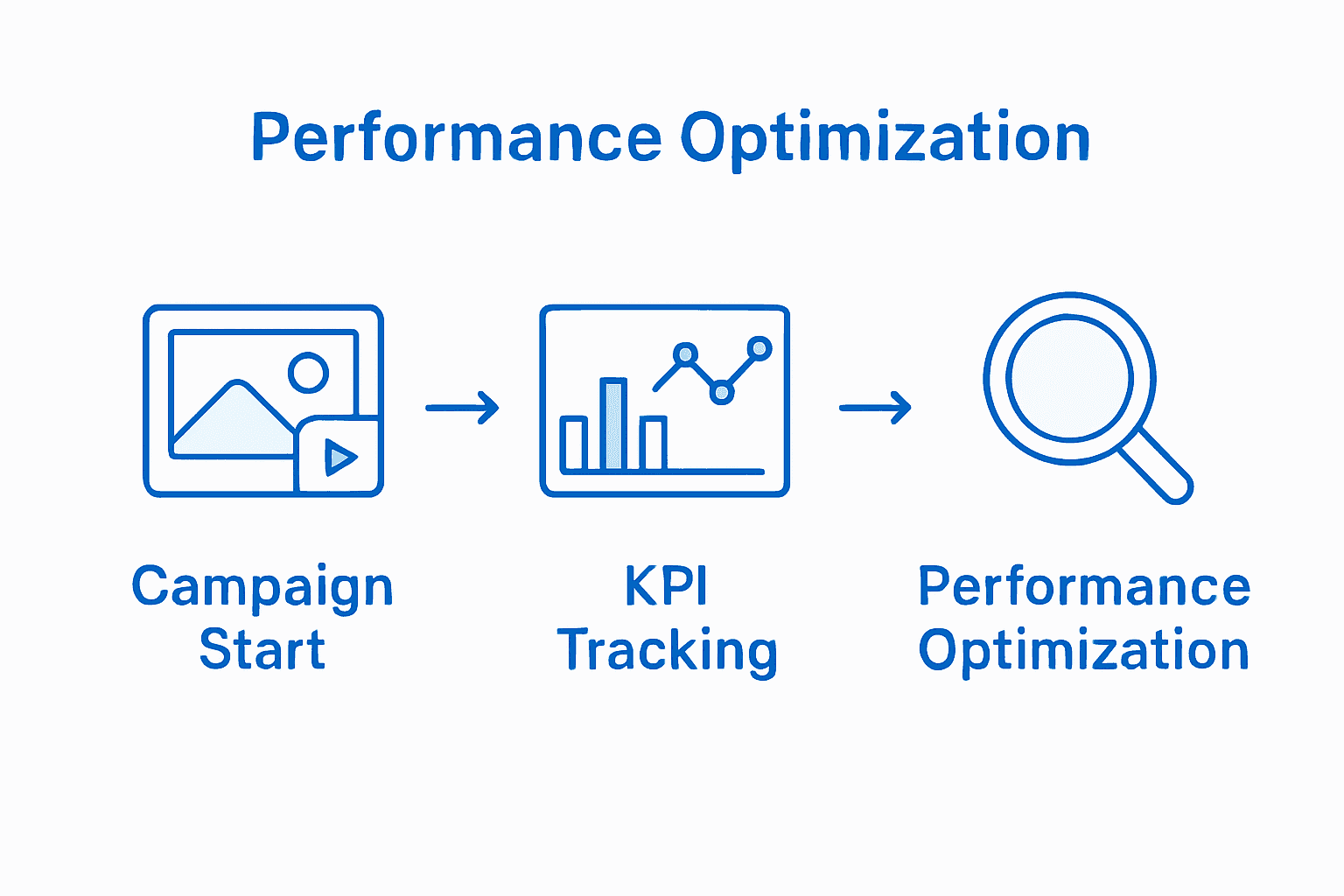
Leverage the OGSM framework’s Measures component to translate performance data into strategic actions. Develop a robust reporting system that not only captures numerical data but also provides contextual insights. Compare your results against predefined benchmarks and industry standards. Be prepared to make rapid adjustments to your marketing strategies based on performance metrics. This might involve reallocating budget, refining targeting parameters, or redesigning content that is not delivering expected results.
Pro Tip: Create a monthly performance review ritual where you conduct a deep dive into your analytics, inviting team members to contribute insights and collaborative optimization strategies.
Simplify Your Digital Marketing Strategy with One Powerful Solution
If you are feeling overwhelmed by the complex frameworks like SOSTAC and OGSM or struggling to keep your digital marketing campaigns aligned while targeting your ideal audience, you are not alone. Many SMB owners face challenges in integrating multi-channel campaigns, automating repetitive tasks, and measuring performance efficiently. The key pain points of juggling multiple tools and tracking numerous metrics can hold back your business growth and waste valuable time.
At Go Online Now, we understand these struggles and have created an all-in-one marketing automation software designed specifically for SMBs. Our platform unifies email marketing automation, CRM, lead management, and digital marketing services under one roof so you can implement clear, SMART objectives and agile optimization strategies without the technical headache. Imagine saving up to 75% of your time while boosting your conversions by up to 85% using a simple, affordable system with real human support.
Ready to take control of your digital marketing roadmap and accelerate your SMB success? Discover effective tools and expert guidance crafted for businesses just like yours in our Digital Marketing Archives – Go Online Now.
Experience how combining marketing automation software with done-for-you strategy and execution can transform your growth journey. Visit Go Online Now today and get started with a platform built to help you grow smarter, not harder. Explore more ways to boost your business efficiency from our Website Services Archives – Go Online Now and learn how professional virtual support can elevate your marketing efforts in our Virtual Assistance Archives – Go Online Now. Take the first step to winning your digital marketing game now.
Frequently Asked Questions
How can I define my business objectives for a digital marketing strategy in 2025?
To define your business objectives, start by identifying specific outcomes you want to achieve, such as increasing website traffic by 35% in six months. Break down these objectives using frameworks like SOSTAC or OGSM for clarity and precision.
What steps should I take to identify my target audience effectively?
Begin by developing detailed customer profiles, considering demographics, psychographics, and behavior patterns. Conduct surveys and analyze your existing customer data to refine your ideal target audience profile continuously.
How do I integrate marketing automation tools into my digital marketing strategy?
Choose an all-in-one marketing automation platform that allows for seamless integration across channels like email and social media. Test the selected platform with a pilot program to ensure it meets your business needs effectively before full implementation.
What is the best way to create multi-channel marketing campaigns?
Develop multi-channel campaigns by mapping out objectives for each platform while keeping your messaging consistent and tailored. Use the SOSTAC framework to ensure each channel’s strategy aligns with your overall business goals.
How do I measure and optimize the performance of my digital marketing efforts?
Establish a robust analytics system to track key performance indicators like conversion rates and engagement levels. Regularly review your performance metrics to identify areas for improvement, aiming to make data-driven adjustments at least once a month.