

Every real estate agency knows a single negative review can shift how clients see your brand online. Strong digital reputation is now a cornerstone of trust and business growth, especially as opinions, comments, and ratings across digital platforms shape client decisions. This guide breaks down practical and affordable reputation strategies, from systematic digital reputation mapping to authentic social engagement, so your agency can build credibility, attract more clients, and stand out in the competitive British property market.
Step 1: Assess Current Digital Reputation
Real estate firms must first understand their existing online image before making strategic improvements. Digital reputation mapping requires systematic investigation across multiple online platforms to reveal how potential clients perceive your brand.
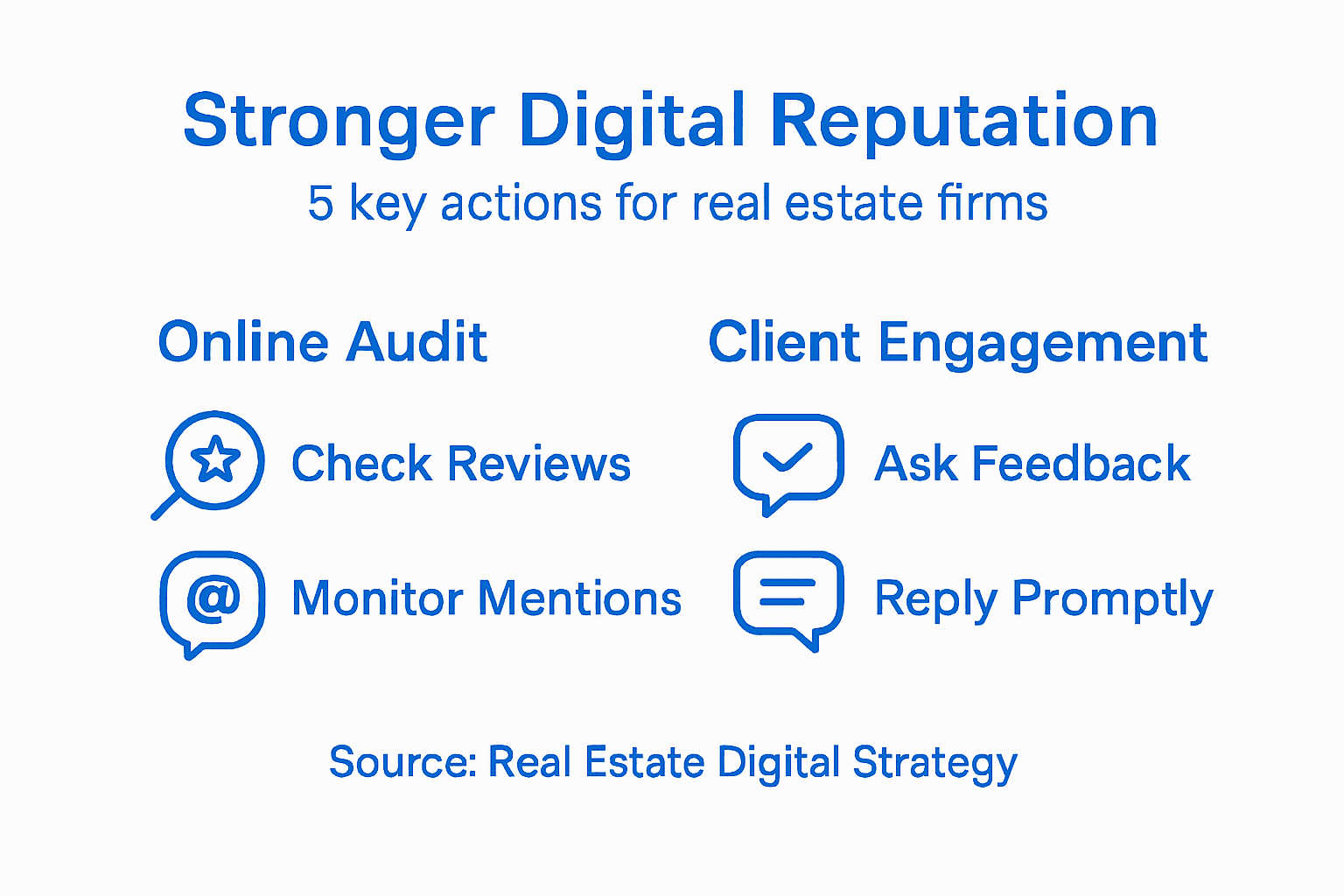
Start by conducting a comprehensive digital audit. Search your firm’s name on Google, review sites like Zillow and Yelp, and analyze social media mentions. Check your Google Business Profile ratings, Facebook reviews, and LinkedIn company page comments. Document every online reference to understand current perceptions. Pay special attention to review sentiment, response rates, and overall tone of client interactions.

Evaluate key metrics like average review scores, response time to online comments, and volume of mentions. Negative reviews or inconsistent messaging can significantly impact your digital reputation. Create a spreadsheet tracking these elements to establish a baseline for future improvement efforts.
Pro tip: Use free online reputation tracking tools to automate monitoring and receive real time alerts about new mentions or reviews about your real estate firm.
To help track digital reputation, consider these key metrics and their significance:
| Metric | What It Shows | Impact on Reputation |
|---|---|---|
| Average Review Score | Client satisfaction level | Higher scores attract more clients |
| Response Time | Customer service efficiency | Quick replies improve perception |
| Volume of Mentions | Brand visibility | More mentions increase awareness |
| Sentiment of Reviews | Public opinion | Positive sentiment drives leads |
Step 2: Claim and Optimize Key Online Profiles
Optimizing your real estate firm’s online presence requires strategically claiming and enhancing key digital platforms where potential clients search for property information. Industry data standards play a crucial role in ensuring your online profiles appear professional and trustworthy.
Start by identifying and claiming your business profiles on essential platforms like Google Business Profile, Zillow, Yelp, LinkedIn, Facebook, and specialized real estate directories. Verify each profile and update them with consistent contact information, high quality professional photos, current service descriptions, and comprehensive business details. Ensure your firm name, address, phone number, and website URL are identical across all platforms to boost search engine credibility.
Implement real estate CRM software to centralize and automate profile management. These tools help track client interactions, maintain updated information, and streamline communication across multiple platforms. Regular profile updates demonstrate your commitment to transparency and professionalism, helping potential clients trust your brand.
Pro tip: Set calendar reminders to review and refresh your online profiles quarterly to maintain accuracy and showcase your most current achievements and services.
Here’s a useful summary of essential online platforms for real estate firms:
| Platform | Primary Benefit | Recommended Actions |
|---|---|---|
| Google Business | Boosts local search visibility | Verify profile; update contact info |
| Zillow | Attracts property buyers | Claim business; showcase listings |
| Yelp | Builds trust via reviews | Monitor ratings; respond professionally |
| Drives community engagement | Post regularly; interact with users | |
| Highlights professionalism | Update company page; share updates | |
| Real Estate Directories | Improves industry reach | Complete profiles; ensure accuracy |
Step 3: Encourage and Manage Client Reviews
Building a strong digital reputation requires proactively encouraging and professionally managing client reviews across multiple platforms. Consumer review regulations provide important guidelines for real estate firms seeking to maintain transparent and ethical review practices.
Develop a systematic approach to soliciting reviews by creating a seamless process for satisfied clients. Send personalized follow up emails or text messages shortly after successful property transactions. Include direct links to review platforms like Google, Zillow, and Yelp to make leaving feedback easy. Train your team to request reviews naturally during client interactions without applying pressure. Consider offering small incentives like entry into a gift card drawing for clients who take time to share their experiences.
Respond to all reviews strategically and professionally. Effective review management involves crafting thoughtful replies that demonstrate your commitment to client satisfaction. For positive reviews, keep responses brief and appreciative. For negative reviews, address specific concerns with empathy, offer solutions, and invite further discussion offline. Always maintain a calm and constructive tone that shows your firm values client feedback and continuous improvement.
Pro tip: Create a template for review responses that can be quickly customized while maintaining a consistent professional voice across all platforms.
Step 4: Engage Authentically on Social Platforms
Building a credible online presence requires strategic and genuine interaction across social media channels. Social media marketing strategy demands more than casual posting it requires thoughtful planning and consistent execution.
Develop a content strategy that showcases your real estate expertise while maintaining a personal touch. Share valuable insights about local market trends, home buying tips, and property investment advice. Use a mix of professional photography, short video tours, client success stories, and informative infographics. Engage with followers by responding promptly to comments, asking questions, and creating interactive content that encourages meaningful dialogue. Avoid overly promotional language and focus on providing genuine value that positions your firm as a trusted local real estate resource.
Maintain a consistent professional presence by strengthening your social media approach. Network with local business professionals, comment thoughtfully on industry discussions, and share content that reflects your firm’s values and community involvement. Track your social media analytics to understand what content resonates most with your audience and adjust your strategy accordingly.
Pro tip: Create a content calendar that balances informative posts, client testimonials, market insights, and personal team highlights to maintain variety and audience engagement.
Step 5: Monitor Progress and Adjust Strategies
Digital reputation management requires continuous tracking and strategic refinement. Integrated risk management approaches help real estate firms proactively identify potential reputation challenges and opportunities for improvement.
Implement comprehensive monitoring tools that track online mentions, social media interactions, review platforms, and website analytics. Set up Google Alerts for your firm’s name and key team members. Use social listening platforms to capture sentiment across different channels. Analyze metrics like review ratings, engagement rates, website traffic, and response times. Pay close attention to trends in client feedback and look for patterns that might indicate areas needing improvement or potential strengths to highlight.
Schedule monthly review sessions to assess your digital reputation performance. Social media reputation strategies demand regular evaluation and adaptation. Compare current metrics against baseline measurements from your initial assessment. Identify what content resonates most with your audience, which platforms generate the most engagement, and where potential reputation risks might be emerging. Be prepared to adjust your communication approach, content strategy, and response protocols based on these insights.
Pro tip: Create a standardized monthly report template that tracks key reputation metrics to streamline your monitoring and strategic adjustment process.
Elevate Your Real Estate Firm’s Digital Reputation with Expert Support
Improving your firm’s digital reputation is essential to attract more clients and grow your business smarter. This article highlights key challenges like managing client reviews, optimizing your online profiles, and monitoring your brand sentiment consistently. Go Online Now-Connect offers everything you need to tackle these pain points in one affordable system. Our platform combines powerful marketing automation tools with a unified CRM designed to simplify lead management and reputation growth—all backed by real human support and done-for-you setup.

Don’t let scattered tools and complex setups slow your progress. Take advantage of expert digital marketing strategies tailored for real estate firms by exploring our Digital Marketing Archives – Go Online Now. You can also streamline client communication and reputation management with our all-in-one CRM and automation platform at https://goonlinenow.co. Ready to stop juggling multiple platforms and start growing faster with confidence? Get started today and transform your digital reputation into your strongest asset.
Frequently Asked Questions
How can I assess my real estate firm’s current digital reputation?
To assess your digital reputation, conduct a comprehensive audit by searching for your firm online across platforms like Google, Zillow, Yelp, and social media. Document average review scores and sentiment to establish a baseline for future improvements.
What steps should I take to optimize my online profiles?
Begin by claiming and verifying your business profiles on essential platforms such as Google Business Profile and Zillow. Update these profiles with consistent contact information and engaging visuals to enhance professionalism and attract potential clients.
How do I encourage clients to leave reviews for my real estate firm?
To encourage clients to leave reviews, create a seamless process by sending personalized follow-up emails or texts shortly after successful transactions. Include direct links to review platforms and consider offering small incentives to motivate clients to share their experiences.
What strategies can I use to engage on social media effectively?
Develop a content strategy that includes sharing helpful insights about the real estate market and engaging with your audience. Respond to comments promptly and create interactive content to foster genuine connections and enhance your firm’s visibility.
How can I monitor and adjust my digital reputation management strategies?
Monitor your digital reputation by regularly tracking online mentions, review ratings, and engagement metrics. Set up a monthly review session to assess performance and identify areas for improvement or strengths to highlight, adjusting your strategies accordingly.
Recommended
- Improving Online Reputation Process for Business Growth – Go Online Now
- Most Effective Real Estate Digital Marketing Strategies
- Value of Online Reputation Management for Business Owners
- Managing Your Institution’s Digital Reputation | Go Online Now
- Yigal Realty
- 7 Schritte zur perfekten Checkliste für Immobilienbesitzer