

Traditional hiring methods leave many service-based SMEs struggling to compete with American giants and larger British corporates. In today’s market, the race for top talent is fierce, and more than 80 percent of UK SMEs want digital recruitment tools to keep up. Adopting advanced technologies means faster, fairer hiring that finally puts smaller organisations on a level playing field. This guide breaks down what digital recruitment really means and how it gives your company a hiring advantage.
Defining Digital Recruitment for SMEs
Digital recruitment represents a strategic transformation in how small and medium enterprises (SMEs) identify, attract, and hire talent in the modern workforce. Unlike traditional recruitment methods, this approach leverages technology, data analytics, and online platforms to streamline hiring processes and connect with potential candidates more effectively. Strategic recruitment practices now extend beyond simple job postings, becoming a critical mechanism for organizational adaptation and digital transformation.
At its core, digital recruitment encompasses a comprehensive set of technological tools and strategies designed to modernize talent acquisition. These methods include online job boards, social media recruiting, applicant tracking systems, video interviewing platforms, and AI-powered candidate screening technologies. For SMEs, these digital solutions offer significant advantages: reduced hiring costs, wider candidate reach, faster screening processes, and more data-driven decision-making. By implementing digital recruitment strategies, smaller organizations can compete more effectively in attracting top talent against larger corporations.

The landscape of digital recruitment is rapidly evolving, driven by technological advancements and changing workforce dynamics. Recruitment procedures in SMEs now require a nuanced understanding of digital platforms, candidate experience, and technological integration. Key components include robust online employer branding, seamless application processes, automated candidate communication, and sophisticated talent matching algorithms. These technologies enable SMEs to conduct more efficient, transparent, and inclusive recruitment efforts that align with modern workforce expectations.
Pro Tip: Invest in user-friendly recruitment software that integrates multiple hiring channels and provides analytics to continuously improve your talent acquisition strategy.
Key Technologies and Types of Solutions
Modern digital recruitment technologies offer SMEs a powerful toolkit for transforming their talent acquisition strategies. Artificial intelligence tools have emerged as a game-changing solution, providing sophisticated capabilities that enable smaller organizations to compete effectively in the talent marketplace. These technologies range from advanced resume screening algorithms to intelligent candidate matching systems, allowing SMEs to process large volumes of applications with unprecedented speed and accuracy.
The digital recruitment technology ecosystem comprises several key solution types designed to address specific hiring challenges. Online job platforms and applicant tracking systems form the foundational layer, enabling businesses to post jobs, collect applications, and manage candidate information efficiently. More advanced solutions include video interviewing platforms, AI-powered screening tools, and predictive analytics systems that can assess candidate potential beyond traditional metrics. Digital recruitment innovations like gamification and interactive online assessments are also transforming how SMEs evaluate candidate skills and cultural fit, providing more nuanced insights into potential employee performance.
Specific technological solutions in digital recruitment can be categorized into several strategic groups. Candidate sourcing technologies help identify potential talent through social media integration and professional network scanning. Screening and assessment tools leverage machine learning to evaluate candidate qualifications, predicting job performance with increasing sophistication. Communication platforms streamline interactions, using chatbots and automated messaging to keep candidates engaged throughout the recruitment process. These integrated technologies not only reduce administrative burden but also help SMEs make more data-driven, objective hiring decisions.
Pro Tip: Conduct a comprehensive audit of your current recruitment technology stack and identify gaps where AI-powered solutions could streamline your hiring process and improve candidate quality.
Here’s how key digital recruitment technologies compare for SMEs:
| Technology Type | Main Feature | Time Savings | Impact on Hiring Quality |
|---|---|---|---|
| Job Boards | Broad posting reach | Moderate | Large candidate pool |
| Applicant Tracking | Automated application sorting | High | Consistent data management |
| Video Interviews | Remote candidate evaluation | Moderate | Improved flexibility |
| AI Screening Tools | Intelligent resume review | Very high | Enhanced candidate matching |
| Predictive Analytics | Candidate potential assessment | High | Data-driven decisions |
How Digital Recruitment Streamlines Hiring
Digital recruitment technologies fundamentally transform hiring processes by dramatically reducing administrative overhead and accelerating candidate selection. Procedural efficiency improvements enable SMEs to move beyond traditional time-consuming recruitment methods, replacing manual screening with intelligent, data-driven approaches. By automating repetitive tasks like resume filtering, initial candidate communication, and preliminary assessments, these technologies free up HR professionals to focus on strategic hiring decisions and candidate relationship management.
The streamlining process encompasses multiple strategic dimensions. AI-driven recruitment technologies automate complex screening processes, using sophisticated algorithms to match candidate profiles against job requirements with unprecedented accuracy. Automated systems can evaluate hundreds of applications simultaneously, assessing qualifications, skills, and potential cultural fit in a fraction of the time required by traditional methods. These technologies significantly compress recruitment timelines, allowing SMEs to identify and engage top talent more quickly and efficiently than ever before.
Digital recruitment solutions also enhance candidate experience through seamless, technology-enabled interactions. Automated communication platforms provide instant updates, schedule interviews, and maintain engagement throughout the hiring process. Advanced video interviewing tools and online assessment platforms enable flexible, location-independent candidate evaluations. By reducing friction and administrative complexity, these technologies create a more transparent, responsive, and candidate-friendly recruitment ecosystem that helps SMEs attract higher-quality talent and build stronger employer brands.
Pro Tip: Implement a digital recruitment workflow that integrates multiple technologies and regularly analyze your recruitment metrics to continuously optimize your hiring process.
Cost, Efficiency, and Time Implications
Digital recruitment technologies deliver transformative economic benefits for small and medium enterprises, fundamentally reshaping traditional hiring economics. Digital assessment strategies dramatically reduce recruitment costs by eliminating manual screening processes and minimizing time-intensive administrative tasks. By automating candidate evaluation, SMEs can significantly lower per-hire expenses, with some organizations reporting up to 40% reduction in recruitment expenditures compared to traditional hiring methods.
AI-powered recruitment platforms accelerate hiring timelines by compressing multi-stage recruitment cycles from weeks to days. Automated screening algorithms can process hundreds of applications simultaneously, identifying top candidates with unprecedented speed and precision. This efficiency translates directly into tangible business value: reduced vacancy periods, faster team scaling, and minimized productivity losses associated with prolonged recruitment processes. Small businesses particularly benefit from these technologies, which enable lean HR teams to compete effectively with larger organizations in talent acquisition.
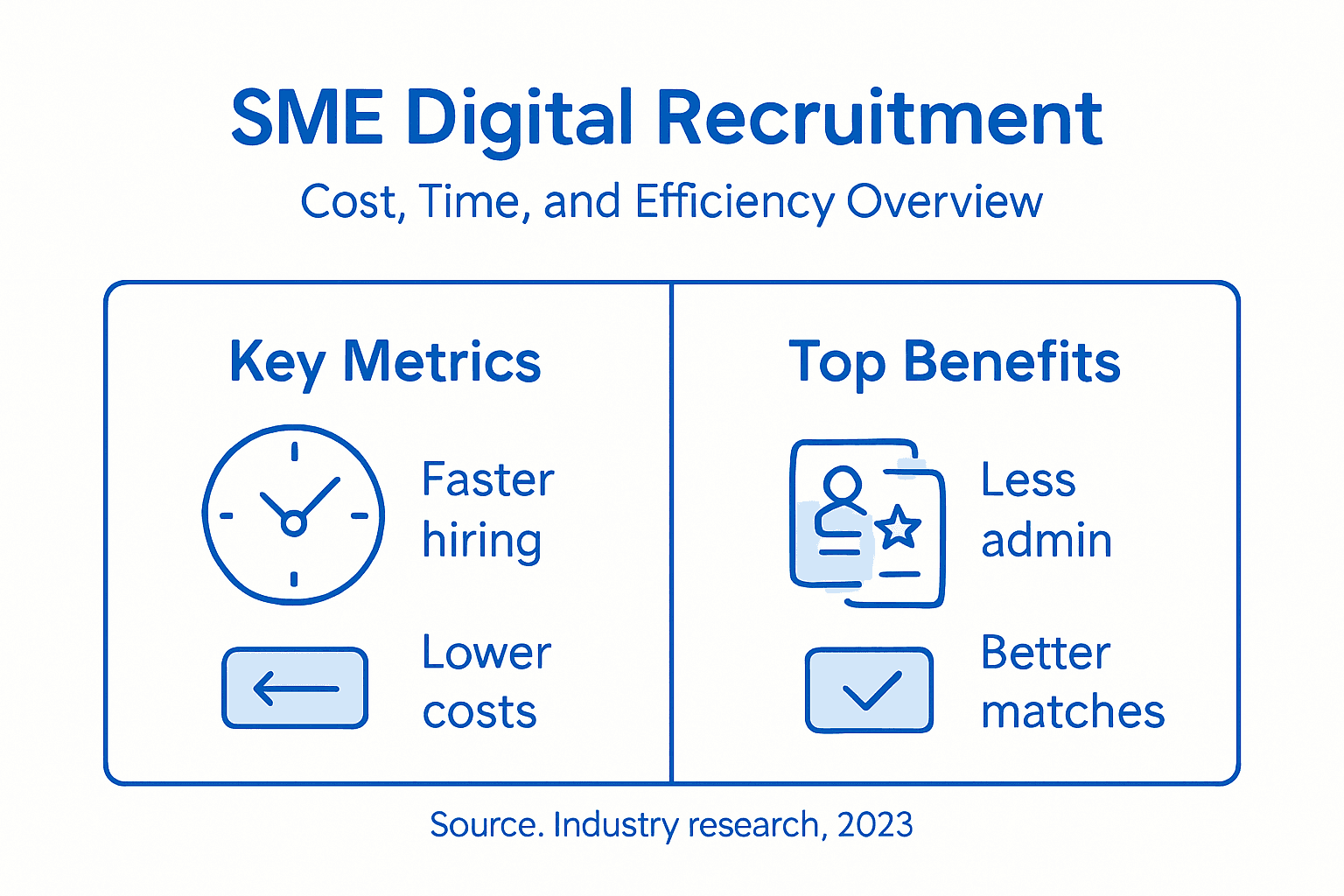
Beyond direct cost savings, digital recruitment technologies generate substantial indirect economic advantages. Sophisticated matching algorithms reduce potential hiring mistakes by objectively evaluating candidate skills, experience, and cultural fit. This precision mitigates expensive turnover risks and improves long-term workforce stability. Advanced analytics embedded in these platforms also provide actionable insights into recruitment performance, allowing SMEs to continuously optimize their hiring strategies and allocate resources more strategically. The result is a more intelligent, data-driven approach to talent acquisition that balances economic efficiency with quality candidate selection.
Pro Tip: Calculate your current recruitment cost per hire and compare it against potential digital recruitment solutions to quantify potential savings and efficiency gains.
Risks, Challenges, and Common Pitfalls
Recruitment challenges in SMEs reveal complex technological and organizational barriers that can undermine digital recruitment efforts. Small businesses often lack the resources, technological infrastructure, and specialized expertise required to implement sophisticated digital hiring solutions effectively. This resource gap creates significant implementation challenges, with many organizations struggling to integrate new technologies seamlessly into existing HR workflows. The risk of poorly executed digital recruitment strategies can potentially negate the intended efficiency gains, creating more complexity instead of simplification.
AI-driven recruitment risks introduce critical concerns around algorithmic bias, data privacy, and potential discrimination in candidate selection processes. Automated screening tools can inadvertently perpetuate systemic biases if not carefully designed and continuously monitored. SMEs must be particularly vigilant about understanding the underlying algorithms, ensuring transparent decision-making processes, and maintaining human oversight. The most significant pitfall lies in treating digital recruitment tools as complete replacements for human judgment, rather than collaborative technologies that enhance human decision-making capabilities.
Technological adoption challenges extend beyond technical implementation. Cultural resistance within organizations can significantly impede successful digital recruitment transformation. HR teams and management may feel threatened by new technologies, perceiving them as potential job replacements rather than productivity enhancers. Additionally, employees might lack the necessary digital skills to leverage these advanced recruitment platforms effectively. Successful digital recruitment requires comprehensive change management strategies, including robust training programs, clear communication about technological benefits, and gradual, strategic implementation that allows teams to adapt and develop confidence in new systems.
Pro Tip: Conduct a comprehensive digital readiness assessment before implementing new recruitment technologies, evaluating your organization’s technological infrastructure, skill levels, and change management capacity.
Common risks and required safeguards for SME digital recruitment adoption:
| Challenge | Typical Risk | Recommended Safeguard |
|---|---|---|
| Resource constraints | IT and budget limits | Choose scalable solutions |
| Algorithmic bias | Unintended discrimination | Regular system audits |
| Data privacy | Candidate information exposure | Implement strict data policies |
| Cultural resistance | Staff reluctance | Provide training and support |
Simplify Your Digital Recruitment and Grow Smarter Today
Struggling with complex hiring processes and the challenge of finding qualified talent for your SME This article highlights how digital recruitment can streamline your hiring while saving time and costs. If you want to overcome common pitfalls like resource constraints and technology adoption challenges Go Online Now-Connect offers a simple yet powerful solution tailored for SMBs and SMEs looking to enhance recruitment with smart automation and expert support.
Our all-in-one platform seamlessly integrates marketing automation software, CRM, and specialized digital recruitment solutions to help you find the right digital professionals worldwide without the hassle and high costs associated with over-engineered tools. Backed by real human support and a done-for-you setup you get a transparent system designed to save up to 75% of your time and dramatically improve hiring quality.
Discover how simple hiring can be by combining efficient recruitment with marketing and customer management in one place Explore our Digital Marketing Archives – Go Online Now to see how connected strategies boost growth. Ready to transform your hiring process Visit Go Online Now to get started with the most affordable and effective digital recruitment platform crafted for your business needs.
Frequently Asked Questions
What is digital recruitment in SMEs?
Digital recruitment in SMEs refers to the use of technology, data analytics, and online platforms to improve how small and medium enterprises identify, attract, and hire talent. It includes practices like online job postings, social media recruiting, and AI-powered candidate screening.
How can digital recruitment streamline the hiring process for SMEs?
Digital recruitment streamlines hiring by automating repetitive tasks such as resume filtering and initial candidate communication, allowing HR professionals to focus on strategic decisions and candidate relationships. This leads to reduced recruitment timelines and improved candidate experiences.
What are the key technologies used in digital recruitment?
Key technologies in digital recruitment include applicant tracking systems, AI-driven screening tools, video interviewing platforms, and predictive analytics systems. These tools enhance efficiency in candidate sourcing, assessment, and communication.
What are the challenges SMEs face when implementing digital recruitment?
SMEs face challenges such as resource constraints, algorithmic bias, data privacy concerns, and cultural resistance to new technologies. Effective implementation requires careful planning, training, and ongoing support to ensure smooth integration into existing HR workflows.
Recommended
- How Digital Recruitment Works: Complete Guide for SMBs – Go Online Now
- Complete Guide to Digital Recruitment Solutions – Go Online Now
- Digital Recruitment Solutions Explained: Complete Guide – Go Online Now
- 7 Effective Examples of Digital Recruitment Strategies – Go Online Now
- why automate job interviews – ParakeetAI