

Over 60 percent of American businesses miss out on valuable leads by not refining their strategy at every stage. Identifying your ideal audience, optimizing digital touchpoints, and leveraging the right tools can make the difference between stagnant growth and steady new customer flow. Clear steps, proven by data and trusted sources, can help any American entrepreneur transform casual website visitors into loyal customers with far less guesswork.
1. Define Your Target Audience Clearly
Successful marketing starts with understanding exactly who you want to reach. Your target audience is the specific group of potential customers most likely to be interested in your products or services.
Businesses that precisely identify their target audience gain a significant competitive advantage. By analyzing demographic factors like age, income level, location, and cultural background, you can create marketing strategies that speak directly to your ideal customers.
To define your target audience effectively, start by examining your current customer base. Look for common characteristics such as age range, professional sector, spending habits, and personal interests. These insights help you create detailed customer personas that represent your most valuable potential clients.
Consider conducting market research through surveys, interviews, and data analysis. The CDC recommends asking key questions like ‘Who am I trying to reach?’ and ‘What am I trying to tell them?’ This approach helps you develop a crystal-clear understanding of your audience’s needs, challenges, and motivations.
Pro tip: Create a detailed audience profile document with at least 5-7 specific characteristics that define your ideal customer. Review and update this profile quarterly to ensure your marketing strategies remain aligned with your target market’s evolving preferences.
2. Optimize Landing Pages for Conversion
Your landing page is the digital gateway to converting website visitors into potential leads. An effectively designed landing page can dramatically increase your business’s ability to capture and engage potential customers.
The University of San Francisco emphasizes the critical elements of high-performing landing pages, including creating clear calls to action and minimizing distractions. Your landing page should have a singular, focused purpose that guides visitors toward taking a specific action.
Key strategies for optimizing landing pages include developing a compelling headline that immediately communicates your value proposition, designing a clean and intuitive layout, and embedding user-friendly contact forms. Web design experts highlight the importance of avoiding common conversion-killing mistakes such as slow loading times and poor mobile responsiveness.
To maximize conversion potential, implement these actionable tactics: use high-contrast color schemes that draw attention to key elements, include social proof like customer testimonials, and ensure your value proposition is clear within the first few seconds of a visitor’s arrival. Simplify your form fields to reduce friction and only request essential information.
Pro tip: Conduct A/B testing on different landing page elements such as headlines, images, and call-to-action buttons to continuously improve your conversion rates. Small incremental changes can lead to significant improvements in lead generation performance.
3. Set Up Automated Lead Capture Forms
Automated lead capture forms are your digital sales team’s first point of contact with potential customers. These strategic tools transform casual website visitors into actionable leads by simplifying the information collection process.
Lead management fundamentals begin with understanding how to design forms that are both user friendly and conversion optimized. The University of San Francisco recommends embedding forms directly on landing pages to streamline lead capture and improve conversion rates.
When creating automated lead capture forms, focus on minimizing friction by requesting only essential information. A typical form should include fields for name, email address, and potentially one additional relevant detail specific to your business. WebDesign.org emphasizes the importance of creating call-to-action buttons that are visually distinct and easy to understand.
Implement smart form design strategies like using progressive profiling, which allows you to collect additional information gradually over multiple interactions. This approach reduces initial resistance and increases the likelihood of form completion. Consider offering a valuable resource like an ebook or webinar in exchange for contact information to incentivize submissions.
Pro tip: Use form analytics tools to track abandonment rates and continuously test different form layouts, field placements, and button designs to maximize your lead capture success rate.
4. Create Value-Driven Lead Magnets
Lead magnets are strategic resources that attract potential customers by offering genuine value in exchange for contact information. These powerful tools transform casual website visitors into qualified leads by addressing specific audience needs.
WebDesign.org emphasizes the importance of crafting strong value propositions that clearly articulate unique benefits and solve customer challenges. An effective lead magnet must be laser focused on delivering tangible solutions to your target audience’s most pressing problems.
Successful lead magnets come in various formats including ebooks, webinars, checklists, templates, free consultations, and industry research reports. Sales funnel strategies work best when the lead magnet directly aligns with your core business offerings and demonstrates expertise in your field.
When designing your lead magnet, focus on creating high quality content that provides immediate practical value. Ethical Gains recommends using clear compelling copy and professional images that visually communicate the resource’s benefits. Your lead magnet should be specific, actionable, and designed to showcase your unique approach to solving customer challenges.
Pro tip: Develop multiple lead magnets targeting different stages of your customer journey, allowing you to capture leads with varying levels of interest and engagement in your products or services.
5. Nurture Leads with Automated Email Sequences
Automated email sequences are your strategic pathway to transforming interested prospects into committed customers. These carefully crafted communication streams help guide potential clients through their buying journey with personalized, timely interactions.
The University of San Francisco recommends integrating prospects into comprehensive drip campaigns that include email marketing, event notifications, and strategic follow-ups. These sequences allow businesses to maintain consistent engagement without requiring constant manual intervention.
Lead nurturing strategies should focus on delivering value at each stage of the customer journey. Design your email sequence to provide educational content, address potential objections, and gradually build trust. WebDesign.org emphasizes the critical importance of including clear and compelling calls to action that guide leads smoothly through the conversion funnel.
A typical effective email sequence might include a welcome email, 2 3 educational content emails, a case study or testimonial email, and a final conversion focused message. Segment your email lists based on lead behavior, interests, and engagement levels to ensure maximum relevance and personalization.
Pro tip: Implement an automated email tracking system that allows you to monitor open rates, click through rates, and engagement metrics, enabling continuous refinement of your nurturing strategy.
6. Track Leads with an All-in-One CRM
A Customer Relationship Management (CRM) system is the central nervous system of your lead generation strategy. It transforms scattered lead information into a powerful, actionable intelligence platform that drives business growth.
The University of San Francisco emphasizes the importance of embedded tracking mechanisms to monitor lead interactions and conversions effectively. An all-in-one CRM enables you to capture, organize, and analyze every touchpoint in your customer journey.
Play Media highlights critical metrics that businesses should track, including bounce rate, time on page, and form completion rates, which provide insights into lead engagement and potential conversion opportunities. A robust CRM allows you to aggregate these metrics in one intuitive dashboard, eliminating the need for multiple disconnected tools.
Key features to look for in a CRM include contact management, lead scoring, automated follow-up capabilities, integration with marketing platforms, and real time analytics. By consolidating your lead tracking into a single system, you can create more personalized communication strategies and identify the most promising prospects more efficiently.
Pro tip: Implement a lead scoring system within your CRM that automatically ranks prospects based on their interactions, helping your sales team prioritize high potential leads and optimize their time and resources.
7. Measure and Refine Your Lead Generation Strategy
Constant measurement and strategic refinement are the keys to sustainable lead generation success. Your marketing efforts are only as good as the insights you can extract and the improvements you can implement.
Oregon State University recommends conducting systematic A/B tests to determine which modifications to marketing strategies produce the best conversion outcomes. This approach allows businesses to make data driven decisions rather than relying on guesswork or intuition.
Lead generation techniques require ongoing analysis of key performance indicators such as conversion rates, cost per lead, lead quality, and return on investment. Start by establishing baseline metrics and then continuously experiment with different approaches to improve each parameter.
Essential metrics to track include website visitor to lead conversion rate, email open and click through rates, landing page performance, social media engagement, and lead to customer conversion percentage. Create a dashboard that consolidates these metrics, allowing you to quickly identify trends, strengths, and areas requiring improvement.
Pro tip: Schedule a monthly review meeting dedicated to analyzing your lead generation performance, where you critically examine your metrics, discuss potential optimization strategies, and align your team around data driven improvement goals.
Below is a comprehensive table summarizing the main strategies and steps discussed throughout the article for effective lead generation and audience engagement.
| Strategy | Implementation | Expected Results |
|---|---|---|
| Define Target Audience | Analyze demographics and create detailed customer personas. Conduct market research through surveys and interviews. | Clear understanding of audience needs, leading to better-targeted marketing strategies. |
| Optimize Landing Pages | Develop compelling headlines, design intuitive layouts, and use high-contrast color schemes. Conduct A/B testing for continuous improvement. | Increased conversion rates and improved lead engagement. |
| Set Up Automated Lead Capture Forms | Minimize form fields, use progressive profiling, and embed forms on landing pages. Offer incentives for form completion. | Higher form completion rates and more actionable leads. |
| Create Value-Driven Lead Magnets | Develop high-quality content like ebooks or webinars. Align content with business offerings to demonstrate expertise. | Attraction of qualified leads by providing tangible value. |
| Nurture Leads with Email Sequences | Integrate prospects into drip campaigns with tailored content and clear calls to action. Segment lists for personalization. | Improved engagement and higher conversion rate of prospects to customers. |
| Track Leads with CRM | Use CRMs to capture, organize, and analyze customer interactions. Include real-time analytics and lead scoring. | Enhanced insights into lead behaviors, leading to more efficient sales and marketing efforts. |
| Measure and Refine Strategy | Conduct systematic A/B tests and analyze key performance indicators. Create dashboards for insights. | Continuous improvement in lead generation effectiveness and optimization of marketing strategies. |
Streamline Your Lead Generation Efforts with an All-in-One Solution
Growing SMBs face common challenges like managing scattered tools, optimizing landing pages, and nurturing leads effectively. This 7-step lead generation checklist highlights the need for clear audience targeting, automated forms, and continuous lead tracking — all of which can feel overwhelming without the right technology and support. To achieve your goals without the frustration of complex setups or exorbitant costs, you need a simple yet powerful system that unifies your marketing automation, CRM, and lead management processes.
Discover how Go Online Now-Connect delivers everything growing SMBs require in one affordable platform. From crafting compelling email nurturing sequences to optimizing your lead capture with automated forms, our marketing automation tools and all-in-one CRM help you save time and increase conversions. Pair this with expert-driven digital marketing strategies and real human support to accelerate your growth with confidence.
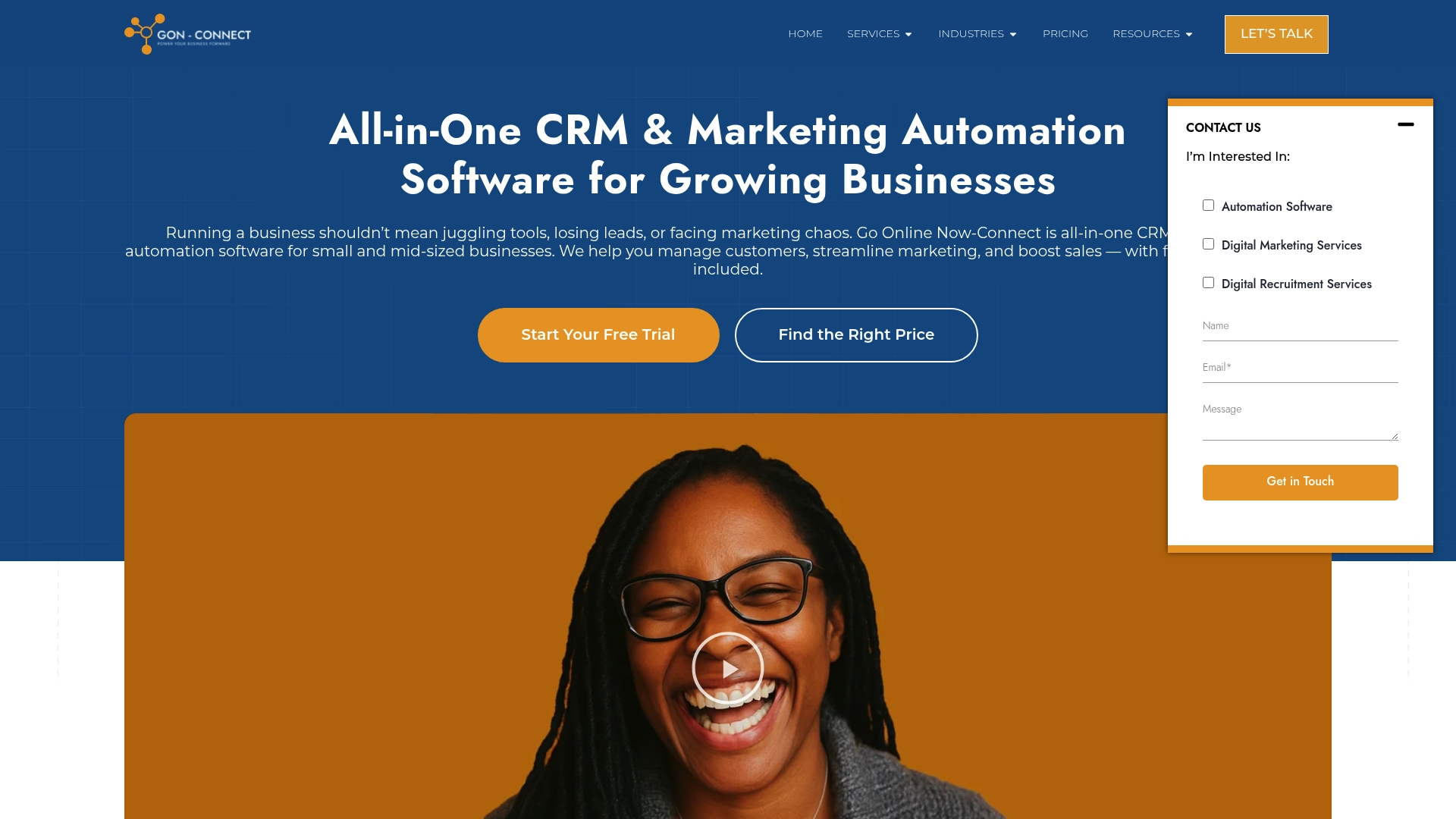
Ready to stop juggling multiple platforms and start generating qualified leads smarter and faster The solution is here. Visit Go Online Now now to explore how our simple, done-for-you setup combined with proven automation and marketing services will transform your lead generation process today.
Frequently Asked Questions
What is the first step in the lead generation checklist for growing SMBs?
The first step is to clearly define your target audience. Analyze your existing customer base to identify common characteristics and create detailed customer personas that represent your ideal clients.
How can I optimize my landing pages for better lead conversion?
To optimize your landing pages, focus on creating clear calls to action and a clean layout that minimizes distractions. Implement high-contrast colors to draw attention to key elements, and conduct A/B testing to identify the most effective designs.
What information should I include in my automated lead capture forms?
Include essential fields such as name, email address, and one additional relevant detail specific to your business. Keep forms short to minimize friction and consider offering a valuable resource in exchange for contact information to increase submissions.
How do I create effective lead magnets for my SMB?
Craft lead magnets that deliver genuine value, such as ebooks or webinars, tailored to your target audience’s needs. Ensure that your lead magnets clearly communicate the unique benefits of your offerings to solve customer challenges.
What should I include in an automated email sequence for nurturing leads?
Include a welcome email, educational content, a case study or testimonial, and a conversion-focused message. Tailor the content to address potential objections and gradually build trust with your leads to enhance engagement.
How can I measure the success of my lead generation strategy?
Regularly track key performance indicators like conversion rates and lead quality. Schedule monthly reviews to analyze these metrics, making adjustments as needed to continuously improve your lead generation efforts.
Recommended
- 7 Essential Lead Generation Tips for Small Businesses – Go Online Now
- Lead Nurturing Process Guide for SMB Growth Success – Go Online Now
- Effective Lead Generation Campaign Guide for Businesses – Go Online Now
- Master the Lead Generation Process for 2025 Success – Go Online Now
- 7 Steps to Build a Strong Local SEO Checklist for 2025 – WordsAtScale