Tips for small business growth: smart strategies for 2026
Choosing the right growth tools can feel overwhelming when you’re running a small business. Between juggling daily operations and scouting for affordable solutions, many SMB owners end up with scattered platforms that drain budgets and time. This guide cuts through the noise with evidence-based tips on selecting integrated tools, automating marketing, and crafting strategies that actually move the needle for service-based businesses in 2026.
Key takeaways
| Point | Details |
|---|---|
| Tool selection criteria | Prioritize transparent pricing, seamless integration, and live human support to avoid costly platform fragmentation. |
| Marketing automation impact | Automation boosts sales productivity by 14.5% and cuts marketing overhead by 12.2% while saving 75% of time on lead nurturing. |
| Unified CRM advantage | Integrated CRM and marketing platforms deliver 30% higher lead conversion rates and improve customer retention by 25%. |
| Tailored marketing strategies | Industry-specific campaigns can increase conversion rates up to 85% within three months for service-based SMBs. |
| Done-for-you setup value | Professional onboarding increases platform adoption by over 60% and accelerates ROI by 50%. |
How to choose the right growth tools: key selection criteria
Selecting the right growth platform starts with understanding what actually matters for your bottom line. Too many SMB owners chase feature lists without considering how those features fit their budget, team capacity, or daily workflows.

Start by evaluating transparent pricing models. Most SMB-focused platforms range from $50 to $200 per month, while enterprise solutions like HubSpot or Salesforce often exceed $1,000 monthly. Hidden fees and surprise charges can quickly turn an “affordable” tool into a budget killer. Look for providers that publish pricing upfront and guarantee no contracts or cancellation penalties.
Integration is your second non-negotiable. When your CRM, email marketing, SMS campaigns, and appointment scheduling live in separate tools, you waste hours copying data and risk losing leads in the gaps. Platforms that unify these functions under one roof eliminate data silos and streamline your entire sales pipeline. Consider affordable marketing tools for SMBs that bundle essential features without forcing you to juggle multiple subscriptions.
Done-for-you setup and live human support separate platforms built for SMBs from those designed for enterprise teams with dedicated IT departments. If you’re stretched thin running your business, you don’t have weeks to configure automations or troubleshoot integrations. Prioritize vendors offering free onboarding, real-time chat support, and detailed manuals. These resources pay for themselves by getting you operational faster and reducing frustration.
Focus on features that directly drive revenue: lead capture forms, automated follow-up sequences, appointment reminders, and pipeline tracking. Fancy dashboards and endless customization options sound appealing but often sit unused. Ask yourself whether each feature will save time, increase conversions, or improve customer retention. If the answer is no, it’s just noise.
Workflow automation capabilities determine how much time you’ll reclaim each week. Can the platform automatically send welcome emails to new leads? Does it trigger SMS reminders before appointments? Will it move contacts through your sales funnel based on their actions? These automations compound over time, freeing you to focus on strategy instead of repetitive tasks. If you’re scaling operations, explore recruitment solutions for SMBs to streamline hiring alongside your marketing efforts.
Professionele tip: Before committing to any platform, request a demo focused on your specific industry use case. Generic walkthroughs rarely reveal whether the tool fits your actual workflows.
Leveraging marketing automation: boosting efficiency and sales
Marketing automation transforms how small businesses nurture leads and close deals. Instead of manually sending follow-up emails or tracking which prospects opened your messages, automation handles these tasks while you sleep.
The numbers tell a compelling story. Businesses using marketing automation see an average 14.5% increase in sales productivity and 12.2% reduction in marketing overhead. That’s not marginal improvement; it’s a fundamental shift in how efficiently your team operates. When salespeople spend less time on administrative tasks, they close more deals. When marketing budgets stretch further, you can test more channels and scale what works.
Time savings represent another massive win. The typical SMB saves 75% of the time previously spent on lead nurturing and follow-up workflows after implementing automation. Think about what you could do with an extra 15 hours per week. You could refine your service offerings, build strategic partnerships, or finally launch that referral program you’ve been postponing.
Multi-channel outreach is where automation really shines. Your platform can send an email when someone downloads your guide, follow up with an SMS reminder two days later, and trigger a phone call notification if they book a consultation. This coordinated approach boosts customer engagement by up to 85% compared to single-channel campaigns. People consume information differently, and automation lets you meet them where they are without multiplying your workload.
Resource allocation becomes smarter when automation handles repetitive tasks. Your team can focus energy on high-value activities like closing warm leads, creating content, or improving customer experience. Campaign consistency improves too, since automated sequences never forget to follow up or send the wrong message to the wrong segment.
For practical implementation guidance, review marketing automation benefits for SMEs En marketing automation tips for small businesses. These resources break down specific workflows that deliver results across service industries.
Professionele tip: Start with one automated sequence, like a welcome series for new leads, before building complex multi-step campaigns. Master the basics, measure results, then expand.
Unified CRM systems: driving customer retention and pipeline management
Fragmented systems kill deals before you even know they existed. When your contact database lives in one tool, your email campaigns in another, and your appointment calendar in a third, leads slip through the cracks. Someone books a consultation but doesn’t receive a confirmation email. A hot prospect reaches out on multiple channels, but no one realizes they’re the same person. These failures cost you money.
Integrated platforms solve this problem by centralizing every customer interaction. SMBs using integrated CRM and marketing automation platforms outperform standalone tools by 30% in lead conversions. That gap exists because unified systems give you complete visibility into each lead’s journey. You see which emails they opened, what pages they visited, and whether they’ve engaged with your SMS campaigns, all in one dashboard.
Appointment scheduling features embedded in your CRM boost repeat customer retention by up to 25%. When clients can book, reschedule, or cancel appointments through automated links, friction disappears. Automated reminders reduce no-shows, and post-appointment follow-ups keep your business top of mind for future needs. This seamless experience turns one-time buyers into loyal customers.
A unified inbox consolidates messages from email, SMS, social media, and web chat into one stream. Your team never misses a question or loses context switching between platforms. Every conversation is logged against the customer’s profile, so anyone on your team can pick up where the last person left off. This consistency builds trust and professionalism.
Pipeline management becomes intuitive when all your data flows into one system. You can see exactly how many leads are at each stage, which campaigns generate the highest-quality prospects, and where bottlenecks slow your sales process. These insights let you make data-driven decisions instead of guessing what’s working.
Ontdekken all-in-one CRM for SMBs En lead management for small businesses to understand how integration transforms operational efficiency and revenue growth.
Tailored digital marketing strategies for service-based SMBs
Generic marketing campaigns waste money and miss opportunities. A real estate agent’s ideal client journey looks nothing like a salon owner’s or a business coach’s. When you customize your digital marketing to your industry’s specific needs, results improve dramatically.
Industry-specific content and SEO targeting ensure you attract qualified leads actively searching for your services. A fitness coach writing about “how to build an online coaching business” reaches aspiring trainers, not potential clients. But content focused on “personalized nutrition plans for busy professionals” speaks directly to their target market. Search engines reward this relevance with higher rankings, and readers reward it with their contact information.
Paid campaigns amplify this targeting precision. Platforms like Google Ads and Meta let you define audiences by job title, income, interests, and behaviors. A salon promoting bridal packages can target engaged women within 20 miles of their location. An education consultant can focus on parents of high school juniors researching college admissions. This specificity improves lead quality and volume simultaneously.
Conversion rates tell the real story. Service-based SMBs implementing tailored digital strategies see conversion improvements up to 85% within three months. That’s not luck; it’s the result of aligning every touchpoint with your audience’s actual needs and decision-making process. Coaching businesses might emphasize free discovery calls and client transformation stories. Salons highlight before-and-after galleries and online booking convenience. Real estate agents showcase neighborhood expertise and virtual tour technology.
Multi-channel marketing sustains engagement throughout the customer journey. Someone might discover your business through a Facebook ad, visit your website to learn more, sign up for your email list to receive a free guide, and finally book a consultation after receiving an SMS reminder about your limited-time offer. Each channel reinforces the others, building familiarity and trust.
For deeper insights into building effective campaigns, review digital marketing services overview En lead generation tips for SMBs.
The impact of done-for-you setup and human support
Buying software is easy. Actually using it to grow your business is where most SMBs stumble. The gap between signing up and seeing results often stretches for months because business owners lack time or technical expertise to configure complex platforms properly.
Done-for-you setup changes this equation completely. When experts handle the initial configuration of your automations, funnels, and CRM workflows, you skip the learning curve and start generating results immediately. Over 60% increase in marketing platform adoption happens when professional onboarding is included. People actually use tools that work out of the box instead of abandoning them in frustration.
Human support accelerates time to ROI by 50% compared to self-service models. When you hit a roadblock, you can hop on a chat or call with a real person who understands your business context and can troubleshoot in real time. This responsiveness prevents the technology fatigue that kills momentum. You don’t need to spend hours watching tutorial videos or digging through help documentation.
Professional onboarding simplifies platforms that would otherwise feel overwhelming. Your setup team explains which features matter most for your goals, configures them correctly from day one, and provides training tailored to your team’s skill level. This foundation prevents the common mistake of using 10% of a platform’s capabilities while paying for 100%.
SMBs with limited technical resources benefit most from this support model. You shouldn’t need a computer science degree to automate your email marketing or set up appointment reminders. When the barrier to entry drops, adoption soars.
One business owner described their experience this way:
“We were drowning in disconnected tools and manual processes. Within two weeks of switching to a platform with done-for-you setup, our lead response time dropped from hours to minutes, and we stopped losing deals to competitors who followed up faster.”
For examples of how proper setup transforms results, see marketing automation software for SMB conversions En online coaching setup tips.
Professionele tip: During onboarding, ask your setup team to document their configuration choices. This knowledge transfer helps your team maintain and optimize the system long-term.
Pricing, affordability, and value comparison of growth tools
Price tags don’t tell the whole story when comparing growth platforms. Total cost of ownership includes subscription fees, setup charges, training expenses, integration costs, and hidden fees that appear after you’re locked in.
SMB-focused platforms typically range from $50 to $200 per month and bundle the essentials: CRM, email marketing, SMS campaigns, appointment scheduling, and basic automations. Enterprise solutions like HubSpot or Salesforce start around $1,000 monthly for comparable features, and that’s before adding required integrations, premium support plans, or professional services to get everything configured.
Go Online Now-Connect offers 20% lower total cost versus competitors by eliminating common surcharges. Done-for-you setup is included at no extra cost. There are no per-contact pricing tiers that explode your bill as you grow. Human support via email and chat comes standard, not as a premium add-on. This transparent pricing model means your $97 monthly subscription actually costs $97, not $97 plus $200 in surprise fees.
| Platform Type | Monthly Cost | Setup Fees | Support Model | Key Limitations |
|---|---|---|---|---|
| Enterprise (HubSpot/Salesforce) | $1,000+ | $3,000-$10,000 | Tiered, mostly self-service | Over-engineered for SMBs, steep learning curve |
| Mid-tier (Keap/ActiveCampaign) | $150-$500 | $500-$2,000 | Email + paid phone support | Hidden costs, complex pricing tiers |
| SMB-focused (Go Online Now-Connect) | $50-$200 | Included free | Live chat, email, onboarding | Purpose-built for small teams |
| DIY tools (Mailchimp standalone) | $30-$100 | Self-setup | Help docs only | Requires multiple tools, no integration |
The value proposition becomes clear when you calculate time saved. If done-for-you setup saves your team 40 hours at $50/hour, that’s $2,000 in labor cost avoided. If unified systems prevent just one lost deal per month worth $500, you’ve covered your annual subscription in two months.
For SMB budgets and growth scale, platforms offering transparent pricing, included setup, and unified functionality deliver the best ROI. You’re not paying for features you’ll never use or enterprise-level complexity you don’t need. Explore affordable marketing tools for SMBs for detailed pricing comparisons.
Situational recommendations: choosing growth strategies for your SMB
Your ideal growth stack depends on your industry, current stage, and specific pain points. Cookie-cutter advice fails because a solo consultant’s needs differ wildly from a 10-person salon’s requirements.
1. Complex lead pipelines with long sales cycles: If you’re in coaching, consulting, or B2B services where deals take weeks to close, prioritize unified CRM and marketing automation. You need visibility into every touchpoint and automated nurture sequences that keep prospects engaged without manual follow-up. Multi-step email workflows, lead scoring, and pipeline stages become essential.
2. Resource or time constraints: Service businesses with small teams should choose done-for-you services over DIY platforms. When you’re wearing every hat in your business, spending 20 hours configuring marketing automation isn’t viable. Pay slightly more for professional setup and support; you’ll recoup the cost through faster implementation and avoided mistakes.
3. Rapid scaling and hiring needs: Growing businesses face dual challenges: marketing to customers and recruiting talent. Incorporate recruitment automation to speed hiring during scale. Platforms that bundle job posting distribution, applicant tracking, and interview scheduling alongside your CRM eliminate another tool from your stack.
4. Service industries requiring appointment management: Salons, spas, coaching practices, and professional services must prioritize appointment scheduling features integrated with your CRM. Automated reminders, easy rescheduling, and post-visit follow-ups directly impact retention and revenue. Calendar tools that sync with your marketing platform prevent the manual data entry that causes errors.
5. Budget-conscious startups: New businesses should focus on affordable platforms offering transparent, flat-rate pricing with no contracts. Avoid enterprise solutions with per-contact pricing that penalizes growth. Start with core features (CRM, email, SMS) and expand into advanced automations as revenue increases.
6. Multi-location or franchise operations: Businesses with multiple locations need centralized reporting, role-based permissions, and customizable workflows per location. Your platform should support this complexity without requiring separate subscriptions for each site.
Professionele tip: Map your customer journey before evaluating platforms. Identify every touchpoint from first contact to repeat purchase. Then choose tools that automate the highest-friction points in that journey.
For implementation guidance aligned with your growth stage, see marketing automation for SMB growth.
Unlock your SMB’s growth potential with Go Online Now
You’ve learned the strategies that separate thriving SMBs from those stuck on the growth treadmill. Now it’s time to implement them.
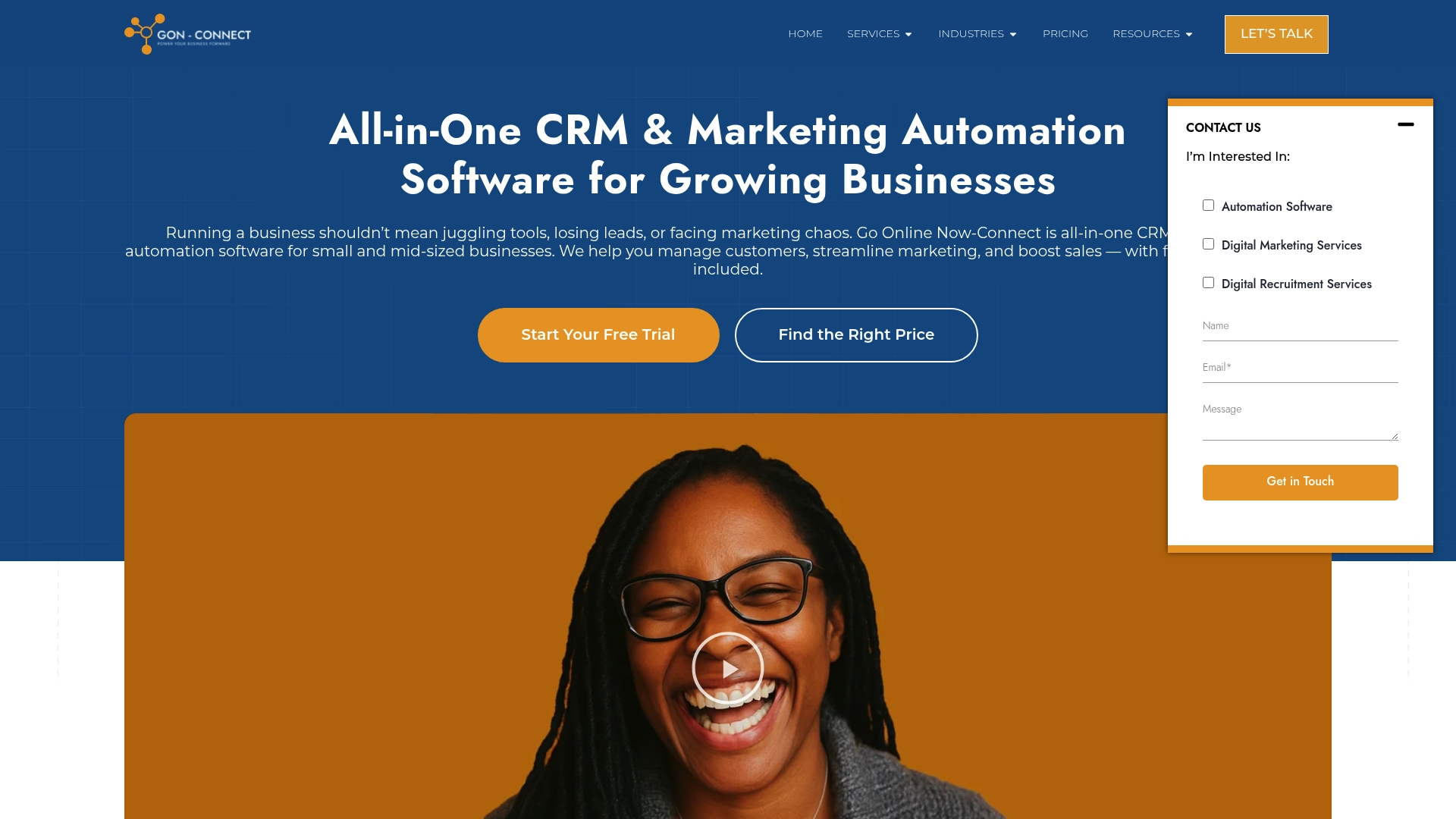
Go Online Now-Connect delivers everything covered in this guide under one roof. Our marketing automation software for SMB conversions includes done-for-you setup, transparent pricing starting at $97 monthly, and real human support via chat and email. No contracts. No hidden fees. Just results.
Our all-in-one CRM for SMBs unifies your contact management, appointment scheduling, email campaigns, SMS outreach, and pipeline tracking in one simple dashboard. Stop juggling five tools when one does the job better.
Need content, SEO, or paid campaigns? Our digital marketing services overview shows how our Filipino team handles strategy and execution while you focus on serving clients. We’re your growth partner, not just your software vendor.
Frequently asked questions
What are the most important criteria for choosing SMB growth tools?
Focus on affordability, seamless integration, live human support availability, automation capabilities, and industry fit. Transparent pricing models and done-for-you setup services reduce adoption friction and hidden costs. Tools that unify CRM, marketing, and communication channels deliver better ROI than fragmented solutions.
How does marketing automation improve SMB sales productivity?
Automation increases sales productivity by over 14% while reducing marketing overhead by 12%. It saves approximately 75% of time previously spent on manual lead nurturing and follow-up workflows. This efficiency lets sales teams focus on closing deals instead of administrative tasks.
Why is unified CRM integration important for SMB growth?
Integrated CRM and marketing platforms boost lead conversion rates by about 30% compared to standalone tools. Unified systems improve appointment scheduling efficiency and increase customer retention by up to 25%. Centralized data eliminates lost leads and provides complete visibility into each customer’s journey.
What role does done-for-you setup play in platform adoption?
Professional setup increases platform adoption rates by over 60% because users start with working systems instead of spending weeks learning complex software. Expert onboarding accelerates time to ROI by 50% and dramatically reduces the technology overwhelm that causes SMBs to abandon new tools.