Over 50 percent of American small businesses say they lack a clear digital strategy, limiting their ability to compete in fast-changing markets. For local service providers and marketing teams, the challenge is not just picking new tools but using them to build reliable growth. This guide cuts through the noise, showing how a focused digital approach can improve online presence, safeguard customer data, and help American and British SMBs see real results quickly.
Defining SMB Digital Strategy and Its Purpose
A digital strategy for small and medium businesses represents a comprehensive approach to integrating digital technologies across all operational domains. At its core, this strategy enables SMBs to leverage technological tools and platforms to enhance business performance, improve market competitiveness, and drive sustainable growth in an increasingly digital economy.
The fundamental purpose of an SMB digital strategy extends beyond mere technological adoption. It involves strategically mapping digital technologies to specific business objectives, creating a roadmap that transforms how companies communicate, operate, and deliver value. This means identifying precise digital solutions that can streamline processes, expand customer reach, and generate measurable business outcomes. Whether it involves implementing customer relationship management systems, developing targeted digital marketing campaigns, or optimizing online sales channels, a well-crafted digital strategy acts as a blueprint for technological transformation.
Key components of an effective SMB digital strategy typically include:
- Digital Infrastructure Assessment: Evaluating current technological capabilities and identifying improvement areas
- Optimalisatie van de klantervaring: Using digital tools to enhance interaction and engagement
- Data Analytics Integration: Implementing systems to gather and analyze performance metrics
- Cybersecurity Planning: Protecting digital assets and customer information
- Scalable Technology Solutions: Selecting platforms that can grow with the business
Pro tip: Start your digital strategy by conducting a comprehensive audit of your current digital capabilities and identifying the most immediate technological needs that can deliver quick, measurable business improvements.
Key Components of an Effective SMB Digital Plan
Developing a robust digital plan requires small and medium businesses to strategically approach technology integration with precision and purpose. Comprehensive digital strategies must encompass more than simply adopting new tools—they demand a holistic framework that aligns technological investments with core business objectives and market opportunities.

The most successful digital plans for SMBs typically include several interconnected strategic components. These include conducting a thorough digital maturity assessment, mapping detailed customer journeys, establishing clear technological infrastructure requirements, and developing robust data analytics capabilities. By creating a multifaceted approach, businesses can ensure their digital transformation is not just reactive, but proactively designed to drive competitive advantage and operational efficiency.
Critical elements of an effective digital strategy encompass:
- Business Objective Alignment: Ensuring digital initiatives directly support core business goals
- Technology Infrastructure Assessment: Evaluating current systems and identifying upgrade pathways
- Cybersecurity Planning: Implementing comprehensive protection strategies
- Customer Experience Design: Creating seamless digital interaction points
- Data Analytics Integration: Developing systems for performance measurement and insights
- Skills and Training Development: Building internal digital competency
Pro tip: Start your digital strategy development by conducting a comprehensive internal audit that identifies both technological gaps and potential innovation opportunities within your current business model.
Essential Digital Tools and Platforms for SMBs
Small and medium businesses must strategically leverage digital tools to remain competitive in today’s rapidly evolving marketplace. AI-powered automation platforms and integrated solutions have become critical for streamlining operations, enhancing customer engagement, and driving business growth. These technologies enable SMBs to punch well above their weight class, transforming complex business processes into manageable, efficient workflows.
The digital ecosystem for SMBs encompasses a wide range of essential platforms designed to address specific operational challenges. Critical tools include customer relationship management (CRM) systems, cloud computing services, digital payment solutions, and automated marketing platforms. Each tool serves a unique purpose, from managing customer interactions and tracking sales pipelines to processing online transactions and executing targeted marketing campaigns. By carefully selecting and integrating these technologies, businesses can create a comprehensive digital infrastructure that supports scalability and innovation.
Key digital tools SMBs should consider implementing include:
Here’s a comparison of how key digital tools impact core SMB business outcomes:
| Digital Tool Type | Main Function | Business Impact |
|---|---|---|
| CRM Software | Manages customer relationships | Boosts customer retention |
| Cloud Platforms | Enables remote collaboration | Increases team productivity |
| Marketingautomatisering | Automates campaign delivery | Improves lead conversion rates |
| Betalingsverwerking | Handles online sales securely | Expands revenue channels |
| Cybersecurityoplossingen | Defends against cyber threats | Reduces risk of data breaches |
| Analyseplatforms | Tracks and analyzes metrics | Supports data-driven decisions |
- Customer Relationship Management (CRM) Software: Centralize customer data and interactions
- Cloud Storage and Collaboration Platforms: Enable remote work and document sharing
- Marketing Automation Tools: Streamline email campaigns and lead nurturing
- Payment Processing Systems: Facilitate secure online transactions
- Cybersecurityoplossingen: Protect digital assets and customer information
- Business Intelligence and Analytics Platforms: Track performance and generate insights
- Project Management Software: Coordinate team efforts and track progress
Pro tip: Prioritize tools that offer seamless integration and scalability, focusing on platforms that can grow alongside your business without requiring complete system overhauls.
Common SMB Mistakes and How to Avoid Them
Digital transformation can be challenging for small and medium businesses, with numerous potential pitfalls that can derail technological progress and expose organizations to significant risks. Cybersecurity vulnerabilities represent one of the most critical areas where SMBs consistently make costly mistakes, often resulting from inadequate understanding of digital security fundamentals and limited resource allocation for robust protective measures.
The most prevalent mistakes small businesses make typically involve technological implementation, security oversight, and strategic planning. These errors range from using outdated software and neglecting regular system updates to poor access management and insufficient employee training. Businesses frequently underestimate the complexity of digital infrastructure, leading to fragmented technology approaches that create security gaps, reduce operational efficiency, and potentially expose sensitive business and customer data to unnecessary risks.
Key mistakes SMBs should actively avoid include:
- Neglecting Cybersecurity Fundamentals: Leaving systems vulnerable to potential breaches
- Postponing Software Updates: Running outdated systems with known security vulnerabilities
- Weak Password Protocols: Using simple, easily guessable authentication credentials
- Inadequate Backup Strategies: Failing to implement comprehensive data protection plans
- Overlooking Employee Training: Not educating staff about digital security best practices
- Poor Access Control Management: Granting excessive system permissions
- Ignoring Network Segmentation: Allowing unrestricted internal network access
Pro tip: Implement a comprehensive digital risk assessment every six months, systematically reviewing your technological infrastructure and identifying potential vulnerabilities before they can be exploited.
Measuring Success and Maximizing ROI for SMBs
Measuring the return on investment for digital strategies requires small and medium businesses to develop a nuanced approach that goes beyond traditional financial metrics. Strategic IT budgeting and comprehensive performance assessment are essential for understanding the true impact of technological investments. Success means evaluating not just monetary returns, but also improvements in operational efficiency, employee productivity, and overall business capabilities.
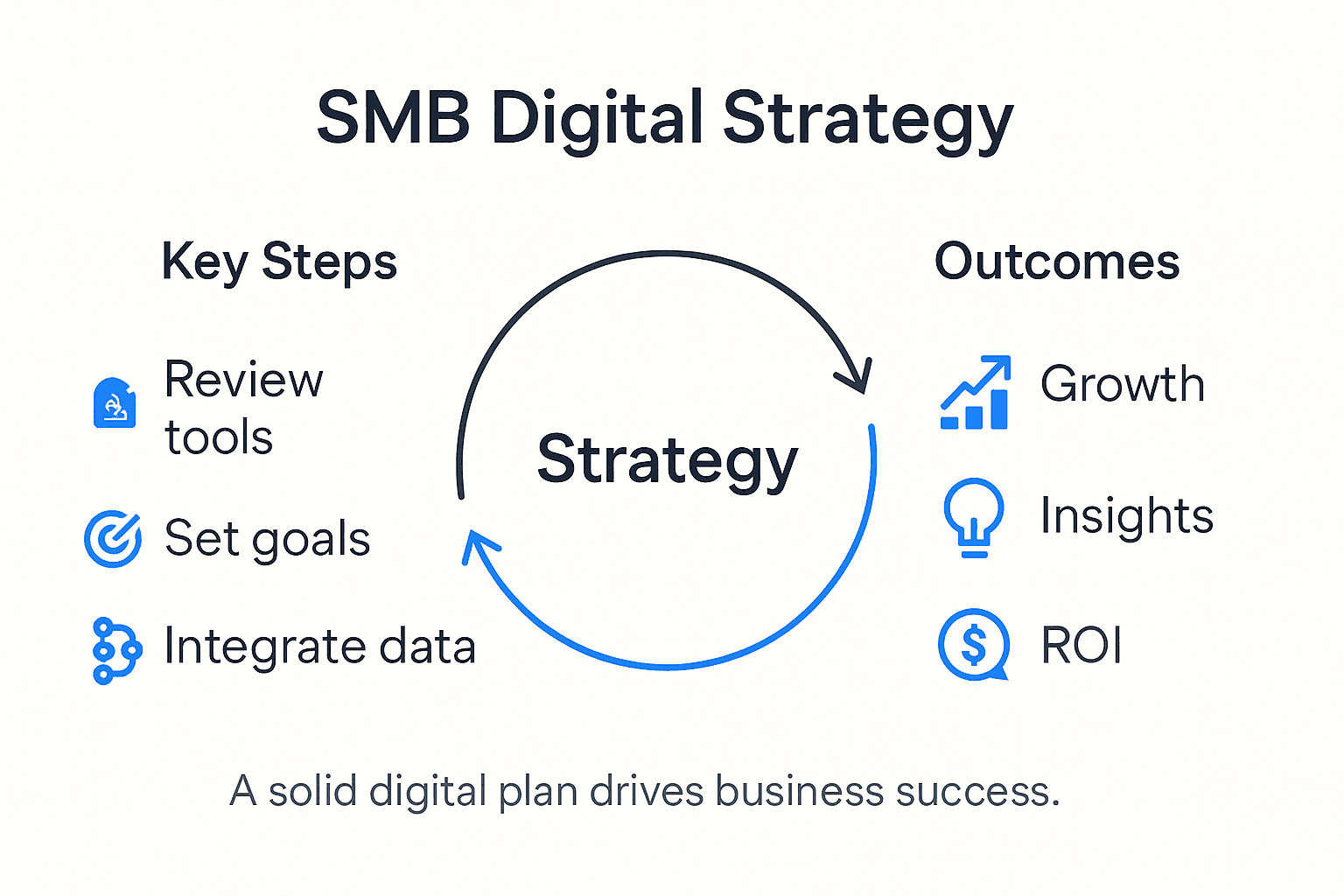
Effective ROI measurement demands a multifaceted framework that captures both quantitative and qualitative outcomes. Small businesses must establish clear key performance indicators (KPIs) that align directly with their strategic objectives. These metrics might include customer acquisition costs, conversion rates, operational time savings, process automation efficiency, and improvements in team collaboration. By developing a holistic measurement approach, SMBs can gain meaningful insights into how digital technologies are driving business transformation and competitive advantage.
Critical metrics for measuring digital strategy success include:
The following table summarizes distinct approaches to measuring digital strategy success for SMBs:
| Evaluation Dimension | Voorbeeldmetriek | Value to SMB |
|---|---|---|
| Financial | Revenue growth | Helps justify technology spend |
| Operational | Time savings | Identifies efficiency gains |
| Customer Experience | Satisfaction scores | Informs service improvements |
| Technological | Tool adoption rate | Tracks innovation progress |
-
Financial Performance Indicators:
- Revenue growth attributable to digital initiatives
- Cost reduction from process automation
- Customer acquisition cost reduction
-
Operational Efficiency Metrics:
- Time saved through automation
- Workflow productivity improvements
- Reduction in manual processing errors
-
Customer Experience Indicators:
- Customer satisfaction scores
- Response time improvements
- Engagement rate increases
-
Technological Advancement Metrics:
- Digital tool adoption rates
- Employee digital skill development
- Technology integration effectiveness
Pro tip: Create a quarterly digital performance dashboard that tracks your key metrics, allowing for rapid identification of successes and areas requiring strategic adjustment.
Elevate Your SMB Digital Strategy with Go Online Now-Connect
Many small and medium businesses struggle with integrating the right digital tools into a clear, actionable plan. This article highlights common challenges such as aligning technology with business goals, optimizing customer experience, and ensuring cybersecurity—all of which are critical for successful digital transformation. If you want to stop juggling scattered solutions and avoid costly mistakes, a streamlined and affordable system can make all the difference.
Ga nu online - Maak verbinding offers an all-in-one platform tailored specifically for SMBs seeking simple yet powerful marketing automation software and an all-in-one CRM. Our platform helps you unify email, SMS, funnels, and lead management with done-for-you setup and real human support that ensures you get immediate value without the complexity. Pair this with expert digital marketing services found in our Digital Marketing Archives – Go Online Now and access to skilled virtual assistants through our Virtuele assistentie archieven – Ga nu online to fully support your growth.

Take the next step to avoid common SMB digital strategy pitfalls. Experience how combining marketing automation, CRM, and dedicated support in one affordable system can save you hours and boost conversions fast. Visit Go Online Now today and start growing smarter, not harder.
Veelgestelde vragen
What is an SMB digital strategy?
An SMB digital strategy is a comprehensive approach that integrates digital technologies across all operational domains of a small or medium business, enabling it to leverage technological tools and platforms to enhance performance and drive growth.
Why is a digital strategy important for small and medium businesses?
A digital strategy is important for SMBs because it helps them align technology with business objectives, improves market competitiveness, streamlines operations, and enhances customer engagement in a digital economy.
What are the key components of an effective SMB digital strategy?
Key components include digital infrastructure assessment, customer experience optimization, data analytics integration, cybersecurity planning, and scalable technology solutions that support business growth.
How can SMBs measure the success of their digital strategies?
SMBs can measure success through various metrics such as revenue growth, operational efficiency, customer satisfaction scores, and digital tool adoption rates, providing insights into the overall impact of their digital initiatives.