Nearly half of American small businesses say manual marketing tasks eat up valuable time and limit growth potential. With rising competition and evolving customer expectations, affordable automation is quickly becoming a must-have for any service-driven company looking to thrive in 2025. This guide gives American marketing managers a practical path to assess their current processes, identify real opportunities, and select the most cost-effective automation solutions for lasting results.
Step 1: Assess your business needs and goals
Kicking off your marketing automation journey starts with a clear understanding of where your business currently stands and where you want to go. This critical assessment phase allows you to map out precise objectives and select automation tools that align perfectly with your strategic vision.
Begin by conducting a comprehensive internal review of your current marketing processes. Identify repetitive tasks that consume significant time, such as email follow ups, lead tracking, or social media scheduling. Examine your digitale marketingstrategie to understand existing bottlenecks and inefficiencies. Look for patterns in customer interactions, sales cycles, and communication channels that could benefit from automated workflows.

During this assessment, create a detailed inventory of your marketing goals. These might include increasing lead generation, improving customer retention, reducing manual administrative work, or enhancing personalized communication. Quantify these goals with specific metrics like desired conversion rates, expected time savings, or projected revenue growth. By establishing clear, measurable objectives, you can more effectively evaluate which marketing automation solutions will deliver the most meaningful impact for your small business.
Pro tip: Schedule a dedicated strategy session with your core team to collaboratively map out your marketing automation roadmap, ensuring everyone understands and supports the implementation goals.
Step 2: Select and set up an all-in-one automation platform
Selecting the right marketing automation platform is a pivotal moment for your small business. Your goal is to find a comprehensive solution that streamlines your marketing processes and provides robust tools for growth without overwhelming your team with complexity.
Start by evaluating platforms that offer comprehensive marketing automation capabilities across multiple channels. Look for solutions that integrate email marketing, customer relationship management (CRM), sales tracking, and social media management into a single interface. Key features to prioritize include audience segmentation, message personalization, multi channel campaign support, and scalable workflow automation. Pay close attention to platforms that offer intuitive dashboards, real time analytics, and the ability to create customized automation sequences that match your specific business needs.
When setting up your chosen platform, begin with foundational workflows that address your most critical marketing challenges. Create welcome sequences for new leads, design automated follow up campaigns, and establish basic segmentation rules that allow for personalized communication. Test different variants of your automation sequences, track key performance indicators, and be prepared to refine your approach as you gain more insights into your customers behavior and engagement patterns.
Pro tip: Request a comprehensive demo or free trial of your selected platform, ensuring you fully understand its capabilities and can seamlessly integrate it with your existing marketing tools and processes.
Compare automation platforms using these essential criteria:
| Criteria | Why It’s Important | Typical Feature Example |
|---|---|---|
| Integration Capability | Seamless tool synchronization | Connects CRM, email, and social media |
| Analytics & Reporting | Data-driven decision making | Real-time performance dashboards |
| Campaign Personalization | Tailored customer engagement | Dynamic content for audience segments |
| Usability & Onboarding | Quick team adoption | Intuitive interface, training access |
Step 3: Integrate your CRM and marketing tools seamlessly
Successful marketing automation hinges on creating a unified ecosystem where your customer relationship management and marketing tools communicate effortlessly. The right integration strategy transforms disconnected systems into a powerful, synchronized engine driving your business growth.
Unifying sales and marketing data enables your small business to create more intelligent, responsive marketing workflows. Start by carefully mapping out the data fields that need synchronization between your CRM and marketing platforms. Focus on critical touchpoints like lead contact information, interaction history, engagement metrics, and behavioral tracking. Ensure your chosen tools support real time data exchange and can automatically update customer profiles across different systems. This approach eliminates manual data entry, reduces errors, and provides a comprehensive view of each customer journey.
When implementing your integration, prioritize establishing automated workflows that trigger based on specific customer actions. Design sequences that score leads dynamically, segment audiences automatically, and personalize communication pathways. For instance, create rules that instantly notify sales teams when a lead reaches a specific engagement threshold or automatically enroll contacts into targeted email campaigns based on their interactions. Continuously monitor and refine these integrations, testing different automation scenarios to optimize your marketing and sales alignment.
Pro tip: Before finalizing your integration, conduct a thorough compatibility test by running sample data through both systems to ensure smooth information transfer and identify any potential synchronization challenges.
Step 4: Automate lead capture, nurturing, and follow-up workflows
Transforming your lead generation process requires strategic automation that captures potential customers seamlessly and nurtures them through a personalized journey. Your goal is to create intelligent workflows that engage prospects without constant manual intervention.
Automating lead capture begins with implementing smart digital tools that interact with website visitors automatically. Integrate AI chatbots that can instantly qualify leads, smart forms that collect essential contact information, and automated booking calendars that allow prospects to schedule consultations without human coordination. Design these tools to capture critical details like name, email, business type, and specific interests while providing an interactive and responsive user experience. Develop landing pages with clear calls to action that guide visitors through a smooth conversion funnel, ensuring each interaction moves potential customers closer to becoming qualified leads.
Once leads are captured, design automated email sequences that trigger based on specific user behaviors and interactions. Segment your audience carefully to deliver personalized content that addresses their unique needs and pain points. Create multi stage nurturing workflows that include welcome emails, educational content, case studies, and targeted offers. Set up automated reminders and follow up messages that keep your business top of mind while providing genuine value. Track engagement metrics closely and be prepared to adjust your workflows based on performance data, ensuring your automation strategy remains dynamic and responsive to changing customer behaviors.
Pro tip: Test your automated workflows extensively using dummy data and monitor conversion rates closely to continually refine and optimize your lead nurturing strategy.
Step 5: Measure campaign results and optimize for growth
Successful marketing automation requires more than just implementing workflows you must continuously track, analyze, and refine your strategies to ensure maximum impact and return on investment. Your ultimate goal is transforming raw data into actionable insights that drive meaningful business growth.
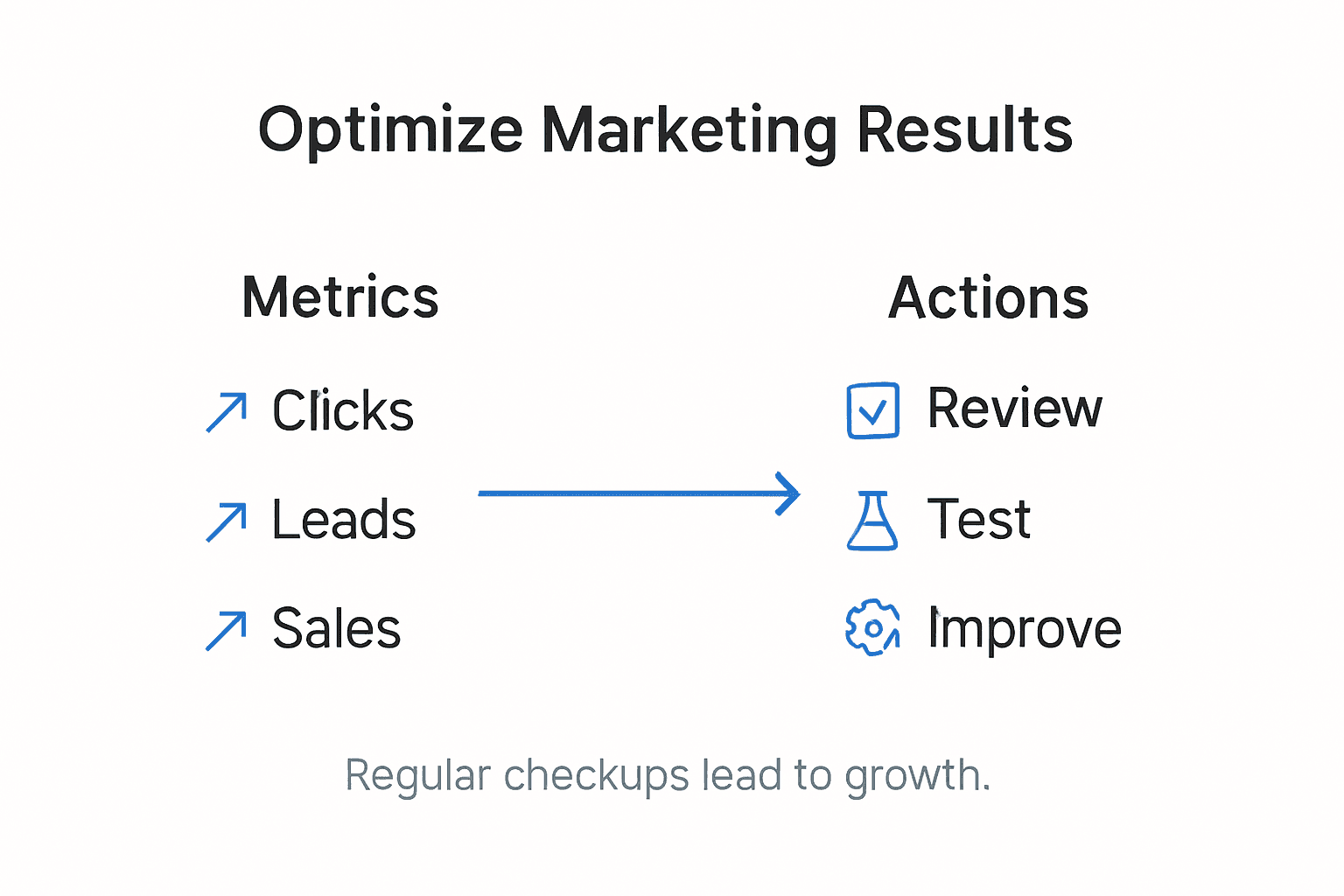
Marketing effectiveness measurement demands focusing on strategic key performance indicators directly tied to your business objectives. Identify critical metrics such as Customer Acquisition Cost, Conversion Rate, Return on Ad Spend, and Customer Lifetime Value. Implement robust cross channel analytics tools that provide comprehensive performance dashboards, enabling you to track campaign results in real time. Compare performance across different marketing channels, identifying which strategies generate the most engagement and revenue for your specific business model.
Here’s a summary of key marketing automation metrics to monitor for ongoing growth:
| Metric Name | What It Measures | Why It Matters |
|---|---|---|
| Customer Acquisition Cost | Total spend to acquire one customer | Indicates campaign cost efficiency |
| Conversiepercentage | Percentage turning leads into sales | Shows success of marketing workflows |
| Return on Ad Spend | Revenue generated per ad dollar | Helps allocate marketing budget effectively |
| Klantlevenswaarde | Projected revenue per customer | Guides retention and nurturing strategies |
Develop a systematic approach to campaign optimization by establishing a continuous improvement cycle. Conduct regular multivariate testing to experiment with different messaging, design elements, and audience targeting strategies. Create detailed reports that not only showcase current performance but also highlight potential areas for improvement. Pay special attention to audience segmentation data, understanding which customer groups respond most positively to your marketing efforts. Be prepared to quickly pivot your strategies based on empirical evidence, ensuring your marketing automation remains agile and responsive to changing market dynamics.
Pro tip: Schedule monthly performance review sessions where you critically examine your marketing metrics, discussing insights and potential optimization strategies with your entire team.
Unlock Smarter Growth With Proven Marketing Automation Solutions
Struggling to streamline your marketing automation or overwhelmed by complex and costly software options The article “Small Business Marketing Automation 2025: A Success Guide” highlights key challenges such as choosing the right tools, integrating your CRM seamlessly, and optimizing campaigns for real growth This is exactly where Go Online Now-Connect stands apart We understand your need for a simple all-in-one platform that powers lead nurturing, email marketing automation, and CRM without the headache or high price
Explore our Automation Archives – Go Online Now and see how our easy-to-use marketing automation software helps small businesses grow smarter not harder With features tailored to your goals from automated workflows to digital marketing services and real human support you get done-for-you setup and proven results right away Take the next step to boost conversions save time and unify your marketing tools by visiting Ga nu online or learn more about effective strategies in our Digital Marketing Archives – Go Online Now today
Veelgestelde vragen
How do I assess my business needs for marketing automation?
Start by conducting a thorough review of your current marketing processes. Identify repetitive tasks and set clear, measurable goals to ensure that the automation tools you choose align with your strategic vision.
What features should I look for in a marketing automation platform?
Seek a platform that offers comprehensive capabilities such as email marketing, customer relationship management, and social media management all in one place. Prioritize features like audience segmentation, real-time analytics, and customizable automation sequences to enhance your marketing efforts.
How can I integrate my CRM with my marketing automation tools?
Map out the data fields that need synchronization between your CRM and marketing tools. Focus on critical connection points, such as lead contact information and engagement metrics, to establish real-time data exchange and reduce manual data entry.
What is the best way to automate lead nurturing workflows?
Implement digital tools that capture leads and design automated email sequences that reflect user behavior. Create multi-stage workflows that keep potential customers engaged through targeted content and follow-up messages, improving conversion rates over time.
How do I measure the effectiveness of my marketing automation campaigns?
Focus on key performance indicators such as Customer Acquisition Cost and Conversion Rate to evaluate your campaigns. Regularly analyze these metrics and use the data to adjust your strategies, aiming for an improvement of 10-20% in your results each month.
Aanbevolen
- Marketing Automation Software: Complete Guide for SMBs – Go Online Now
- Why Small and Midsized Businesses Need Marketing Automation in 2024 – Go Online Now
- Marketing Trends in 2025: Essential Guide for SMBs – Go Online Now
- Understanding the Small Business Marketing Automation Process – Go Online Now
- Best Lead Generation Tools 2025 – Expert Comparison – Jarrod Harman