

Managing how a brand is seen can feel like steering through shifting tides, especially with so many digital voices shaping perception. For American and British businesses, reputation is now a multidimensional asset built by ongoing interactions, not just online reviews. With reputation management evolving into a strategic cornerstone for organizational growth, this guide uncovers how advanced tools and thoughtful strategies can help your business build trust, navigate risks, and drive sustainable success in 2025.
Reputation Management Defined for 2025
Reputatiebeheer has evolved dramatically in recent years, transforming from a simple tracking exercise into a sophisticated strategic approach for businesses. Organizational reputation dynamics now represent a complex ecosystem of perceptions, interactions, and stakeholder evaluations that go far beyond traditional marketing metrics.
In 2025, reputation is no longer just about managing online reviews or social media presence. Instead, it represents a multidimensional strategic asset that encompasses how organizations are perceived across multiple touchpoints. Businesses now understand that reputation is an accumulated value built through consistent positive interactions, transparent communication, and genuine commitment to stakeholder expectations.
Key characteristics of modern reputation management include:
- Holistic perception tracking across digital and physical platforms
- Real-time sentiment analysis using advanced AI technologies
- Proactive reputation building through authentic engagement
- Comprehensive stakeholder experience management
- Data-driven strategic positioning
The strategic importance of reputation has become increasingly pronounced. Reputation measurement challenges highlight that organizations must now develop nuanced approaches that recognize reputation as a dynamic, perception-based asset influencing competitiveness and long-term sustainability.
Pro tip: Invest in continuous reputation monitoring tools that provide real-time insights and enable swift, strategic responses to emerging perceptions.
AI, Automation, and Reputation Monitoring
Artificial intelligence has revolutionized reputation management, enabling businesses to track and respond to brand perceptions with unprecedented precision and speed. AI-driven corporate reputation analysis now provides real-time insights into complex digital ecosystems, transforming how organizations understand and manage their public image.
Modern AI technologies have dramatically expanded the capabilities of reputation monitoring. By leveraging machine learning algorithms and advanced natural language processing, businesses can now:
- Analyze sentiment across multiple digital platforms simultaneously
- Detect potential reputation risks before they escalate
- Track brand mentions in real-time with nuanced contextual understanding
- Generate predictive insights about emerging public perceptions
- Automate rapid response strategies for potential reputation challenges
The most sophisticated AI reputation monitoring systems go beyond simple keyword tracking. Automated sentiment detection technologies now incorporate complex emotional intelligence algorithms that can interpret subtle nuances in language, tone, and context across global communication channels.

These advanced systems represent a quantum leap in reputation management, enabling businesses to move from reactive to proactive strategies. By understanding public sentiment with unprecedented depth and accuracy, organizations can anticipate potential challenges and craft more strategic communication approaches.
Here’s how advanced AI reputation systems differ from traditional monitoring tools:
| Aspect | Traditional Monitoring | Advanced AI Systems |
|---|---|---|
| Response Speed | Delayed, batch reports | Real-time alerts |
| Sentiment Analysis | Basic, keyword-based | Contextual, emotion-aware |
| Coverage | Limited platforms | Multiple channels, global |
| Risk Detection | Manual | Automated, predictive |
Pro tip: Implement AI-powered reputation monitoring tools that offer real-time analytics and predictive risk assessment to stay ahead of potential reputation challenges.
Review Platforms, Misinformation, and Risks
Digital review platforms have become critical battlegrounds for brand reputation, where misinformation can spread rapidly and cause significant damage. Social media misinformation risks now represent a complex challenge that extends far beyond simple online criticism, threatening institutional trust and potentially impacting public perception across multiple sectors.
The most significant risks emerging in digital reputation management include:
- Algorithmic amplification of false narratives
- Sophisticated bot-generated fake reviews
- Coordinated disinformation campaigns
- Rapid viral spread of unverified content
- Emotional manipulation through strategic messaging
Businesses must develop comprehensive strategies to combat these emerging threats. Misinformation management strategies now require a multifaceted approach that combines advanced technological monitoring, proactive communication, and strategic fact-checking to maintain brand integrity and public trust.
The landscape of online reviews has transformed dramatically, with artificial intelligence creating increasingly sophisticated methods of generating and spreading misleading content. Organizations must invest in robust verification systems, real-time monitoring technologies, and transparent communication protocols to effectively manage their digital reputation and mitigate potential risks.
Summary of common digital misinformation risks and their mitigation tactics:
| Misinformation Risk | Example | Mitigation Tactic |
|---|---|---|
| Fake Reviews | Bot-generated feedback | Review verification tools |
| Viral Spread | Unverified social posts | Real-time monitoring alerts |
| Algorithmic Amplification | Trending false claims | Prompt, factual content push |
| Coordinated Campaigns | Organized disinformation | Cross-platform investigation |
Pro tip: Develop a rapid response protocol for addressing potential misinformation, including clear escalation paths and pre-approved communication templates.
Compliance, FTC Rules, and Ethical Issues
Digital marketing compliance has become increasingly complex, with regulatory bodies implementing more stringent guidelines to protect consumer interests. FTC marketing compliance rules now demand unprecedented levels of transparency and accountability from businesses engaging in online reputation management and digital marketing practices.
The key compliance requirements for businesses in 2025 include:
- Explicit disclosure of sponsored content
- Elimination of deceptive user interface designs
- Comprehensive documentation of marketing interactions
- Enhanced consumer privacy protections
- Strict verification of endorsement authenticity
- Mandatory clear labeling of paid promotions
Consumer review regulations have dramatically transformed the landscape of online feedback and testimonial management. Businesses must now navigate a complex set of legal standards that prohibit manipulative review practices and mandate complete transparency in how consumer opinions are collected, displayed, and leveraged.
Ethical reputation management in 2025 requires a holistic approach that goes beyond mere legal compliance. Organizations must cultivate a genuine commitment to transparency, actively work to prevent misinformation, and develop robust internal processes that prioritize consumer trust and authentic communication over short-term marketing gains.
Pro tip: Create a comprehensive compliance checklist that includes review verification protocols, content disclosure requirements, and regular internal audits to ensure ongoing ethical marketing practices.
Winning Strategies for SMB Reputation Growth
Small business reputation management has evolved into a sophisticated approach that demands strategic, technology-driven solutions. SMB growth strategies now require businesses to leverage digital transformation, strategic partnerships, and innovative marketing techniques to build sustainable market presence and credibility.
Key reputation growth strategies for SMBs in 2025 include:
- Implementing AI-powered personalization technologies
- Developing comprehensive digital marketing ecosystems
- Creating authentic, transparent communication channels
- Investing in continuous employee skill development
- Prioritizing data-driven customer experience optimization
- Building strategic local and digital partnerships
Marketing strategies for small businesses have become increasingly sophisticated, emphasizing the need for holistic approaches that integrate multiple digital channels. Successful SMBs are now focusing on creating omnichannel experiences, utilizing advanced analytics, and developing genuine connections with their target audiences through targeted, personalized communication strategies.
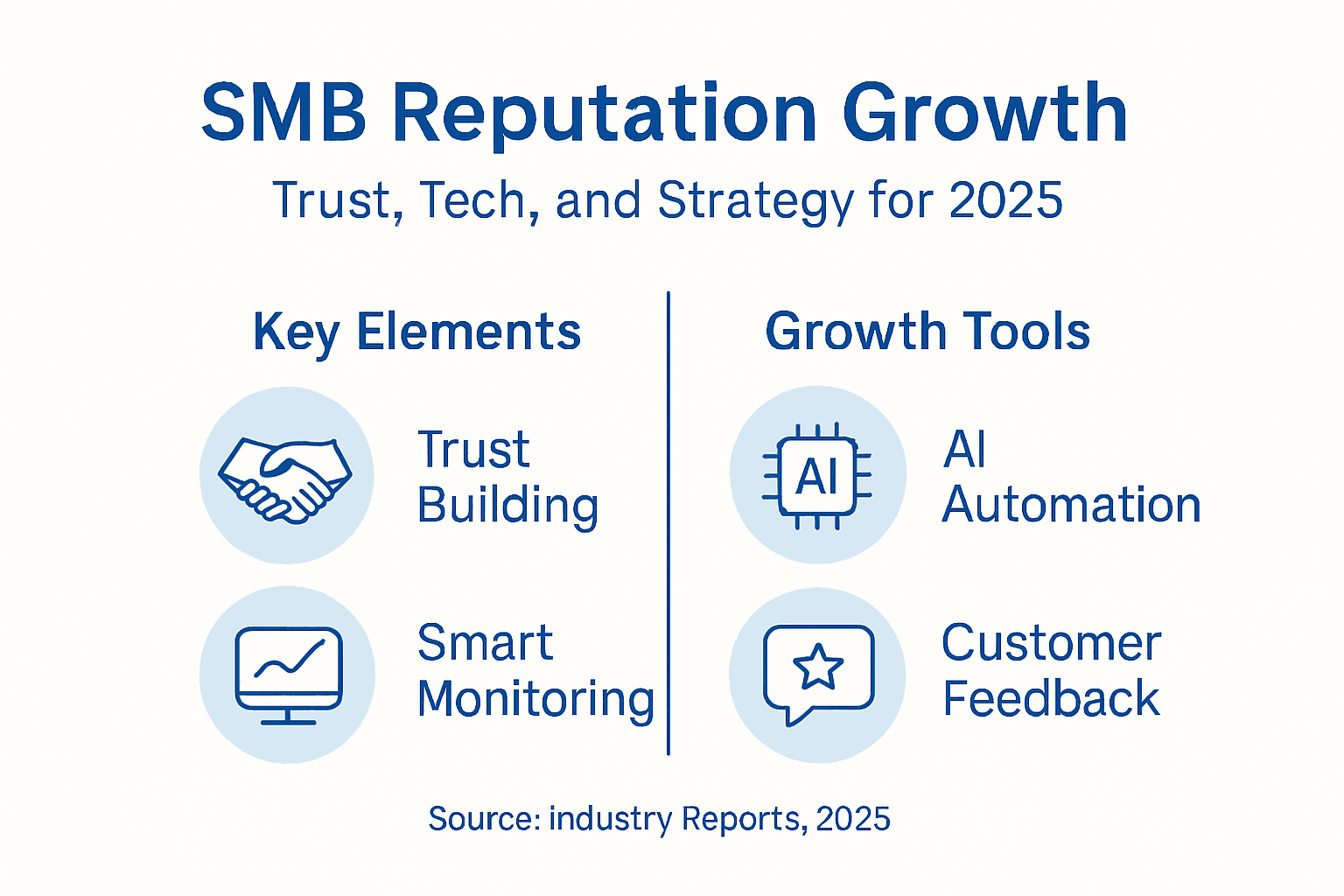
Reputation growth in 2025 is not just about marketing – it’s about building a comprehensive ecosystem of trust, technological innovation, and customer-centric approaches. Small businesses must view reputation management as a strategic investment that requires continuous adaptation, technological integration, and a genuine commitment to delivering exceptional value.
Pro tip: Develop a comprehensive digital reputation roadmap that integrates technology, customer feedback, and strategic communication to create a sustainable competitive advantage.
Take Control of Your Reputation with Smart Automation and Real Support
Managing reputation in 2025 demands a proactive, technology-driven approach that empowers you to monitor sentiment in real time, combat misinformation, and ensure compliance with evolving regulations. If you are an SMB or SME striving to grow your brand with transparency and trust while simplifying complex tools, Go Online Now-Connect has the exact solution crafted for you.
Unlock powerful marketing automation tools combined with an all-in-one CRM and expert digital marketing services to streamline your reputation management and digital growth. Explore our Digital Marketing Archives – Go Online Now to see how smart, ethical reputation strategies can boost your business credibility and customer loyalty. Ready to grow smarter, not harder? Visit Ga nu online today and transform how your business builds trust and wins in a digital-first world.
Veelgestelde vragen
What is reputation management in 2025?
Reputation management in 2025 has evolved into a multifaceted approach that goes beyond just managing online reviews. It focuses on building a strategic asset through consistent positive interactions, transparent communication, and thorough stakeholder experience management across digital and physical platforms.
How does artificial intelligence enhance reputation monitoring?
Artificial intelligence enhances reputation monitoring by providing real-time insights, tracking sentiment across multiple platforms, detecting potential risks early, and automating response strategies. This enables organizations to anticipate challenges and manage their public image more effectively.
What role do digital review platforms play in reputation management?
Digital review platforms serve as critical battlegrounds for brand reputation, where misinformation can spread quickly. Businesses must implement strategies to combat threats like fake reviews and disinformation campaigns to maintain their credibility and public trust.
What compliance requirements are important for businesses in reputation management?
In 2025, businesses must adhere to stringent FTC regulations that require explicit disclosure of sponsored content, elimination of deceptive designs, proper documentation of marketing interactions, and enhanced consumer privacy protections to ensure ethical reputation management.
Aanbevolen
- Reputation Management for SMEs: Building Trust and Growth – Go Online Now
- Improving Online Reputation Process for Business Growth – Go Online Now
- Value of Online Reputation Management for Business Owners
- Marketing Trends in 2025: Essential Guide for SMBs – Go Online Now
- US Stocks: Opt For Resilience, Growth And Value / Naijatipsland