
Over 90 percent of American shoppers use online searches to find local businesses today. With so many choices just a click away, even a minor error in your online listings can turn customers toward a competitor. A clear strategy for managing your business profiles, from reputation to local SEO, puts you in front of more customers and builds lasting trust in your brand.
Step 1: Audit current local listings and online profiles
Optimizing your local business presence starts with a comprehensive audit of your existing online listings and profiles. This systematic process helps you understand your current digital footprint and identify areas for improvement. When conducting this audit, you will collect critical intelligence about your business’s online representation across multiple digital platforms.
Begin by creating a spreadsheet to track all your current online listings. Search for your business name on major platforms like Google Business Profile, Yelp, Facebook, LinkedIn, and industry specific directories. Check for consistent information including business name, address, phone number, website, hours of operation, and description. Look for any duplicate listings, outdated information, or variations in how your business details are presented. Pay special attention to accuracy the smallest discrepancy can confuse potential customers and negatively impact your local search rankings.

A pro tip when auditing: Use professional reputation management tools to help streamline the process and catch listings you might miss manually. These tools can automatically scan multiple platforms and provide a comprehensive overview of your online presence. Quick warning ensure you verify and update listings yourself even if using automated tools automation is helpful but cannot replace your personal review and verification.
Once you complete your audit, you will have a clear roadmap for cleaning up and optimizing your local business profiles. The next step involves strategically updating and enhancing these listings to maximize your online visibility and attract more local customers.
Step 2: Enhance business information for local visibility
Improving your local business visibility requires strategic optimization of your online business information. The goal is to create a comprehensive and compelling digital profile that attracts potential customers and improves your search rankings. You can optimize your website for better local search performance by carefully refining your business details across multiple platforms.
Start by ensuring your core business information is accurate and consistent everywhere it appears online. This includes your business name, physical address, phone number, website URL, business category, operating hours, and a detailed description of your services. Use high quality professional images that showcase your business interior, exterior, products, or team. Write a compelling business description that highlights your unique value proposition and includes relevant local keywords that potential customers might use when searching for your services.
A critical pro tip is to leverage customer reviews and testimonials as part of your information enhancement strategy. Gather and display positive Google reviews that demonstrate your business credibility and customer satisfaction. Encourage satisfied customers to share their experiences and respond professionally to all reviews, both positive and negative. This approach not only improves your online reputation but also signals to search engines that your business is active and engaged with its community.
By meticulously enhancing your business information, you create a strong foundation for local visibility. The next step involves actively monitoring and updating your online profiles to maintain their accuracy and appeal.
Step 3: Implement targeted local SEO and automation
Targeted local SEO requires a strategic approach to positioning your business prominently in local search results. Understand your team’s readiness for implementing local SEO strategies by first assessing your current digital marketing capabilities and resources. The key is developing a systematic approach that combines precise technical optimization with smart automation techniques.
Begin met building consistent citations and directory listings that ensure your business name, address, and phone number appear uniformly across multiple online platforms. This consistency not only enhances your credibility but also significantly improves your local search rankings. Utilize local SEO automation tools that can help track and manage these citations, reducing manual work and minimizing potential errors. Focus on key platforms like Google Business Profile, Yelp, Facebook, and industry specific directories relevant to your business sector.
A critical pro tip is understanding whether to handle local SEO internally or consider professional outsourcing options. While automation tools can streamline many processes, they cannot completely replace strategic human insight. Develop a balanced approach that leverages technology while maintaining a personalized touch in your local marketing efforts. Monitor your local SEO performance regularly, track key metrics like search ranking, website traffic from local searches, and conversion rates to continuously refine your strategy.
By implementing these targeted local SEO and automation techniques, you create a robust digital foundation that increases your visibility and attracts more local customers. The next phase involves continuously optimizing and adapting your approach based on performance insights.
Step 4: Leverage reviews and reputation management tools
Managing your online reputation requires a strategic approach to collecting, monitoring, and responding to customer feedback across multiple platforms. Understand the critical value of online reputation management by recognizing how customer reviews directly impact your business visibility and customer trust.
Begin by utilizing crowd sourced review platforms like Yelp, where customers can submit detailed reviews using star ratings. Create comprehensive business profiles that allow you to update contact information, hours, and add special promotions. Implement a systematic process for actively monitoring these platforms regularly tracking and responding to both positive and negative reviews. Develop a professional response strategy that demonstrates your commitment to customer satisfaction showing potential clients that you value feedback and are dedicated to continuous improvement.
A critical pro tip is integrating reputation management tools that can automate review tracking across multiple channels. Monitor your social media reputation carefully to ensure a consistent and positive brand image. These tools can help you quickly identify and address potential reputation challenges before they escalate. Aim to generate a steady stream of positive reviews by proactively asking satisfied customers to share their experiences and making the review process simple and straightforward.
By effectively leveraging reviews and reputation management tools, you create a robust system for maintaining and enhancing your business’s online credibility. The next phase involves developing a long term strategy for consistently managing your digital reputation.
Step 5: Track performance and refine optimization strategies
Collecting and analyzing competitive intelligence is crucial for understanding how your local business optimization efforts are performing. Tracking performance requires a systematic approach that goes beyond surface level metrics to provide actionable insights into your digital marketing strategies.
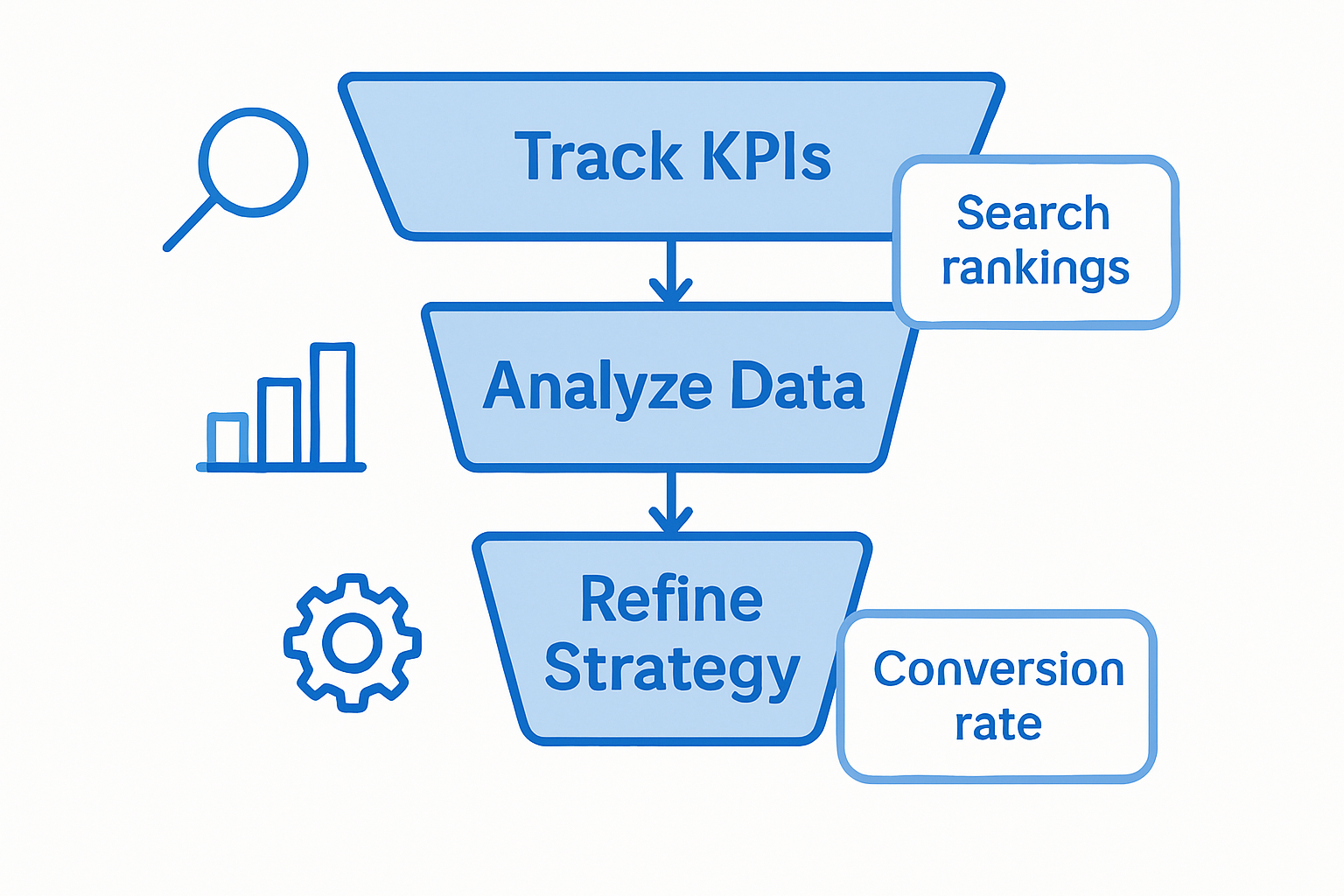
Develop a comprehensive tracking system that monitors key performance indicators across multiple channels. Utilize analytics tools to measure critical metrics such as website traffic, local search rankings, conversion rates, customer engagement, and review sentiment. Create a monthly reporting dashboard that provides a clear visual representation of your progress, allowing you to quickly identify trends, successes, and areas requiring improvement. Pay close attention to how changes in your local SEO and online reputation management strategies correlate with shifts in these performance metrics.
A critical pro tip is to approach performance tracking as a continuous improvement process. Regularly compare your performance against industry benchmarks and your own historical data. Be prepared to make swift strategic adjustments based on the insights you uncover. This might involve refining your keyword strategies, updating business listings, improving content, or adjusting your reputation management approach. Remember that optimization is an ongoing journey what works today might need refinement tomorrow.
By meticulously tracking and analyzing your performance, you transform raw data into strategic intelligence that drives your local business growth. The final phase involves developing a long term optimization strategy that adapts to changing digital landscapes and customer expectations.
Take Control of Your Local Business Growth with the Right Tools
Optimizing your local business presence is vital but can be overwhelming when juggling inconsistent listings, managing customer reviews, and tracking performance. The article highlights challenges such as auditing online profiles, enhancing business information, and implementing targeted local SEO while balancing reputation and automation. You need a simple yet powerful solution that combines these essential functions without complex setups or hidden costs.
Ontdek hoe Ga nu online solves these exact pain points by offering an all-in-one marketing automation software and CRM designed with SMBs and SMEs in mind. Enjoy seamless management of your local SEO, reputation, and customer engagement with real human support and done-for-you setup. Start growing smarter today by exploring our Digitale marketingarchieven En Website Services Archives to see how our services align perfectly with your business goals.
Veelgestelde vragen
How do I perform a local business listing audit?
Performing a local business listing audit involves checking your existing online profiles for accuracy and consistency. Start by creating a spreadsheet to track your business name, address, phone number, and other vital details across platforms like Google Business Profile and Yelp.
What should I include in my local business information for SEO?
Include your business name, address, phone number, website URL, category, operating hours, and a detailed description of your services. Use high-quality images and relevant local keywords to enhance attractiveness and searchability.
How can I use customer reviews to enhance my local business presence?
Leverage customer reviews by encouraging satisfied clients to share their experiences and responding professionally to all feedback. Displaying positive reviews prominently not only boosts your credibility but also enhances local search rankings.
What are effective strategies for tracking the performance of my local SEO efforts?
Use analytics tools to monitor key performance indicators like website traffic, local search rankings, and conversion rates. Create a monthly report to visualize progress and identify trends or areas needing improvement.
How often should I update my local business information online?
Regularly update your local business information, ideally at least once a month, to ensure accuracy and relevance. This includes revising promotional offers, reflecting changes in operational hours, and refreshing content to engage users.
Aanbevolen
- The Importance of Local SEO 2023- Go online Now
- How to Optimize Your Website – Go Online Now
- Outsourcing Local SEO | Go Online Now
- Time Constraints & Priorities: Local SEO – Go Online Now
- Business Presentation Tips: Complete Expert Guide – Projector Display