Small businesses using integrated marketing automation see a 75% improvement in lead conversion rates. Yet many SMBs still struggle with expensive, complex platforms that promise results but deliver frustration. In 2025, the landscape shifts toward affordable, all-in-one solutions that combine CRM, email, SMS, and intelligent automation without the enterprise price tag or technical headaches.
Key Takeaways
| Point | Details |
|---|---|
| Integrated platforms drive efficiency | All-in-one CRM and automation tools eliminate disconnected systems and reduce costs. |
| AI enhances lead nurturing | Predictive analytics and smart scoring improve conversion rates without manual effort. |
| Multi-channel automation wins | Combining SMS, email, and funnels delivers 90%+ engagement versus email alone. |
| Affordable solutions increase adoption | Simple platforms with human support help 70% of SMBs succeed with automation. |
| Right platform choice matters | Proper selection boosts conversions significantly and saves up to 75% of marketing time. |
Why Marketing Automation Matters for SMBs in 2025
By 2025, 70% of SMBs globally use some form of marketing automation. This isn’t a trend reserved for Fortune 500 companies anymore. Small businesses recognize that automation levels the playing field, allowing them to compete with larger enterprises through smarter lead management and consistent customer engagement.
Yet adoption doesn’t mean success. Many SMBs face three critical pain points:
- High costs that eat into already tight marketing budgets
- Technical complexity requiring dedicated IT resources they don’t have
- Disconnected tools forcing teams to juggle multiple platforms and subscriptions
These challenges explain why growth and lead management top the priority list for small business owners in 2025. You need systems that work together, not against you. The marketing trends in 2025 show a clear shift toward integration, simplicity, and transparent pricing.
Think of marketing automation as your digital sales team that never sleeps. It captures leads, nurtures relationships, sends timely follow-ups, and tracks every interaction. When done right, automation transforms how you convert prospects into paying customers. When done wrong, it becomes another expensive software subscription gathering digital dust.
The businesses winning in 2025 choose platforms that eliminate complexity while delivering real results. They prioritize tools that include onboarding support, unified dashboards, and multi-channel capabilities. Most importantly, they avoid the trap of paying enterprise prices for features they’ll never use.
Key Trends Shaping Marketing Automation in 2025
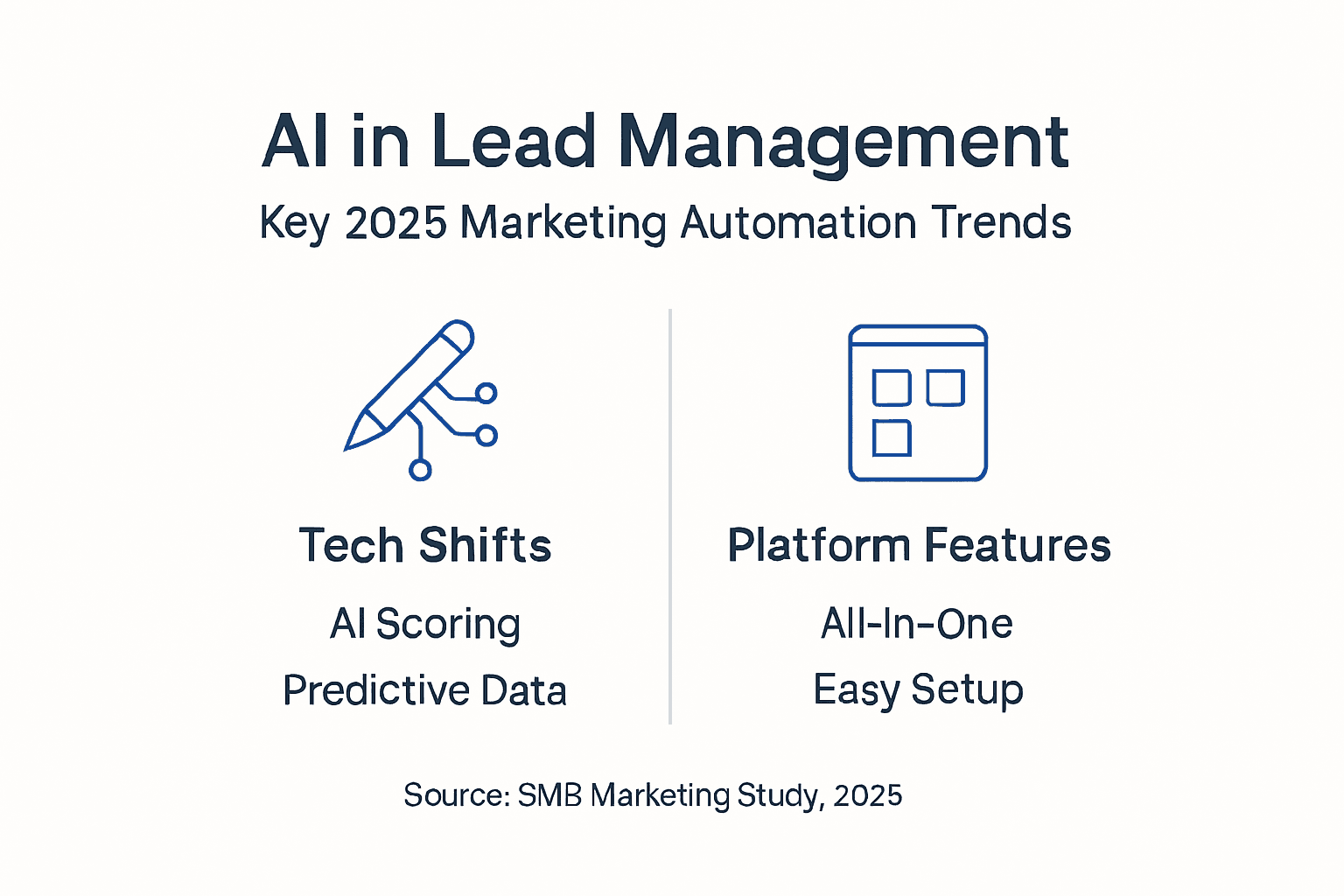
Three major technology shifts are transforming how SMBs approach marketing automation. Understanding these trends helps you make smarter platform decisions and avoid costly mistakes.
All-in-One Integration Replaces Fragmented Tools
The days of juggling separate systems for email, CRM, appointments, and lead tracking are ending. Modern platforms combine these functions into unified dashboards. This integration reduces costs, eliminates data silos, and gives you a complete view of every customer interaction. You spend less time switching between tools and more time growing your business.

AI Drives Smarter Lead Management
Artificial intelligence now powers practical features like lead scoring and predictive analytics. These tools identify your hottest prospects automatically, prioritize follow-ups, and suggest the best times to reach out. You’re not replacing human judgment but enhancing it with data-driven insights that improve conversion rates.
Multi-Channel Automation Dominates Single-Channel Approaches
Email alone no longer cuts it. SMS marketing automation integrated with email increases open rates to over 90% compared to email alone averaging around 20-30%. Adding automated funnels, web chat, and social media touchpoints creates multiple paths for prospects to engage with your brand.
Consider this reality check: your prospects check their phones constantly but might ignore email for days. A well-timed SMS reminder about an abandoned cart or upcoming appointment can recover revenue that email alone would miss.
Pro Tip: Start with two channels (email plus SMS) before expanding. Master the basics of marketing automation trends in 2025 by ensuring your core systems work flawlessly together.
The shift toward email marketing in 2025 emphasizes quality over quantity. Automated segmentation ensures the right message reaches the right person at the right time. This personalization drives engagement rates that blast emails could never achieve.
These technologies work best when they’re simple to implement and supported by real humans, not chatbots. The platforms succeeding in 2025 balance sophisticated features with user-friendly interfaces that small business teams can master quickly.
Common Misconceptions About Marketing Automation
Three persistent myths prevent SMBs from adopting effective marketing automation. Let’s address each one with current data and practical realities.
Myth 1: Marketing Automation Is Only for Large Enterprises
The 70% SMB adoption rate proves this wrong. Small businesses now represent the fastest-growing segment of automation users. Affordable platforms designed specifically for SMBs offer enterprise-level features without the enterprise price tag or complexity. You don’t need a dedicated marketing operations team to succeed with automation anymore.
Myth 2: Automation Platforms Are Too Complex and Expensive
Here’s the painful truth: 68% of SMBs abandon platforms due to cost and complexity despite availability of affordable solutions. The problem isn’t automation itself but choosing the wrong platform. Enterprise tools built for Fortune 500 companies overwhelm small teams with unnecessary features and steep learning curves.
The solution? Select platforms that include done-for-you setup, training resources, and responsive human support. These features dramatically reduce the technical barriers that cause abandonment. Look for transparent pricing with no hidden fees or surprise charges as your contact list grows.
Myth 3: Email-Only Automation Is Sufficient
Email remains important, but relying on it exclusively leaves money on the table. Multi-channel approaches combining email, SMS, web chat, and automated funnels deliver engagement rates that single-channel strategies cannot match. Your prospects interact across multiple touchpoints, and your automation should follow them there.
Think about your own behavior as a consumer. You might miss an email but immediately check a text message. You might ignore a newsletter but respond to a personalized chat message on a website. Effective automation meets people where they are, not where you wish they were.
Pro Tip: Audit your current tools honestly. If you’re paying for features you don’t use or struggling with technical setup, you’re likely overpaying for the wrong solution. The benefits of marketing automation only materialize when you actually use the platform consistently.
Successful SMBs in 2025 choose platforms that match their current skills and budget while offering room to grow. They prioritize ease of use over feature lists and support quality over brand name recognition.
Comparing Marketing Automation Platforms for SMBs
Choosing the right marketing automation platform requires evaluating several critical factors beyond basic features. Use this framework to assess options that fit your business needs and budget.
Integration Capabilities Matter Most
Your marketing automation platform should include built-in CRM, email, SMS, appointment scheduling, and pipeline management. Separate subscriptions for each function quickly become expensive and create data synchronization headaches. Look for true all-in-one solutions, not platforms that require multiple add-ons.
Compare Total Cost of Ownership, Not Just Monthly Fees
Many platforms advertise low starting prices but charge extra for essential features, additional users, contact limits, SMS messages, and support. Calculate your true monthly cost including all necessary features before committing. Factor in setup costs, training time, and potential consultant fees.
Support Quality Determines Success Rates
Platforms offering done-for-you setup, live onboarding, and responsive human support dramatically increase your chances of success. Email-only or chatbot support often leaves SMBs stuck when issues arise. According to research on SMB conversions, Go Online Now-Connect offers affordable all-in-one CRM and marketing automation with done-for-you setup and human support, tailored for SMBs.
| Platform | Starting Price | CRM Included | Done-for-You Setup | SMS Included | Support Type |
|---|---|---|---|---|---|
| Ga nu online - Maak verbinding | $97/month | Yes | Yes | Yes | Live human support |
| HubSpot | $800/month | Yes (limited) | No | Add-on cost | Email/chat |
| Salesforce Marketing Cloud | $1,250/month | Separate purchase | No | Add-on cost | Tiered support |
| MailChimp-account | $299/month | Basic only | No | Add-on cost | Email only |
Pro Tip: Request a competitor comparison from potential vendors. Reputable platforms will transparently show how they stack up on features, pricing, and support. If a vendor refuses this comparison, consider it a red flag.
The best marketing automation software for SMBs balances three elements: comprehensive features, affordable pricing, and quality support. Compromise on any one element, and you risk joining the 68% who abandon their platforms.
Test drive platforms with free trials that include full feature access, not limited demos. This hands-on experience reveals usability issues and support quality before you commit.
Practical Benefits: How Marketing Automation Drives Growth
Let’s move beyond theory to measurable business outcomes. Marketing automation delivers four critical benefits that directly impact your bottom line.
Improved Lead Conversion Rates
Integrated marketing automation improves lead conversion rates significantly while saving substantial time on campaign management. Automated lead scoring identifies hot prospects so your team focuses energy on the most promising opportunities. Triggered follow-up sequences ensure no lead falls through the cracks during busy periods.
Massive Time Savings on Marketing Operations
Unified platforms save up to 75% of time previously spent on manual marketing tasks. Instead of logging into multiple systems, copying data between tools, and manually sending follow-ups, automation handles these repetitive tasks. Your team redirects this saved time toward strategy, creative work, and personal customer interactions that actually require human expertise.
Enhanced Customer Lifetime Value
Consistent automated engagement keeps your brand top-of-mind long after the initial purchase. Birthday messages, anniversary offers, reorder reminders, and educational content nurture relationships that drive repeat business. The cost of retaining existing customers is far lower than acquiring new ones.
Better Campaign Performance Through Multi-Channel Reach
Automated campaigns spanning email, SMS, and web interactions achieve higher engagement and conversion rates than single-channel efforts. You meet prospects across their preferred communication channels, increasing the chances they’ll respond when ready to buy.
Think of the lead management checklist for SMBs as your roadmap to these benefits. Each automated touchpoint moves prospects closer to purchase while requiring minimal manual intervention from your team.
These benefits compound over time. A small improvement in conversion rates, multiplied across hundreds of leads per month, generates substantial revenue growth. The time savings allow you to scale marketing efforts without proportionally scaling headcount.
Implementing Marketing Automation Successfully
Success with marketing automation follows a clear roadmap. Use these steps to implement your platform effectively and avoid common pitfalls.
- Assess Your Specific Business Needs and Budget
Document your current lead volume, team size, and most time-consuming marketing tasks. Identify which processes you want to automate first. Set a realistic budget that includes platform costs, implementation time, and training.
- Select an Affordable, Integrated Platform with Strong Support
Prioritize platforms offering all-in-one functionality, transparent pricing, and responsive human support. Verify that SMS, email, CRM, and appointment scheduling are included in the base price. According to ROI research, leveraging done-for-you setup and human assistance reduces technical barriers and improves ROI.
- Use Onboarding Assistance to Accelerate Adoption
Take full advantage of setup help, training sessions, and documentation. The platforms with best success rates include hands-on configuration support that gets you operational within days, not months. Don’t skip onboarding calls or try to figure everything out alone.
- Deploy Multi-Channel Campaigns Including SMS and Email
Start with your highest-value customer journey: maybe new lead nurturing or appointment reminders. Build automated sequences that combine email and SMS touchpoints. Test messaging and timing, then refine based on engagement data.
- Monitor Key Performance Indicators and Refine Continuously
Track conversion rates, time saved on manual tasks, email open rates, SMS response rates, and revenue attributed to automation. Review these metrics monthly and adjust your sequences based on what the data reveals. Small optimizations compound into significant improvements.
Pro Tip: Implement one automated process at a time until it works smoothly before adding the next. Trying to automate everything simultaneously overwhelms your team and leads to poor execution across all areas.
Follow the lead nurturing process for SMB growth to structure your automated sequences logically. Each touchpoint should provide value and move prospects toward a clear next step.
Successful implementation requires commitment from leadership and buy-in from the team members who will use the platform daily. Involve them in platform selection and training to increase adoption rates.
The Future of Marketing Automation for SMB Growth
The 2025 marketing automation landscape favors SMBs willing to embrace integrated, intelligent, and multi-channel approaches. Integration eliminates the tool sprawl that drains budgets and productivity. AI-powered features make sophisticated lead management accessible to businesses without data science teams. Multi-channel automation meets prospects where they naturally engage.
Yet technology alone doesn’t guarantee success. Simplicity and human support remain critical factors separating platforms that SMBs actually use from those they abandon. The winning combination pairs powerful features with interfaces that real business owners can master without technical backgrounds.
Now is the time to evaluate whether your current marketing tools serve your growth goals or hold you back. The marketing automation tips for SMBs emphasize starting smart and scaling strategically. Choose platforms that grow with your business, offer transparent pricing, and provide support when you need it.
Your competitors are already using these tools to capture and convert leads more effectively. The question isn’t whether to adopt marketing automation but which platform will help you compete successfully in 2025 and beyond.
Discover Affordable Marketing Automation Solutions for SMBs
Ready to boost your lead conversions and reclaim hours of marketing time each week? Go Online Now-Connect delivers everything covered in this article: integrated CRM, email and SMS automation, intelligent lead management, and multi-channel campaign tools designed specifically for small businesses.
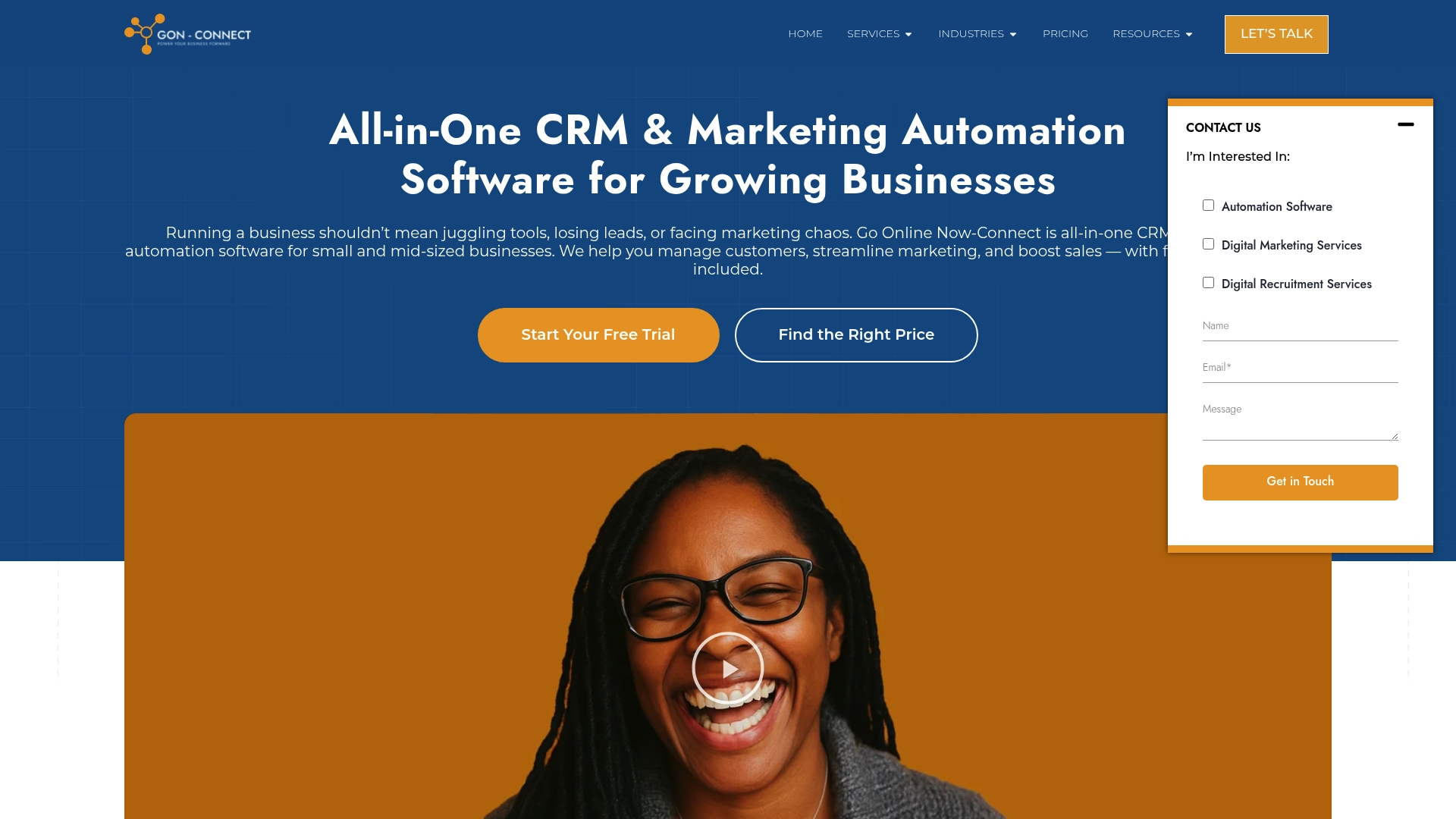
What sets us apart is our commitment to making marketing automation actually work for SMBs. We provide done-for-you setup, real human support via email and chat, and transparent pricing with no hidden fees or surprise charges. Our affordable marketing automation software includes everything you need in one simple system.
Businesses using our platform see up to 85% improvement in conversions and save 75% of time spent on marketing operations within 90 days. Explore our marketing automation solutions for growth or check out our CRM integrated marketing tools to see how we help SMBs compete smarter.
Veelgestelde vragen
What is the most important feature for SMB marketing automation platforms?
Integration of CRM, email, SMS, and appointment scheduling into one unified system matters most. This eliminates disconnected tools, reduces costs, and provides a complete view of every customer interaction. Look for true all-in-one platforms, not systems requiring multiple add-ons.
How can SMBs keep marketing automation affordable?
Choose platforms with transparent pricing that includes all essential features in the base price, not as expensive add-ons. Verify that contact limits, user seats, and SMS messages fit your needs without triggering surprise charges. Platforms offering done-for-you setup eliminate costly consultant fees.
What channels should SMBs automate besides email?
SMS marketing delivers over 90% open rates compared to 20-30% for email and should be your second automated channel. Add appointment reminders, web chat, and social media touchpoints as you grow. Multi-channel approaches dramatically outperform email-only automation.
How quickly can SMBs see results from marketing automation?
Businesses using integrated platforms with proper onboarding typically see measurable improvements in lead response time within the first month. Significant gains in conversion rates and time savings become apparent within 90 days. Quick wins include automated appointment reminders and new lead follow-up sequences.
What common mistakes should SMBs avoid during implementation?
The biggest mistake is choosing enterprise platforms that are too complex for small teams. Others include skipping onboarding support, trying to automate everything at once, and neglecting to monitor performance data. Start with one high-value process, master it completely, then expand to additional use cases.