
Every Marketing Manager at an American small or mid-sized business knows how quickly the digital world evolves. Staying competitive feels tougher each year, especially with limited time and budget for technology upgrades. The rise of marketing automation promises relief by combining artificial intelligence with human strategy, delivering not just efficiency but also genuinely personalized outreach. Discover how affordable automation tools can transform your growth strategy and help your team achieve smarter results in 2025.
Defining Marketing Automation and 2025 Evolution
Marketing automation represents a strategic technological approach that transforms how businesses engage with customers by systematically streamlining repetitive marketing tasks through intelligent digital solutions. As we approach 2025, this technology is evolving from simple task automation to a sophisticated ecosystem that blends artificial intelligence with human insight.
At its core, marketing automation encompasses sophisticated software platforms designed to optimize campaign management and customer interactions. The technology enables businesses to:
- Automatically generate and nurture leads
- Personalize communication across multiple digital channels
- Track and analyze customer engagement metrics
- Segment audiences with unprecedented precision
- Trigger targeted communications based on specific customer behaviors
The 2025 landscape of marketing automation is distinguished by its emerging symbiosis between technological capabilities and human strategic thinking. Unlike previous generations of automation that focused primarily on efficiency, modern systems are integrating advanced AI technologies that can interpret complex emotional and contextual signals.
Artificial Intelligence is playing a pivotal role in this transformation, enabling marketing teams to move beyond generic communication strategies. By analyzing massive datasets, AI-powered automation platforms can predict customer preferences, anticipate needs, and craft highly personalized experiences that feel genuinely human.
Marketing automation in 2025 is not about replacing human marketers, but empowering them with intelligent tools that amplify their strategic capabilities.
The technological evolution emphasizes intelligent personalization En predictive engagement, where automation systems don’t just execute tasks but actually understand and respond to nuanced customer interactions.
Pro tip: Invest in marketing automation platforms that offer robust AI integration and emphasize human-centered design to maximize your strategic potential.
Top Marketing Automation Technologies for 2025
The marketing automation landscape in 2025 is characterized by increasingly sophisticated technologies that leverage artificial intelligence and machine learning to deliver unprecedented levels of personalization and strategic insight. Advanced AI-powered marketing technologies are transforming how businesses engage with customers across multiple digital touchpoints.
Key technologies driving this transformation include:
- Autonomous AI Marketing Platforms
- Self-adjusting campaign algorithms
- Realtime prestatie-optimalisatie
- Voorspellende modellering van klantgedrag
- Integrated Multichannel Automation Systems
- Seamless CRM and ERP integrations
- Cross-platform communication tracking
- Unified customer interaction management
- Immersive Experience Technologies
- Virtual and augmented reality marketing interfaces
- Interactive personalized content generation
- Contextual engagement mechanisms
The evolution of marketing automation technologies emphasizes intelligent decision-making En adaptive customer experiences. Modern platforms are no longer just execution tools but strategic partners that can analyze complex datasets, predict market trends, and dynamically adjust marketing strategies in real time.
Artificial intelligence remains the cornerstone of these technological advancements, enabling marketers to move beyond generic communication strategies. By leveraging machine learning algorithms, businesses can now create hyper-personalized marketing experiences that feel genuinely tailored to individual customer preferences and behaviors.
Marketing automation in 2025 represents a symbiotic relationship between human creativity and technological intelligence, where AI amplifies human strategic capabilities.
The integration of advanced technologies like AI-powered chatbots, predictive analytics, and immersive engagement tools is revolutionizing how businesses approach customer interaction and marketing strategy.

Pro tip: Prioritize marketing automation platforms that offer flexible AI integration, comprehensive analytics, and seamless cross-platform capabilities to maximize your strategic potential.
AI Personalization and Omnichannel Integration
Advanced AI-driven personalization techniques are revolutionizing how businesses create meaningful, tailored customer experiences across multiple digital platforms. By leveraging sophisticated machine learning algorithms and predictive analytics, companies can now deliver hyper-personalized interactions that feel intuitive and genuinely responsive to individual customer needs.
Key components of AI-powered personalization include:
- Data Integration Strategies
- Cross-channel customer behavior tracking
- Unified customer profile development
- Real-time data synchronization
- Intelligent Content Recommendation
- Dynamic content adaptation
- Predictive interest modeling
- Contextual engagement triggers
- Personalization Optimization
- Machine learning preference analysis
- Automated customer segmentation
- Individualized communication pathways
The evolution of omnichannel integration represents a sophisticated approach to customer engagement that transcends traditional marketing boundaries. Modern AI technologies enable businesses to create seamless experiences where customer interactions flow smoothly across websites, mobile apps, social media platforms, and physical touchpoints.
Artificial intelligence plays a crucial role in interpreting complex customer data signals, allowing marketers to move beyond generic communication strategies. By analyzing behavioral patterns, purchase history, and real-time interactions, AI systems can generate incredibly precise and contextually relevant marketing experiences.
Here’s how AI-powered personalization strategies compare by effectiveness and business benefit:
| Strategy Type | Business Benefit | Typical Challenge |
|---|---|---|
| Data Integration | Unified customer insights | Ensuring data accuracy |
| Intelligent Content Recommendation | Higher engagement rates | Balancing automation with relevance |
| Personalization Optimization | Increased conversion and loyalty | Avoiding over-segmentation |
Effective AI personalization is not about invasive tracking, but creating genuinely helpful, value-driven customer interactions.
Ethical considerations remain paramount in this technological landscape. Businesses must balance sophisticated personalization capabilities with robust data privacy protections and transparent algorithmic practices.
Pro tip: Implement a comprehensive data governance framework that prioritizes customer consent and provides clear opt-out mechanisms for personalized marketing interactions.
Data Privacy, Compliance, and Trust Factors
AI-driven digital marketing governance represents a critical intersection of technological innovation and ethical responsibility. As marketing automation becomes increasingly sophisticated, businesses must navigate complex regulatory landscapes while maintaining customer trust and protecting individual privacy rights.
Key compliance considerations for responsible AI marketing include:
- Data Collection Transparency
- Clear consent mechanisms
- Explicit purpose disclosure
- Opt-out options for consumers
- Ethical AI Governance
- Algorithmic bias prevention
- Regular compliance audits
- Independent ethical review processes
- Privacy Protection Strategies
- Data minimization protocols
- Secure information storage
- Restricted data access controls
The evolving regulatory environment demands a proactive approach to data ethics that goes beyond mere legal compliance. Modern organizations must develop comprehensive frameworks that prioritize individual privacy, demonstrate responsible data management, and build genuine customer confidence.
Artificial intelligence introduces unprecedented complexity into marketing practices, requiring businesses to balance technological capabilities with robust ethical considerations. This means developing sophisticated governance models that provide transparency, accountability, and meaningful consumer protections.
Trust is the fundamental currency of digital marketing – once lost, it becomes nearly impossible to regain.
Successful implementation requires a holistic strategy that integrates technological innovation with human-centered design principles, ensuring that AI serves customer interests while respecting individual autonomy and privacy expectations.
Pro tip: Develop a comprehensive data ethics policy that explicitly outlines your organization’s commitment to responsible AI use, transparent data practices, and ongoing privacy protection.
Cost-Efficiency and Accessible Tools for SMBs
Automation technologies are transforming SMB marketing strategies by providing powerful, affordable solutions that level the competitive playing field. Small and mid-sized businesses can now access sophisticated marketing tools that were previously available only to large corporations, enabling more strategic and data-driven growth approaches.
Key cost-efficient marketing automation capabilities for SMBs include:
- No-Code Automation Platforms
- Drag-and-drop interface design
- Easy workflow customization
- Minimal technical skills required
- Integrated Business Ecosystem Tools
- Unified CRM and marketing platforms
- Seamless cross-department data sharing
- Consolidated operational insights
- Scalable AI-Powered Solutions
- Predictive customer behavior analytics
- Automated performance optimization
- Intelligent resource allocation
The emergence of AI-driven marketing technologies represents a significant breakthrough for SMBs seeking efficient, affordable growth strategies. These intelligent platforms go beyond traditional automation by providing proactive insights, reducing administrative overhead, and enabling more personalized customer engagement.
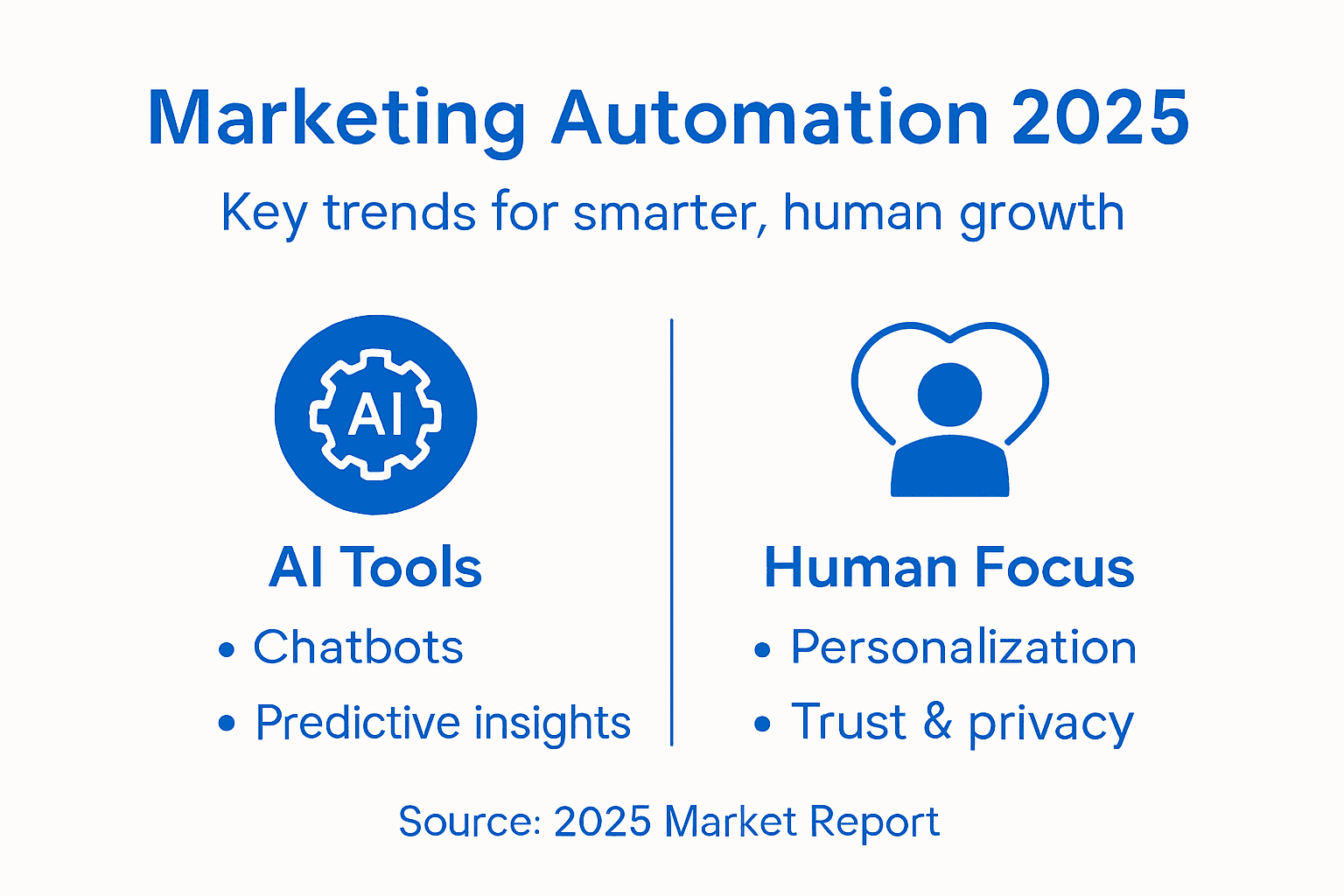
Modern marketing automation tools are designed with SMB constraints in mind, offering flexible pricing models, intuitive interfaces, and modular capabilities that allow businesses to incrementally adopt advanced technologies without overwhelming financial investments.
This table summarizes how marketing automation tools empower SMBs:
| Tool Type | Growth Impact | Ease of Adoption |
|---|---|---|
| No-Code Platforms | Faster campaign launches | Very user-friendly |
| Business Ecosystem Tools | Improved data sharing | Moderate setup |
| Scalable AI Solutions | Personalized marketing at scale | Easily expanded as business grows |
Cost-efficiency in marketing automation isn’t about spending less, but about investing smarter and achieving more with fewer resources.
By leveraging these innovative technologies, small businesses can create sophisticated marketing strategies that compete with larger enterprises, transforming technological limitations into competitive advantages.
Pro tip: Start with a comprehensive marketing automation platform that offers scalable features and transparent pricing, allowing you to expand capabilities as your business grows.
Unlock Smarter Growth with Simple Marketing Automation
The article highlights the growing complexity and evolving expectations of marketing automation in 2025. Many SMBs face challenges like overwhelming technology, disconnected tools, and a lack of true personalization that integrates AI with human insight. If you want to avoid getting lost in over-engineered platforms while maximizing your lead nurturing, omnichannel engagement, and CRM management, it is time to choose a solution designed specifically for your business.
Go Online Now-Connect offers an all-in-one marketing automation software that combines email marketing, SMS, funnels, lead nurturing, and reputation management with a unified CRM and expert digital marketing support. Unlike complicated and expensive options, our platform is easy to use, affordable, and includes done-for-you setup and real human support to help you start smart growth today.
Explore how to simplify your marketing tools and amplify your results with the Automatiseringsarchieven En Digitale marketingarchieven on our site.
Ready to grow smarter, not harder? Visit Ga nu online to see how our integrated platform empowers you to save time, increase conversions by up to 85 percent, and build meaningful customer relationships with ease. Get started now and transform your marketing automation journey with a partner who truly understands SMB needs.
Veelgestelde vragen
What is marketing automation and how is it evolving towards 2025?
Marketing automation is a technological approach that streamlines repetitive marketing tasks through intelligent solutions. By 2025, it is evolving to integrate advanced AI technologies, allowing for smarter personalization and predictive engagement that enhances human marketing strategies.
How can small and mid-sized businesses benefit from marketing automation in 2025?
Small and mid-sized businesses can leverage cost-efficient marketing automation tools, including no-code platforms and scalable AI solutions, to access sophisticated marketing strategies that enhance customer engagement and allow them to compete effectively with larger corporations.
What role does artificial intelligence play in marketing automation by 2025?
Artificial intelligence enhances marketing automation by analyzing vast datasets to predict customer preferences and behaviors. This enables businesses to deliver hyper-personalized experiences and create intelligent content recommendations based on individual customer needs.
What are the key technologies shaping marketing automation for 2025?
Key technologies include autonomous AI marketing platforms, integrated multichannel automation systems, and immersive experience technologies such as virtual and augmented reality, which collectively enable intelligent decision-making and adaptive customer experiences.
Aanbevolen
- Why Automate Marketing in 2025: Smarter Wins – Go Online Now
- Digital Marketing Workflow 2025: Complete Guide – Go Online Now
- SMB Marketing Automation Trends 2025: Smarter, Simpler Growth – Go Online Now
- Marketing Trends in 2025: Essential Guide for SMBs – Go Online Now
- How AI Impacts Email Marketing – Beyond Automation
- 7 Email Marketing Trends 2025 Every Regional Business Needs