Over eight in ten American SMEs believe digital marketing gives them a critical edge over competitors with bigger budgets. This reality matters for every business owner and digital marketer aiming to grow their online presence without stretching costs. Clear guidance on smart marketing automation helps American SMEs use technology for long-term success, building trust with customers and driving higher conversion rates through the right digital strategies.
Defining Digital Marketing for SMEs
Digital marketing represents a strategic approach for Small and Medium Enterprises (SMEs) to connect, engage, and grow their business through online channels. Unlike traditional marketing methods, digital marketing leverages internet technologies to reach targeted audiences more efficiently and cost-effectively.
At its core, digital marketing encompasses a comprehensive range of online strategies designed to help SMEs expand their digital performance and competitive capabilities. These strategies include search engine optimization (SEO), social media marketing, email campaigns, content marketing, and paid digital advertising. The fundamental goal is to create meaningful digital interactions that convert potential customers into loyal clients while simultaneously building brand awareness and credibility.

The significance of digital marketing for SMEs extends beyond mere promotional tactics. Research indicates that successful digital marketing requires a holistic approach involving digital literacy, organizational flexibility, and a proactive mindset toward technological innovation. SMEs must develop adaptive strategies that integrate multiple digital platforms, understanding that modern consumers expect personalized, seamless online experiences across various touchpoints. By embracing systematic digital marketing approaches, small businesses can level the competitive playing field and unlock unprecedented growth opportunities.
Pro Tip: Digital Marketing Foundation: Start by conducting a comprehensive digital audit of your current online presence, identifying gaps in your digital strategy and prioritizing channels that align most closely with your target audience’s preferences and behaviors.
Types of Digital Marketing Strategies
Digital marketing offers Small and Medium Enterprises (SMEs) a diverse array of strategic approaches to connect with potential customers, build brand awareness, and drive business growth. Each digital marketing strategy provides unique advantages and targets specific business objectives, enabling SMEs to create comprehensive and adaptable online marketing ecosystems.
The primary digital marketing strategies include zoekmachine optimalisatie (SEO), contentmarketing, sociale media marketing, e-mailmarketing, advertenties met betaling per klik, En videomarketing. Understanding these digital marketing campaign types allows SMEs to craft targeted, multi-channel approaches that maximize online visibility and customer engagement. SEO focuses on improving website rankings in search results, content marketing creates valuable information to attract audiences, social media marketing leverages platforms like Facebook and LinkedIn to build community, email marketing nurtures customer relationships, pay-per-click advertising generates immediate website traffic, and video marketing creates engaging visual narratives that capture audience attention.
Successful digital marketing requires strategic integration of these channels, recognizing that modern consumers interact with brands across multiple platforms. SMEs must develop a holistic approach that considers their specific target audience, industry dynamics, and available resources. Strategic digital marketing approaches involve careful analysis of each channel’s potential, understanding customer preferences, and creating consistent messaging that resonates across different digital touchpoints. This means developing adaptable strategies that can quickly pivot based on performance metrics and emerging digital trends.
Here’s a summary of popular digital marketing strategies and their key business impact for SMEs:
| Strategy | Primary Benefit | Example Platform |
|---|---|---|
| Zoekmachineoptimalisatie | Higher search visibility | Google Search |
| Inhoudmarketing | Builds trust and authority | Blog, YouTube |
| Sociale media marketing | Engages communities | Facebook, LinkedIn |
| E-mailmarketing | Nurtures customer relationships | MailChimp-account |
| Pay-Per-Click Ads | Generates instant traffic | Google-advertenties |
| Video Marketing | Captures audience attention | Vimeo, TikTok |
Pro Tip: Channel Selection Strategy: Conduct a thorough audience research to identify which digital marketing channels your specific customer demographic uses most frequently, and focus your initial efforts on those platforms for maximum engagement and return on investment.
Key Features of Marketing Automation Software
Marketing automation software represents a transformative technological solution for Small and Medium Enterprises (SMEs), offering sophisticated tools to streamline digital marketing processes, enhance customer engagement, and drive business growth. These platforms provide comprehensive capabilities that enable businesses to manage complex marketing activities more efficiently and strategically.
Comprehensive marketing automation features typically encompass several critical functional areas designed to optimize business performance. These core features include campaign management, which allows businesses to design, execute, and track marketing campaigns across multiple channels; customer segmentation that enables precise audience targeting; workflow automation for eliminating repetitive manual tasks; and AI-powered personalization that tailors marketing messages to individual customer preferences. Advanced platforms integrate data from multiple sources, creating unified customer profiles that support more intelligent marketing decision-making.
The most effective marketing automation software provides a robust suite of interconnected tools. Key capabilities often include email marketing automation, lead scoring and nurturing mechanisms, social media management, customer relationship management (CRM) integration, and advanced analytics dashboards. Marketing platforms typically offer sophisticated landing page builders, form creation tools, and comprehensive tracking mechanisms that enable businesses to monitor campaign performance in real-time, optimize marketing strategies, and demonstrate tangible return on investment. These features empower SMEs to compete more effectively in digital marketplaces by providing enterprise-level marketing capabilities at a fraction of traditional costs.
Pro Tip: Feature Evaluation Strategy: Before selecting a marketing automation platform, create a detailed checklist of your specific business requirements and systematically assess each software’s capabilities against your unique operational needs and growth objectives.
Managing Leads and CRM Integration
Customer Relationship Management (CRM) integration represents a critical technological strategy for Small and Medium Enterprises (SMEs) seeking to transform their lead management processes and optimize business growth. By creating centralized systems that capture, track, and nurture potential customer interactions, SMEs can develop more intelligent, responsive, and personalized marketing approaches.
Social CRM integration strategies enable businesses to seamlessly connect customer engagement processes across multiple digital platforms. This approach involves consolidating data from various touchpoints including website interactions, social media engagement, email communications, and direct sales contacts. Key features of effective lead management include automated lead scoring, segmentation capabilities, interaction tracking, and personalized communication workflows. These systems help SMEs prioritize high-potential leads, reduce manual data entry, and create more targeted marketing strategies that improve conversion rates.
Successful CRM implementation goes beyond technological integration. Comprehensive CRM systems impact SME performance by addressing critical operational challenges such as data management, communication tracking, and customer relationship development. The most effective platforms offer customizable dashboards, real-time analytics, seamless third-party integrations, and intuitive interfaces that enable businesses to understand their sales pipelines more comprehensively. Advanced CRM tools now incorporate artificial intelligence and machine learning capabilities, allowing SMEs to predict customer behaviors, automate follow-up processes, and create more sophisticated engagement strategies without requiring extensive technical expertise.
Pro Tip: CRM Integration Strategy: Conduct a thorough audit of your current lead management processes before selecting a CRM platform, identifying specific workflow requirements and potential integration challenges to ensure a smooth and effective implementation.
Cost-Effective Growth Versus Traditional Tactics
Small and Medium Enterprises (SMEs) face significant challenges when selecting marketing strategies that deliver maximum impact with limited financial resources. Traditional marketing tactics like print advertising, television commercials, and physical billboards have historically dominated business promotion strategies, but their effectiveness and cost-efficiency have dramatically decreased in the digital age.
Comparative analysis of marketing strategies reveals compelling advantages for digital approaches over conventional methods. Digital marketing techniques offer substantially lower customer acquisition costs, more precise targeting capabilities, and significantly better return on investment for SMEs. Traditional tactics often require substantial upfront investments with uncertain outcomes, whereas digital strategies provide real-time performance tracking, granular audience segmentation, and the ability to quickly adjust campaigns based on immediate feedback and engagement metrics.
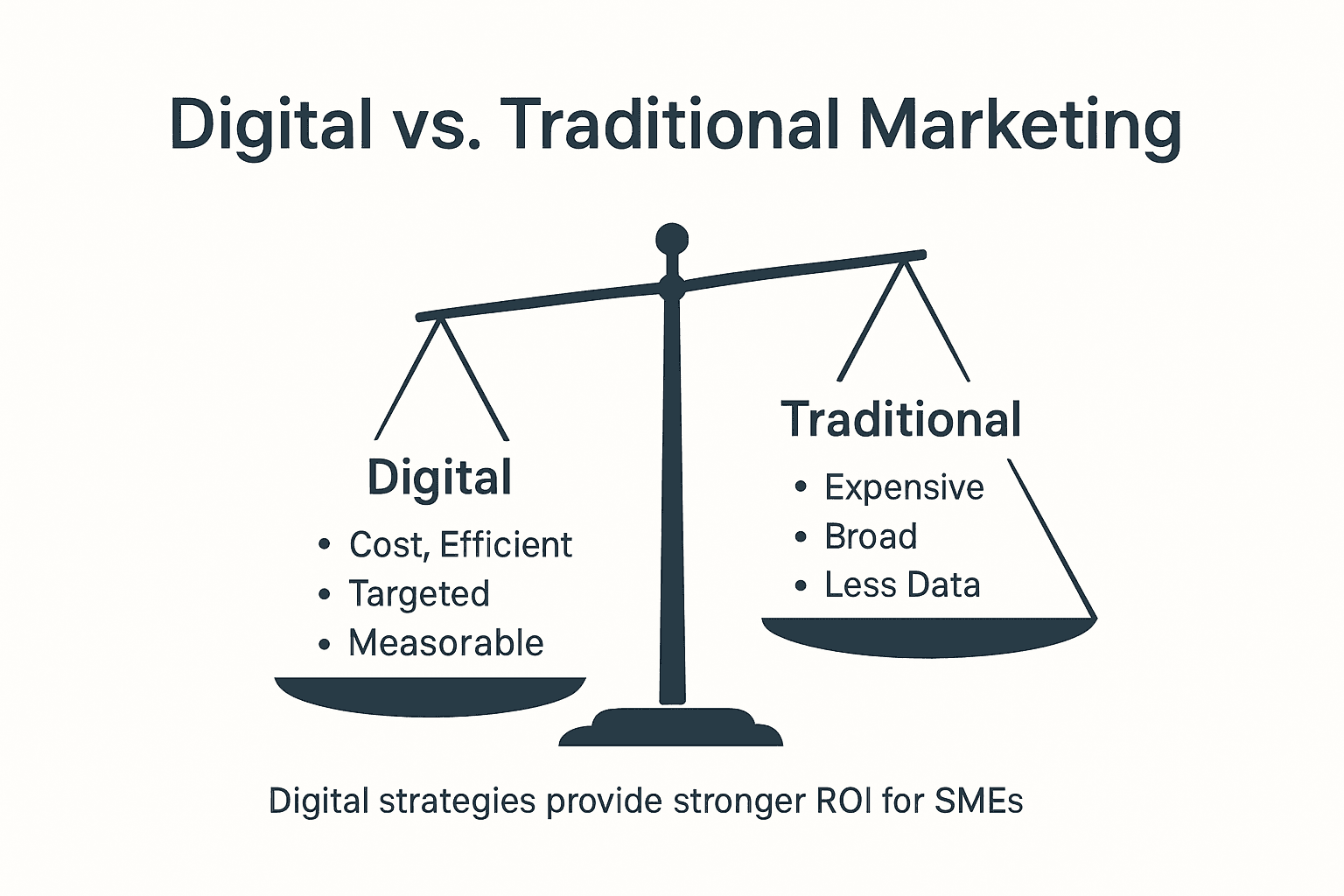
Digital marketing’s transformative potential extends beyond mere cost savings. Modern digital platforms enable SMEs to compete with larger corporations by providing access to sophisticated marketing tools that were previously available only to enterprises with extensive marketing budgets. These digital strategies include targeted social media advertising, search engine marketing, content marketing, email campaigns, and data-driven analytics that allow businesses to understand customer behaviors with unprecedented precision. By leveraging these technologies, SMEs can create personalized marketing experiences that resonate more deeply with potential customers, driving higher engagement and conversion rates compared to traditional broad-reach advertising methods.
Compare traditional and digital marketing tactics for SMEs:
| Benadering | Kostenefficiëntie | Targeting Precision | Prestatietracking |
|---|---|---|---|
| Traditional | High upfront cost | Broad audience reach | Beperkt |
| Digital | Lower ongoing cost | Precise audience segment | Real-time analytics |
Pro Tip: Strategy Optimization: Develop a hybrid marketing approach that combines cost-effective digital tactics with selective traditional methods, continuously measuring and reallocating resources based on actual performance data and customer response rates.
Unlock Growth with Simplified Digital Marketing Solutions for SMEs
The article highlights the challenges SMEs face in navigating complex digital marketing landscapes while striving for cost-effective, data-driven growth. Many struggle with fragmented tools, limited budgets, and the need for integrated marketing automation, CRM, and lead management systems that truly deliver results. If you desire an all-in-one solution that ties together key digital marketing strategies such as campaign management, customer segmentation, and workflow automation into one affordable platform, Go Online Now-Connect is built for you.
Our platform combines powerful marketing automation tools, a unified CRM, and expert digital marketing services to help you save time and increase conversions without the hassle of expensive, over-engineered software. Backed by real human support and done-for-you setup, we simplify digital marketing so you can focus on growing your business. Learn more about strategies and services that align with your goals in our Digital Marketing Archives – Go Online Now and discover how our Website Services Archieven – Ga nu online complement your growth plan.
Ready to transform your digital marketing and achieve smarter growth? Visit Ga nu online today to explore an all-in-one marketing automation software and trusted growth partner designed specifically for SMEs like yours. Take control of your lead management, campaign execution, and customer relationships with one simple and affordable solution built to save you time and deliver proven results.
Veelgestelde vragen
What is digital marketing for SMEs?
Digital marketing for SMEs refers to the use of online channels and technologies to connect and engage with customers, drive business growth, and enhance brand visibility. It includes strategies like SEO, content marketing, social media, email campaigns, and more.
Why is digital marketing important for small and medium enterprises?
Digital marketing is crucial for SMEs because it allows them to compete with larger companies through cost-effective strategies that provide precise targeting, lower customer acquisition costs, and real-time performance tracking, ultimately driving better return on investment.
What are the main types of digital marketing strategies available for SMEs?
The main types of digital marketing strategies for SMEs include search engine optimization (SEO), content marketing, social media marketing, email marketing, pay-per-click advertising, and video marketing, each offering unique benefits for customer engagement.
How can SMEs effectively use marketing automation software?
SMEs can effectively use marketing automation software by managing marketing campaigns, segmenting customers, automating workflows, and utilizing AI for personalization. This streamlines processes, enhances customer engagement, and leads to improved marketing ROI.