

TL;DR:
- Small businesses face challenges competing with larger brands but can leverage affordable marketing automation to generate leads and close sales. Prioritizing clear goals, optimizing existing tools, and starting with simple workflows like automated email sequences can boost growth without overwhelming resources. Focusing on key automation strategies and choosing user-friendly platforms enables SMBs to scale effectively and build stronger customer relationships.
Small business owners know the frustration well: you’re competing against larger brands with bigger teams, bigger ad budgets, and dedicated marketing departments, while you’re juggling operations, customer service, and sales all at once. The good news is that marketingautomatiseringssoftware has fundamentally changed what’s possible for small and mid-sized businesses. With the right strategies in place, you don’t need a massive budget to generate consistent leads, nurture prospects, and close more sales. This article walks you through actionable, step-by-step tips to help your SMB grow smarter using affordable automation.
Key Takeaways
| Point | Details |
|---|---|
| Start with a plan | Begin by clarifying your marketing goals, audience, and must-have features for automation. |
| Automate email first | Email marketing automation offers quick, affordable results with high ROI potential for SMBs. |
| Choose budget-friendly tools | Look for automation platforms with affordable pricing and features suited for small businesses. |
| Sync sales and marketing | Integrate automation with sales processes to boost lead conversion and team efficiency. |
| Stay focused for impact | Master a few automation strategies first to maximize growth without overwhelming your team. |
Evaluating your SMB marketing needs: The right place to start
Before you invest time or money into any new marketing tool, it pays to get clear on what you actually need. Jumping straight into automation without a solid foundation is one of the most common mistakes SMBs make. You end up paying for features you don’t use and ignoring the ones that could genuinely move the needle.
Start by asking three core questions. Who is your target audience? What specific business goals are you trying to reach? And what resources, both time and budget, do you realistically have available right now?
Effective marketing starts with clear strategic goals and resource planning. That means documenting your current workflows, identifying the gaps, and pinpointing repetitive tasks that could easily be automated. For example, if you’re manually sending follow-up emails after every inquiry, that’s low-hanging fruit for automation.
Next, audit your existing tools. Many SMBs discover they’re already paying for software with automation features they’ve never activated. Consolidating your stack before adding anything new can immediately save money and reduce the complexity your team has to manage daily.
A realistic expectation for automation is important too. Automation won’t fix a broken offer or replace genuine relationship building. What it will do is free up your time so you can focus on the high-value work that actually requires your attention. If you’d like to explore digital growth strategies beyond automation, understanding the broader picture helps you prioritize where to start.
Here’s a simple four-step process to evaluate your needs before choosing any marketing tools:
- List your top three marketing goals for the next 90 days, such as growing your email list, booking more appointments, or increasing repeat purchases.
- Audit your current tools and identify which are actively being used, which overlap, and which could be eliminated.
- Estimate your available time for setup and management. Some tools require more maintenance than others.
- Set a monthly budget ceiling and stick to it. Many powerful automation tools exist well under $100 per month.
Pro Tip: Don’t try to automate everything at once. Pick one workflow you can implement this week, such as an automated response to new contact form submissions, and get that running well before expanding.
Automate your email marketing for quick wins
With your needs mapped out, it’s time to take action. Email marketing automation is where most SMBs see the fastest and most measurable return on investment, and for good reason. Your email list is an asset you own completely, unlike social media followers that can vanish if a platform changes its algorithm.

Automated email campaigns can boost SMB engagement and drive direct sales. The key is setting up the right sequences so that your emails arrive at the right moment without you having to manually press send every time.
Here are the most effective email automation workflows for SMBs to prioritize:
- Welcome drip sequences. When someone signs up for your list or submits a contact form, an automatic series of two to four emails introduces your brand, explains your value, and invites them to take a specific next step. This sequence alone can dramatically improve lead-to-customer conversion rates.
- Interest-based promotional emails. Instead of blasting every contact with the same message, segment your list by product interest, location, or behavior. A real estate agent might send one set of emails to buyers and a completely different sequence to sellers.
- Appointment or event reminders. If your business relies on bookings, automated reminders sent 24 hours and one hour before an appointment reduce no-shows significantly, often by 30% or more.
- Post-purchase follow-ups. A simple thank-you email with a review request or upsell recommendation keeps the relationship warm and opens doors to repeat business.
- Re-engagement campaigns. Contacts who haven’t opened your emails in 60 to 90 days get a targeted sequence designed to win back their attention before you archive them.
Personalization doesn’t have to be complicated. Even using a contact’s first name in the subject line has been shown to increase open rates by around 26%. Most SMB email marketing tips point to this as a simple, no-cost improvement you can make immediately.
For more advanced techniques, explore automation tips for email that go beyond basic sequences, including behavioral triggers and dynamic content blocks. You can also review essential email strategies to ensure your overall approach aligns with current best practices.
Pro Tip: Segment your email list from day one, even if you only have two segments to start. Targeted emails consistently outperform generic broadcasts, and the habit of segmenting early makes scaling much easier later.
Leverage marketing automation platforms on a budget
Once you’ve experienced the wins from automated email, it makes sense to look at platforms that can handle more of your marketing workload in one place. The good news is that you don’t need an enterprise-level budget to access genuinely powerful tools.
SMB-focused marketing automation platforms help teams do more with less. The table below compares four popular options based on the features that matter most to small business owners.
| Platform | Starting price | E-mailautomatisering | CRM included | Ease of use | Free trial |
|---|---|---|---|---|---|
| Ga nu online - Maak verbinding | Affordable SMB tiers | Yes | Yes | Very easy | Yes |
| MailChimp-account | Free to $20+/month | Yes | Beperkt | Easy | Yes (free plan) |
| ActiveCampaign | From $29/month | Geavanceerd | Yes | Moderate | Yes |
| HubSpot | Free to $800+/month | Yes | Yes | Moderate to complex | Yes (free plan) |
Each platform has its place, but the right choice depends on your specific situation. Here’s what to look for when evaluating any platform:
- Workflow automation that lets you build sequences triggered by specific actions, such as a lead clicking a link or filling out a form.
- CRM-integratie so your contact data, email history, and sales pipeline live in the same place. Switching between disconnected tools kills productivity.
- Ease of use matters enormously for small teams. If the tool requires a developer to set up a basic campaign, it’s probably not the right fit.
- Transparent pricing with no surprise fees. Some platforms advertise a low entry price but charge extra for basic features like A/B testing or contact limits.
- Real customer support that you can actually reach when something goes wrong.
For SMBs that want to convert more with automation, the most important decision is choosing a platform you’ll actually use consistently. A simpler tool used well beats a sophisticated platform used poorly every time. You can also learn how to grow with automation across multiple marketing channels once you have your primary platform running smoothly.
Understanding the automation benefits for SMBs beyond email, such as SMS marketing, lead scoring, and funnel management, can help you decide which platform tier to invest in as you scale.
Integrate automation with your sales process for stronger results
Choosing your platform is only half the equation. The real efficiency gains happen when your marketing automation and sales activities work together as a unified system rather than two separate departments doing their own thing.
Integrating CRM and automation increases lead conversion and saves time for small teams. The following table shows the typical impact SMBs see when they connect their marketing and sales tools properly.
| Metric | Without integration | With integration |
|---|---|---|
| Lead response time | Hours to days | Minutes (automated) |
| Lead qualification accuracy | Manual and inconsistent | Automated scoring |
| Sales team time on admin | 40% to 60% of day | Under 20% |
| Lead-to-customer conversion | Industry average | Up to 85% improvement |
Here’s a practical step-by-step process to sync your marketing and sales tools effectively:
- Map your customer journey from first contact to closed sale. Identify every touchpoint where a prospect interacts with your business, online or offline.
- Assign automation triggers at each stage. For example, when a lead downloads a guide, they enter a nurture sequence. When they visit your pricing page, a task is created for a sales follow-up.
- Set up lead scoring. Assign points based on behaviors like email opens, link clicks, and page visits. Leads that hit a threshold score automatically move to “hot” status and alert your sales team.
- Sync contact data in real time. Every action a lead takes should update their record immediately so your sales team always has current information before making a call or sending a message.
- Review and adjust monthly. Look at which automated touchpoints are moving leads forward and which are causing drop-offs. Small adjustments consistently improve results over time.
Understanding the difference between a CRM vs marketing automation system helps you use each tool for its intended purpose rather than trying to force one tool to do a job it wasn’t built for.
Pro Tip: Set up automatic lead qualification using your CRM’s scoring feature to prioritize your hottest prospects. Your sales team should spend their time on leads who are already engaged and ready to buy, not cold contacts who need months of nurturing first.
Our perspective: Why less is more with SMB marketing automation
Here’s something the software industry rarely tells you: most SMBs that struggle with automation aren’t failing because they have too few tools. They’re failing because they have too many.
We’ve seen business owners sign up for four or five different platforms, each promising to solve a different problem, and end up spending more time managing their tech stack than actually marketing their business. The tools become a burden instead of a benefit.
The most successful SMBs we work with follow a counterintuitive principle. They pick fewer tools and go deeper with each one. A business running one well-configured email automation sequence, one clear lead pipeline, and one consistent follow-up workflow will outperform a competitor who has 12 half-finished automations running across six platforms.
Small wins stack up to big growth when you let them compound. A welcome email sequence that converts 5% of leads better than before doesn’t sound dramatic, but over 12 months with consistent lead flow, the impact is significant. This is the true promise of more with less thinking.
There’s also an important human element to remember. Automation handles repetitive, predictable tasks well. But your customers still want to feel like they’re dealing with real people who understand their needs. The best automation is invisible. It handles the logistics while you focus on the conversations and relationships that actually build loyalty.
Our honest advice: master the basics first. Get your email welcome sequence running. Connect your CRM to your marketing platform. Set up one lead scoring rule. Once those three things are working consistently, you’ll have the confidence and data to know exactly what to build next.
Unlock growth with the right automation partner
Ready to take the next step in transforming your SMB with automation? At Go Online Now-Connect, we built our platform specifically for business owners who are tired of overpaying for complicated tools that require a tech team to manage.
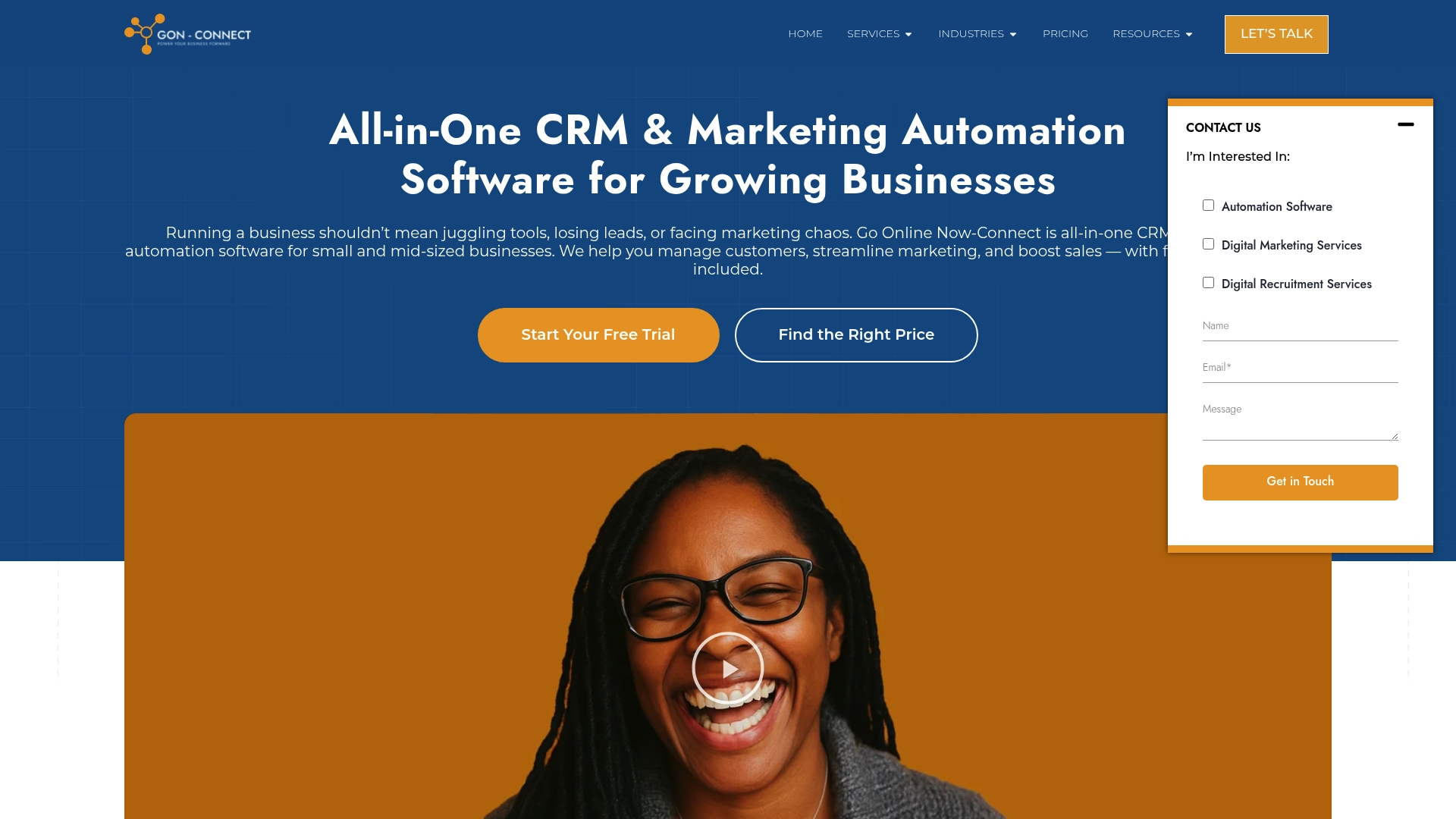
Our all-in-one system combines email automation, CRM, SMS, funnels, and reputation management in one affordable platform, with done-for-you setup included at no extra cost. Whether you want to boost SMB conversions right away or explore deeper email automation tips to fine-tune your campaigns, we have the resources and support to guide you every step of the way. Start with our complete SMB automation guide to see exactly how the system works and what results you can expect within your first 90 days.
Frequently asked questions
What is the simplest marketing automation an SMB can start with?
Most SMBs see fast ROI by automating welcome emails to new leads or customers, since automated email campaigns immediately boost engagement without requiring complex setup.
How much does marketing automation cost for a small business?
Affordable marketing automation tools for SMBs typically start under $50 per month, with some offering free basic plans, because SMB-focused platforms are designed to scale with your budget as you grow.
Can marketing automation really help SMBs compete with big brands?
Yes, automation lets SMBs nurture leads and improve customer experience without a large staff, since marketing automation software levels the playing field by delivering consistent, timely outreach at scale.
Is it better to focus on email or social media automation first?
For most SMBs, starting with email automation yields the fastest and most measurable results, because automated email campaigns produce quick wins and directly trackable ROI compared to social media where organic reach continues to decline.