

Every month, small businesses lose thousands of dollars in potential sales because leads slip through the cracks, follow-ups arrive too late, or sales teams lack clear processes. Without a structured approach to lead management fundamentals, even high-quality prospects disappear into competitors’ pipelines. This guide walks you through a proven, step-by-step system to capture, qualify, nurture, and convert leads efficiently, transforming scattered efforts into predictable revenue growth for your business.
Key Takeaways
| Point | Details |
|---|---|
| Clear steps boost conversions | A proven step by step system for capturing, qualifying, nurturing, and converting leads increases sales results. |
| Preparation and tools essential | Before engaging, choose a SMB friendly CRM and automation stack to manage leads efficiently. |
| Track and nurture leads | Defined lead scoring, routing, and nurturing ensure prospects stay engaged until ready to buy. |
| Automation and CRM boost efficiency | Automated scoring and triggers speed responses and improve accuracy across the team. |
| Regular process evaluation | Regular evaluation of your lead management process keeps actions aligned with goals and improves results. |
Understanding the fundamentals of lead management
Lead management is the systematic process of capturing, tracking, and nurturing potential customers from initial contact through final sale. It sits at the heart of your sales funnel, determining whether prospects become paying customers or vanish into oblivion. For SMBs, mastering this process means higher conversion rates, shorter sales cycles, and more predictable revenue.

Successful lead management requires three core prerequisites. First, you need a reliable CRM system to centralize contact information and track interactions. Second, your team must align on clear qualification criteria so everyone recognizes which leads deserve immediate attention. Third, establish measurable goals for response times and conversion benchmarks to hold your process accountable.
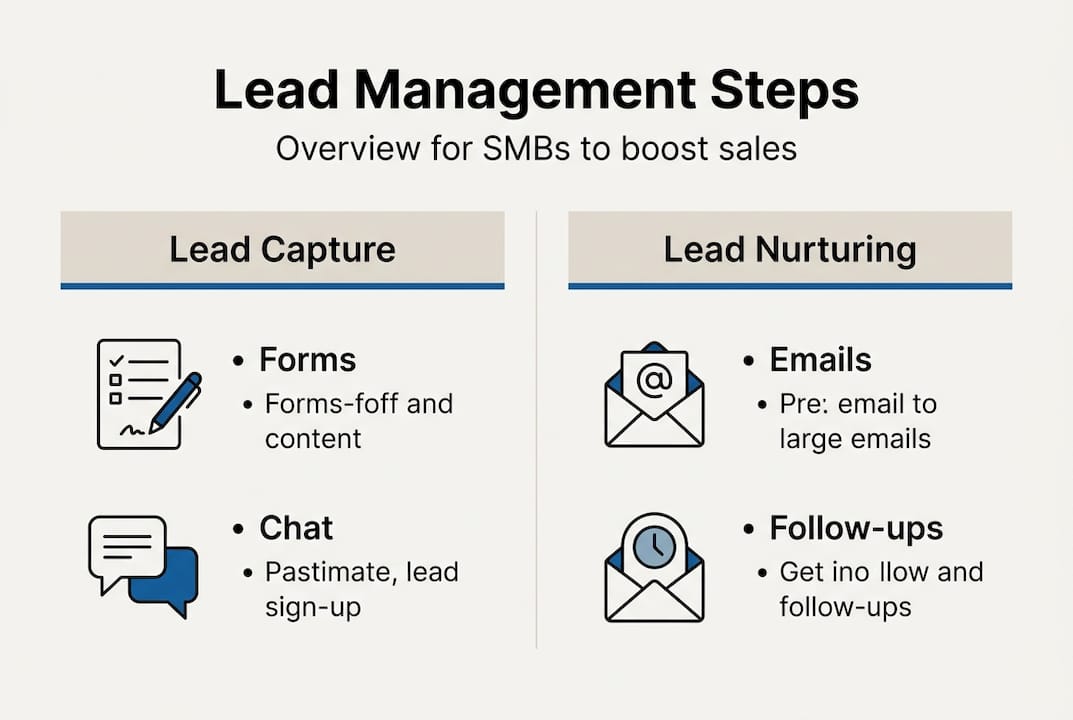
The process breaks into four distinct categories. Lead capture pulls prospects into your system through forms, landing pages, and marketing campaigns. Qualification separates serious buyers from casual browsers using demographic data and behavioral signals. Distribution routes qualified leads to the right sales representatives or automated nurture sequences. Finally, nurturing maintains engagement through personalized content and timely follow-ups until prospects are ready to buy.
Traditional vs modern lead management approaches:
| Benadering | Traditional Method | Modern Method |
|---|---|---|
| Lead capture | Manual data entry from business cards and phone calls | Automated web forms, chatbots, and online lead generation |
| Qualification | Subjective judgment by sales reps | Scoring algorithms based on behavior and demographics |
| Distribution | Manager assigns leads based on availability | CRM automatically routes by territory, expertise, or workload |
| Nurturing | Sporadic phone calls and generic emails | Automated sequences with personalized content triggers |
| Tracking | Spreadsheets and sticky notes | Real-time CRM dashboards with pipeline visibility |
Modern tools eliminate the guesswork and manual labor that plague traditional methods. When your system automatically scores incoming leads and triggers immediate follow-ups, you respond faster than competitors still relying on spreadsheets.
Professionele tip: Set a target to contact new leads within five minutes of inquiry. Research shows response speed directly correlates with conversion rates, and early contact establishes your business as attentive and professional.
Step 1: Prepare your lead management system and team
Before any lead enters your pipeline, build the infrastructure to handle it properly. Start by evaluating marketingautomatiseringssoftware designed for SMBs. Look for platforms that combine CRM functionality with email automation, landing page builders, and lead scoring capabilities. Avoid over-engineered enterprise solutions that drain budgets and require dedicated IT staff.
Define your ideal customer profile and lead qualification criteria next. Document specific characteristics that indicate purchase readiness: company size, budget authority, timeline urgency, and pain points your solution addresses. Create a simple scoring matrix assigning points to demographic factors like job title and behavioral signals like website visits or content downloads.
Organize internal roles clearly. Designate who handles initial lead response, who manages ongoing nurturing, and when qualified leads transfer to sales. Document these responsibilities in a shared workflow diagram so nothing falls between departments. If you’re a solo operation, map out which tasks you’ll automate versus handle personally.
Essential setup tasks before launching:
- Integrate your CRM with website forms, email marketing, and communication tools
- Import existing contacts and clean duplicate or outdated records
- Create lead scoring rules based on your qualification criteria
- Build email templates for common follow-up scenarios
- Train team members on CRM navigation and lead handling protocols
- Establish notification alerts for high-priority lead actions
- Set up reporting dashboards to monitor key metrics
Many SMBs skip proper training and wonder why their expensive CRM for SMB marketing automation sits unused. Schedule hands-on sessions where team members practice entering leads, logging activities, and moving prospects through pipeline stages. Make the system feel familiar before real leads arrive.
Consider partnering with digitale marketingdiensten that offer done-for-you setup if technical configuration overwhelms your team. The right partner configures automations, imports data, and trains your staff without the learning curve that stalls internal implementations.
Professionele tip: Review your tool usage and team performance monthly during the first quarter. Identify features going unused, processes causing friction, and training gaps slowing adoption. Early adjustments prevent bad habits from cementing.
Step 2: Capture, qualify, and distribute leads effectively
Once your foundation is solid, execute the core mechanics of lead handling with precision. Follow this sequence for every prospect entering your system:
- Capture lead information through optimized web forms, chatbots, or manual entry from networking events
- Confirm data accuracy by validating email addresses and phone numbers immediately
- Apply lead scoring automatically based on your predefined criteria
- Segment by priority into hot, warm, and cold categories
- Route to appropriate handler using CRM assignment rules
- Trigger initial outreach within your target response time
- Log all interactions to maintain complete contact history
Automation transforms this sequence from a manual slog into a smooth operation. When someone completes a contact form, your system instantly scores the lead, assigns it to the right rep, and sends a personalized acknowledgment email. The sales team receives a notification with the lead’s details and recommended next steps.
Manual vs automated capture and qualification:
| Factor | Manual Process | Automated Process |
|---|---|---|
| Speed | Hours or days to process | Instant capture and scoring |
| Accuracy | Prone to data entry errors | Validation rules ensure clean data |
| Consistency | Varies by person handling lead | Same criteria applied to every lead |
| Schaalbaarheid | Bottlenecks during high volume | Handles unlimited leads simultaneously |
| Kosten | Requires staff time for routine tasks | Frees team for high-value activities |
Lead scoring separates tire-kickers from serious buyers without manual review. Assign points for factors indicating purchase intent: visiting pricing pages, downloading case studies, or matching your ideal customer profile. Automated lead capture and scoring improves lead quality and responsiveness, converting more prospects into customers.
Distribution rules prevent leads from languishing unassigned. Configure your CRM to route leads by territory, product expertise, or workload balance. If a rep is at capacity, overflow leads automatically go to the next available team member. This systematic approach ensures every prospect receives attention regardless of who’s busy or on vacation.
Implement safeguards against lost leads. Set up alerts when leads remain uncontacted past your response time target. Create backup assignment rules if primary reps don’t acknowledge new leads within an hour. Build a weekly report showing unworked leads so managers can intervene before opportunities expire.
Speed matters more than perfection in initial contact. A prompt, personalized response beats a delayed, perfectly crafted message every time. Focus on acknowledging the inquiry, confirming you understand their need, and scheduling a detailed conversation rather than trying to close the sale immediately.
Step 3: Nurture leads and track progress to close sales
Not every lead is ready to buy immediately. Consistent lead nurturing and accurate tracking lead to higher conversion rates and customer lifetime value by maintaining engagement until prospects reach decision readiness.
Deploy multiple nurturing tactics based on lead temperature and preferences. Email sequences deliver educational content addressing common objections and showcasing success stories. Phone calls build personal relationships and uncover specific pain points. Content marketing establishes your expertise through blog posts, webinars, and guides that solve prospect problems. Retargeting ads keep your brand visible as leads research solutions.
Your CRM becomes mission control for tracking every interaction. Log calls, emails, meetings, and content engagement to build a complete picture of each lead’s journey. Monitor which messages generate responses, which content pieces drive pipeline movement, and which leads have gone cold despite outreach efforts.
Lead nurture best practices:
- Personalize messaging based on lead source, industry, and stated challenges
- Time follow-ups strategically using behavioral triggers like email opens or website returns
- Provide genuine value in every touchpoint rather than pushing for immediate sales
- Vary communication channels to match prospect preferences
- Space outreach appropriately to stay present without becoming annoying
- Share relevant case studies and testimonials that mirror the lead’s situation
- Ask questions that reveal timeline and budget to gauge true readiness
Marketing automation handles the repetitive aspects of nurturing while keeping communication personal. When a lead downloads a pricing guide, trigger a sequence explaining implementation timelines and offering a consultation. If they visit your comparison page, send testimonials from customers who switched from competitors. These automated touches feel timely and relevant because they respond to actual prospect behavior.
Track lead status meticulously as prospects move through your pipeline. Update stage designations when leads progress from initial contact to qualified opportunity to proposal sent. Note any obstacles or objections that emerge during conversations. This documentation helps you recognize patterns and refine your approach for future leads.
Recognize buying signals that indicate a lead is ready to close. Asking detailed questions about implementation, requesting references, or inquiring about contract terms all suggest imminent decision-making. When these signals appear, accelerate your timeline and remove any remaining friction from the buying process.
Execute clean sales handoffs by briefing your closer on the lead’s entire journey. Share which content resonated, what objections surfaced, and which decision-makers are involved. This context allows your sales team to pick up the conversation naturally rather than starting from scratch.
Professionele tip: Analyze your lead data quarterly to identify which sources produce the highest-converting prospects and which nurture tactics move leads fastest through your pipeline. Double down on what works and eliminate what doesn’t to nurture leads effectively.
Common mistakes to avoid and verifying results
Even well-intentioned lead management efforts fail when common errors creep in. Slow follow-up is the deadliest mistake. When you take days to respond, leads assume you’re disorganized or uninterested and move to competitors who answered immediately. Poor data hygiene creates duplicate records, outdated contact information, and incomplete histories that frustrate sales teams and embarrass your business during outreach.
Inconsistent nurturing sends mixed signals. A flurry of contact followed by weeks of silence makes you look desperate then disinterested. Neglecting to update lead status causes confusion about who’s working which prospects and where opportunities stand. Failing to personalize communication treats leads like numbers rather than people with specific needs.
Red flags indicating lead management problems:
- Response times exceeding 24 hours for new inquiries
- Multiple team members contacting the same lead without coordination
- Leads marked as qualified but receiving no follow-up
- CRM data contradicting what prospects say in conversations
- High percentage of leads going cold after initial contact
- Sales team complaining about lead quality or quantity
- No clear process for handling leads outside business hours
Correct these issues immediately when they surface. Implement automated alerts that escalate uncontacted leads. Establish a weekly data cleanup routine to merge duplicates and update information. Create nurture calendars that specify touchpoint frequency and content themes. Build feedback loops where sales reports lead quality issues back to marketing for source evaluation.
Verify your lead management effectiveness using concrete metrics. Track conversion rate from lead to opportunity and opportunity to closed sale. Monitor average response time and compare it against your targets. Calculate pipeline velocity by measuring how long leads take to move through each stage. Measure cost per lead and cost per acquisition to understand marketing efficiency.
According to Go Online Now data, SMBs using marketing automation software see ROI improvements of up to 85% more conversions within 90 days of implementation.
Review CRM reports monthly to spot trends and anomalies. Which lead sources produce the most closed deals? Which sales reps convert at the highest rates? Where do most leads stall in your pipeline? Use these insights to refine your qualification criteria, adjust nurturing sequences, and provide targeted coaching.
Test variations systematically rather than overhauling everything at once. Try different email subject lines, adjust follow-up timing, or experiment with new content offers. Measure results objectively and adopt changes that demonstrably improve your numbers. This disciplined approach to optimization compounds over time, gradually transforming adequate lead management into a competitive advantage.
Establish quarterly reviews where your entire team examines lead management performance. Celebrate wins, diagnose losses, and agree on specific improvements for the next period. This regular evaluation prevents complacency and ensures your process evolves with changing market conditions and customer expectations.
Optimize your lead management with Go Online Now solutions
Transforming your lead management from chaotic to systematic requires the right tools and support. Go Online Now delivers marketing automation software for SMBs that combines CRM, email automation, lead scoring, and pipeline tracking in one affordable platform. Unlike over-engineered enterprise systems, our solution is built specifically for small businesses that need results without complexity.
Our CRM for SMB marketing automation integrates seamlessly with your existing tools and includes done-for-you setup so you start capturing and converting leads immediately. With real human support instead of chatbots, transparent pricing, and proven results showing up to 85% more conversions, Go Online Now becomes your growth partner rather than just another software subscription. Explore how our lead management for small businesses can streamline your sales process and accelerate revenue growth.
Frequently asked questions
What are the most effective ways to qualify leads quickly?
Lead scoring combines demographic information like company size and job title with engagement signals such as website visits and content downloads to prioritize leads instantly. Automation tools apply your scoring criteria the moment a lead enters your system, flagging high-value prospects for immediate attention. This approach eliminates manual review while ensuring your sales team focuses energy on the most promising opportunities.
How can I track my leads’ progress without overwhelming my team?
CRM systems automate tracking and provide dashboards that simplify monitoring without extra manual work. Set up alerts for key lead actions like email opens, pricing page visits, or form submissions rather than tracking every minor detail. Your team sees only what matters for next steps, reducing noise while maintaining complete visibility into pipeline health.
What are common mistakes to avoid in lead nurturing?
Neglecting personalization makes your outreach feel generic and ignorable. Inconsistent follow-up confuses prospects about your level of interest and professionalism. Ignoring lead feedback prevents you from addressing real objections that block sales. Avoid overwhelming leads with irrelevant messaging by segmenting your audience and tailoring content to their specific stage and needs. Focus on proven nurturing processes that balance persistence with respect.
How long should I nurture a lead before giving up?
Nurture duration depends on your sales cycle and product complexity. B2B services with longer consideration periods may require six to twelve months of engagement, while simpler offerings might convert within weeks. Monitor engagement signals rather than arbitrary timelines. If a lead stops opening emails, visiting your site, or responding to outreach for 90 days despite varied attempts, move them to a low-priority list with occasional check-ins rather than active nurturing.
Aanbevolen
- Lead Management Fundamentals: Complete Guide for SMBs – Go Online Now
- Lead Management for Small Businesses: Converting More Prospects – Go Online Now
- 7-Step Lead Generation Checklist for Growing SMBs – Go Online Now
- Lead Nurturing Process Guide for SMB Growth Success – Go Online Now
- How to Increase Online Sales for SMEs: Step-by-Step Guide|BM