

Juggling endless emails, scattered leads, and shifting customer expectations can quickly drain your team’s energy. For American marketing managers at growing service businesses, finding a practical way to simplify automation and unify lead management matters more than ever. This article spotlights how marketing automation software and all-in-one CRM platforms deliver real relief, offering clear comparisons, actionable workflow ideas, and strategies to help your business outperform without overwhelming your budget.
What Marketing Automation Software Does for SMBs
Marketing automation software transforms how small and medium-sized businesses (SMBs) approach customer engagement, communication, and growth strategies. By automating repetitive marketing tasks and centralizing critical customer data, these powerful platforms enable businesses to work smarter, not harder.
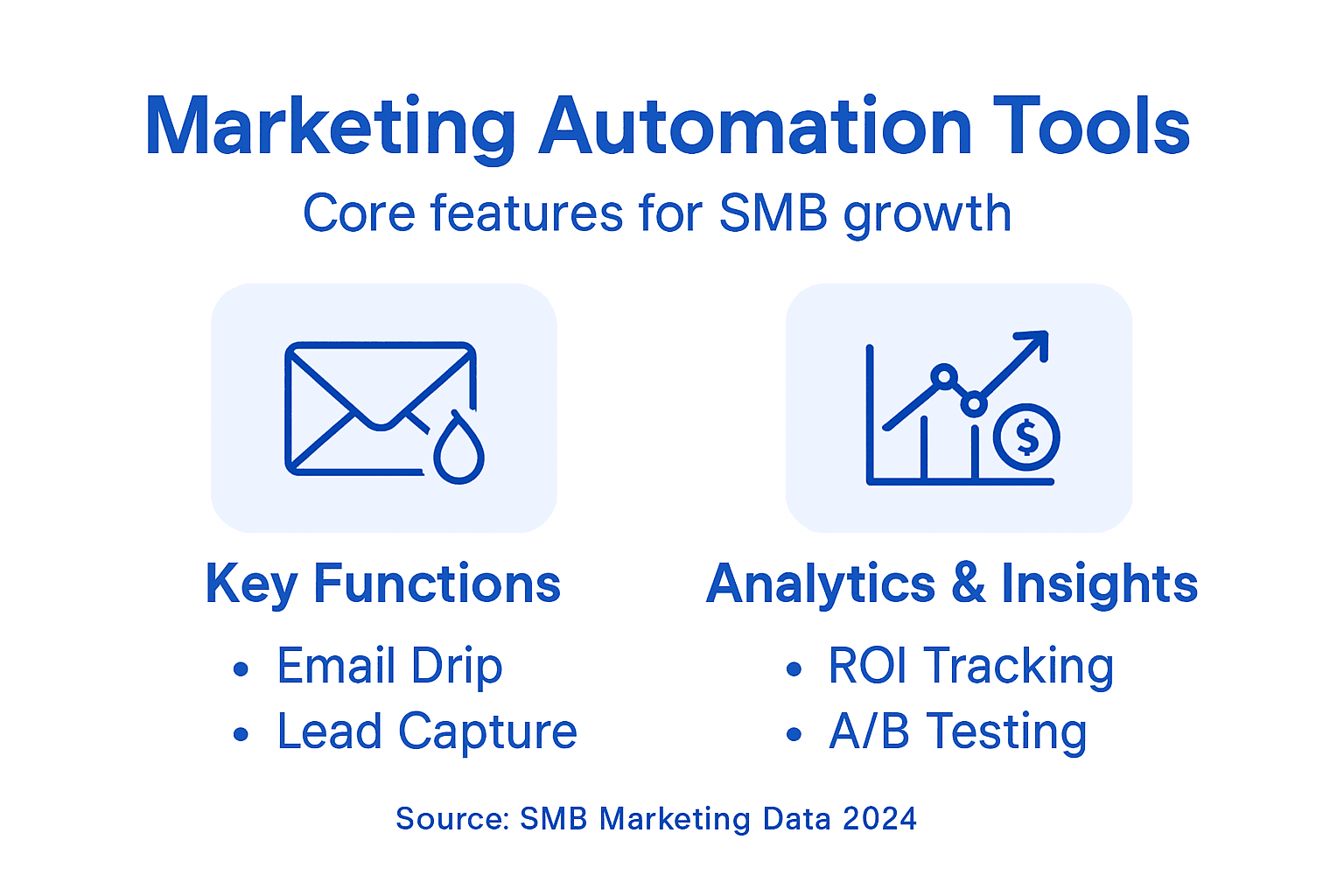
The core functionality of marketing automation software centers on several key capabilities:
- E-mailmarketingautomatisering: Sending personalized, targeted email campaigns based on customer behaviors and interactions
- Lead-koestering: Tracking and guiding potential customers through the sales funnel automatically
- Customer Segmentation: Dividing audiences into precise groups for more tailored marketing approaches
- Performance Analytics: Tracking campaign effectiveness and generating actionable insights
Marketing automation technology enables SMBs to streamline complex marketing processes that would traditionally require significant manual effort. By reducing administrative workload, businesses can redirect their energy toward strategic planning and creative initiatives.
The software integrates multiple marketing channels into a single platform, creating a cohesive approach to customer communication. This integration allows businesses to maintain consistent messaging across email, social media, website interactions, and other digital touchpoints. Automated workflows can trigger specific actions based on customer behaviors, ensuring timely and relevant engagement.
Marketing automation isn’t just a tool—it’s a strategic partner that scales your customer engagement without scaling your workload.
Pro tip: Start by mapping out your current marketing workflows to identify repetitive tasks that could benefit from automation, helping you prioritize which features will deliver the most immediate impact.
Types of Automation Tools and Key Features
Marketing automation tools have evolved to address diverse business needs, offering specialized solutions that help small and medium-sized businesses (SMBs) optimize their digital marketing strategies. Marketing automation tools typically fall into several critical categories, each designed to tackle specific aspects of customer engagement and marketing performance.
The primary types of marketing automation tools include:
- E-mailmarketingautomatisering: Platforms that manage email campaigns, track open rates, and personalize communication
- Social Media Automation: Tools for scheduling posts, tracking engagement, and managing multiple social channels
- Lead Generation and Nurturing: Software that captures potential customer information and guides them through the sales funnel
- Content Marketing Automation: Systems that help plan, create, distribute, and track content across various channels
- Customer Relationship Management (CRM) Integration: Tools that synchronize marketing efforts with customer data and interaction tracking
Key features that distinguish high-quality marketing automation platforms focus on creating seamless, intelligent customer experiences. These typically include advanced audience segmentation, which allows businesses to divide their customer base into precise groups based on behaviors, demographics, and interaction history. Multi-channel campaign management enables consistent messaging across email, social media, website, and other digital platforms.

Performance analytics represent another crucial feature, providing SMBs with detailed insights into campaign effectiveness. These tools generate comprehensive reports that track metrics like conversion rates, customer engagement, and return on investment. By transforming raw data into actionable intelligence, marketing automation software empowers businesses to make data-driven decisions and continuously refine their marketing strategies.
Here’s a summary of how different automation tools address core SMB needs:
| Automation Tool Type | Primary Focus | Typical Benefit | Example Use Case |
|---|---|---|---|
| E-mailmarketingautomatisering | Personalized campaign delivery | Higher engagement rates | Targeted customer outreach |
| Social Media Automation | Post scheduling and monitoring | Consistent brand visibility | Managing multiple channels |
| Lead Generation and Nurturing | Sales funnel automation | Increased lead conversions | Capture and nurture prospects |
| Content Marketing Automation | Multi-channel content distribution | Streamlined workflows | Blogging and social sharing |
| CRM Integration | Unified customer data | Improved tracking and insight | Sales and support coordination |
Effective marketing automation isn’t about replacing human creativity—it’s about amplifying your marketing team’s capabilities and reaching customers more intelligently.
Pro tip: Before selecting a marketing automation tool, conduct a thorough audit of your current marketing workflows to identify specific automation needs and ensure the chosen platform aligns perfectly with your business objectives.
How All-in-One CRM Powers Business Growth
All-in-one CRM software represents a transformative approach to managing customer relationships, enabling small and medium-sized businesses (SMBs) to streamline operations and drive strategic growth. By consolidating marketing, sales, and customer support functions into a single integrated platform, these comprehensive tools eliminate the inefficiencies of disconnected systems.
The key advantages of all-in-one CRM platforms for SMBs include:
- Centralized Customer Data: Creating a unified view of customer interactions across all touchpoints
- Automated Workflow Management: Reducing manual tasks and improving operational efficiency
- Advanced Analytics: Generating real-time insights for data-driven decision-making
- Scalable Infrastructure: Adapting to business growth without requiring complex system migrations
- Seamless Cross-Department Communication: Breaking down information silos between teams
Modern CRM platforms leverage artificial intelligence to further enhance business capabilities. These intelligent systems can predict customer behaviors, automate repetitive tasks, and provide personalized recommendations that help businesses anticipate and meet customer needs more effectively. By analyzing historical data and interaction patterns, AI-powered CRMs enable SMBs to develop more targeted marketing strategies and improve customer engagement.
The strategic value of an all-in-one CRM extends beyond simple data management. These platforms serve as a comprehensive growth engine, connecting marketing efforts with sales processes and customer support. By providing a holistic view of the customer journey, businesses can create more meaningful interactions, increase customer satisfaction, and ultimately drive revenue growth.
An effective all-in-one CRM doesn’t just manage customer data—it transforms how businesses understand and interact with their customers.
Pro tip: Before implementing a CRM, map out your current customer interaction processes to ensure the selected platform addresses your specific workflow requirements and integration needs.
Real SMB Use Cases and Results
AI-powered marketing automation has revolutionized how small and medium-sized businesses (SMBs) approach customer engagement, operational efficiency, and strategic growth. By leveraging intelligent automation tools, SMBs can now compete more effectively with larger organizations, transforming traditional limitations into competitive advantages.
Practical use cases for marketing automation across different industries include:
- Vastgoed: Automating lead follow-ups and property inquiry responses
- Healthcare Services: Scheduling appointment reminders and patient communication
- Professional Coaching: Creating personalized email nurture sequences for client onboarding
- Detailhandel: Implementing targeted abandoned cart recovery campaigns
- Educational Services: Managing student enrollment and communication workflows
These automation strategies deliver measurable business outcomes. For instance, a small professional coaching business might reduce administrative work by 60% while increasing client conversion rates by implementing automated lead nurturing sequences. Similarly, a local healthcare clinic can improve patient retention by using automated appointment reminders and personalized follow-up communications.
The most successful SMBs view marketing automation not as a replacement for human interaction, but as a powerful tool to enhance customer relationships. By intelligently automating repetitive tasks, businesses free up valuable human resources to focus on high-value strategic activities like relationship building, creative problem-solving, and developing innovative service offerings.
Marketing automation transforms small business potential by turning limited resources into scalable, intelligent customer engagement systems.
Pro tip: Start with one specific workflow you want to automate, track its performance meticulously, and gradually expand your automation strategy based on measurable results.
Costs, Common Pitfalls, and Smart Choices
Marketing automation software pricing reveals significant complexity for small and medium-sized businesses (SMBs) navigating technological investments. Understanding the true cost of implementation involves more than just monthly subscription fees, requiring a comprehensive view of potential expenses, potential returns, and strategic considerations.
The pricing landscape for marketing automation platforms typically breaks down into several key categories:
Below is a comparison of marketing automation platform pricing and associated strategic considerations for SMBs:
| Platform Tier | Monthly Cost Range | Ideal Business Size | Key Considerations |
|---|---|---|---|
| Entry-Level | $75-$300 | Small startups | Budget-friendly, basic features |
| Mid-Range | $300-$750 | Growing SMBs | More integrations, scalability |
| Enterprise-Grade | $750-$2,000 | Advanced/large teams | Customization, advanced analytics |
| Additional Expenses | Varies (one-time) | All | Setup, training, integrations |
- Entry-Level Solutions: $75-$300 per month
- Mid-Range Platforms: $300-$750 per month
- Enterprise-Grade Systems: $750-$2,000 per month
- Additional Costs: Setup fees, training, integration, and potential custom development
Common pitfalls that SMBs must carefully navigate include inadequate data management, unrealistic expectations, and insufficient team training. Many businesses invest in sophisticated tools without developing the internal capabilities to leverage them effectively. This can lead to underutilization, frustration, and ultimately, diminished return on investment.
Successful marketing automation adoption requires a strategic approach that goes beyond technological selection. Businesses must assess their specific workflow needs, evaluate the potential for scalability, and develop a clear implementation roadmap. This means conducting thorough internal audits, understanding specific marketing challenges, and selecting platforms that offer not just features, but genuine support and adaptability.
Marketing automation is an investment in efficiency, not just another software subscription.
Pro tip: Create a detailed implementation plan that includes comprehensive staff training, clear performance metrics, and a phased rollout strategy to maximize your marketing automation investment.
Supercharge Your SMB Growth with Simple, Powerful Marketing Automation
The article highlights the challenge SMBs face juggling complex marketing automation platforms that are often overpriced and overly complicated. Key pain points include managing multiple tools, struggling with lead nurturing and segmentation, and lacking real support to leverage advanced features strategically. If you want to transform your business by automating email campaigns, lead management, and customer relationships without the hassle of confusing setups or hidden costs, you need a solution built for your unique needs.
Go Online Now-Connect delivers everything you need in one easy-to-use platform. Combining marketing automation tools, an all-in-one CRM, and expert digital marketing services, we help you save time and boost conversions. With done-for-you setup and real human support, you will get personalized automation that actually moves the needle. Don’t let fragmented tech or inflated prices hold you back from smarter growth strategies.
Discover how simple automation and integrated systems can unlock your business potential Automation Archives – Go Online Now.
Take control of your marketing with an affordable, all-in-one platform designed specifically for SMBs. Visit Ga nu online to explore our solutions and see how we combine automation, CRM, and digital marketing services that work together seamlessly. Start growing smarter today and leave complicated software behind. Learn more about our approach and success stories in Digital Marketing Archives – Go Online Now.
Veelgestelde vragen
What is marketing automation software and how does it benefit SMBs?
Marketing automation software helps small and medium-sized businesses streamline repetitive marketing tasks, centralize customer data, and improve engagement strategies. It automates processes like email marketing, lead nurturing, and customer segmentation, enabling businesses to focus more on strategic efforts and creative marketing campaigns.
How does email marketing automation work?
Email marketing automation involves using software to send personalized and targeted email campaigns based on customer behaviors and interactions. This allows businesses to maintain consistent communication with their audience, improve open and click-through rates, and ultimately drive conversions.
What are the key features to look for in a marketing automation tool?
Key features to consider include email marketing automation, lead nurturing capabilities, advanced audience segmentation, multi-channel campaign management, and robust performance analytics. These features help create coherent customer experiences and improve the effectiveness of marketing initiatives.
How can marketing automation contribute to overall business growth?
Marketing automation contributes to business growth by streamlining marketing processes, enhancing customer engagement, and providing valuable insights through performance analytics. This allows SMBs to make data-driven decisions and create targeted marketing strategies that resonate with their audience, resulting in increased sales and customer loyalty.
Aanbevolen
- Marketing Automation Software: Complete Guide for SMBs – Go Online Now
- Marketing Automation Software: Complete Guide for SMBs – Go Online Now
- Marketing Automation Software: Smarter Growth for SMBs – Go Online Now
- 7 Affordable Marketing Automation Tips for SMB Success – Go Online Now
- I Just Want to Help — But Marketing Feels Gross. Now What? – Starfireblast