

More than 85 percent of American consumers say they trust online reviews as much as personal recommendations. In this digital era, a single comment or viral post can reshape public perception overnight, making proactive reputation management crucial for every business. This article explores how American companies are using cutting-edge digital tools and strategies to build resilience, respond faster, and turn every online interaction into a chance to earn lasting trust.
What Reputation Management Means Today
Reputation management represents a strategic approach for businesses to proactively shape and protect their public perception across multiple digital and traditional platforms. Modern reputation management goes far beyond traditional public relations, integrating complex digital monitoring, response strategies, and continuous brand narrative development.
Today’s reputation management encompasses a comprehensive process of strategically influencing corporate stakeholder attitudes, addressing multiple audience segments simultaneously. Small and mid-sized businesses must recognize that their reputation is no longer solely determined by direct customer interactions, but increasingly shaped by online reviews, social media conversations, and broader digital ecosystem conversations.
The core components of contemporary reputation management include:
- Real-time digital monitoring of brand mentions
- Proactive engagement with customer feedback
- Swift crisis communication protocols
- Consistent brand messaging across platforms
- Transparent and authentic communication strategies
Businesses that understand reputation management as a dynamic, ongoing process can transform potential reputation challenges into opportunities for demonstrating corporate integrity and customer commitment. By implementing systematic reputation tracking and responsive communication strategies, organizations can build trust, mitigate potential risks, and ultimately drive sustainable growth in an increasingly interconnected business landscape.
Types Of Reputation Management Solutions
Reputation management solutions have evolved dramatically, offering businesses sophisticated tools to monitor, analyze, and proactively manage their digital presence. These solutions range from basic monitoring platforms to advanced computational reputation systems using reinforcement learning techniques, enabling organizations to develop nuanced strategies for protecting their brand image.
Small and mid-sized businesses typically leverage several core types of reputation management solutions:
- Monitoring Tools: Real-time tracking of online mentions, reviews, and social media conversations
- Review Management Platforms: Centralized systems for collecting, responding to, and analyzing customer feedback
- Social Media Management Solutions: Tools for coordinating and tracking brand interactions across multiple digital channels
- Crisis Communication Systems: Rapid response frameworks for addressing potential reputation threats
- Sentiment Analysis Software: Advanced algorithms that interpret the emotional tone of digital conversations about a brand
These solutions work synergistically to provide businesses with a comprehensive approach to reputation management. By implementing strategic digital reputation tracking, organizations can transform potential reputation challenges into opportunities for demonstrating transparency, building trust, and maintaining a positive brand narrative. The most effective reputation management strategies integrate multiple solution types, creating a holistic approach that adapts to the dynamic digital landscape.
Modern reputation management is no longer a reactive process but a proactive strategic initiative. Businesses must view these solutions as essential investments in their long-term brand health, enabling them to understand public perception, quickly address potential issues, and consistently communicate their core values across diverse digital platforms.
Key Features Of Modern Reputation Tools
Modern reputation management tools have revolutionized how businesses track and protect their digital brand image, incorporating sophisticated machine learning techniques for advanced social media reputation analysis. These cutting-edge solutions go beyond simple monitoring, offering intelligent insights that help organizations proactively manage their online presence and respond to potential reputation challenges.
The key features of contemporary reputation management tools include:
- Real-Time Monitoring: Continuous tracking of digital mentions across multiple platforms
- Sentiment Analysis: Advanced algorithms that interpret the emotional context of online conversations
- Predictive Intelligence: Machine learning models that anticipate potential reputation risks
- Comprehensive Reporting: Detailed analytics and visualization of brand perception trends
- Multi-channel integratie: Unified platforms that consolidate data from social media, review sites, and other digital channels
Continuous research and electronic content monitoring have become fundamental to effective reputation management. These tools now leverage artificial intelligence and deep learning algorithms to provide businesses with unprecedented insights into their digital reputation. The most advanced solutions can detect subtle shifts in brand perception, identify emerging issues before they escalate, and provide actionable recommendations for maintaining a positive online image.

For small and mid-sized businesses, these sophisticated reputation management tools represent more than just a defensive strategy. They are powerful intelligence platforms that transform digital feedback into strategic insights, enabling organizations to build stronger customer relationships, quickly address potential concerns, and continuously refine their brand narrative in an increasingly complex digital landscape.
Building Trust Through Online Reviews
Online reviews have become the digital currency of trust for small and mid-sized businesses, serving as powerful social proof that can dramatically influence customer decisions. Online reputation management involves strategically overseeing and influencing search engine results to build credibility and attract potential customers through authentic, positive feedback.
Key strategies for leveraging online reviews effectively include:
- Proactive Review Management: Consistently monitoring and responding to customer feedback
- Authenticiteit: Encouraging genuine, unfiltered customer experiences
- Rapid Response: Addressing negative reviews quickly and professionally
- Diversified Review Platforms: Building a strong presence across multiple review sites
- Customer Engagement: Treating reviews as meaningful dialogues, not just ratings
A good reputation directly enhances business profitability by attracting customers, investors, and top talent. Online reviews serve as a critical mechanism for building this trust, providing potential customers with transparent insights into a business’s performance, customer service quality, and overall reliability.
Small businesses must recognize that online reviews are more than just ratings—they are dynamic conversations that shape public perception. By approaching reviews as opportunities for improvement and transparent communication, organizations can transform potential criticism into powerful demonstrations of their commitment to customer satisfaction and continuous growth.
Risks, Costs, And Common SMB Mistakes
Reputation management for small and mid-sized businesses involves navigating complex challenges that can significantly impact long-term success. Companies are increasingly developing comprehensive policies that address stakeholder expectations and competitive environments, recognizing that reputation risks can emerge from multiple strategic and operational blind spots.
Common mistakes small businesses frequently make include:
- Ignoring Negative Feedback: Failing to respond to or address critical reviews
- Inconsistent Brand Messaging: Presenting conflicting narratives across different platforms
- Reactive Instead of Proactive Management: Addressing reputation issues only after they escalate
- Lack of Transparency: Attempting to hide or suppress genuine customer experiences
- Unethical Reputation Tactics: Engaging in manipulative practices like fabricating reviews
The financial and strategic costs of poor reputation management can be devastating. A single unaddressed negative review or unmanaged online criticism can result in significant customer loss, reduced trust, and potential revenue decline. Small businesses must invest time and resources in developing robust reputation management strategies that prioritize genuine customer engagement, transparent communication, and continuous improvement.
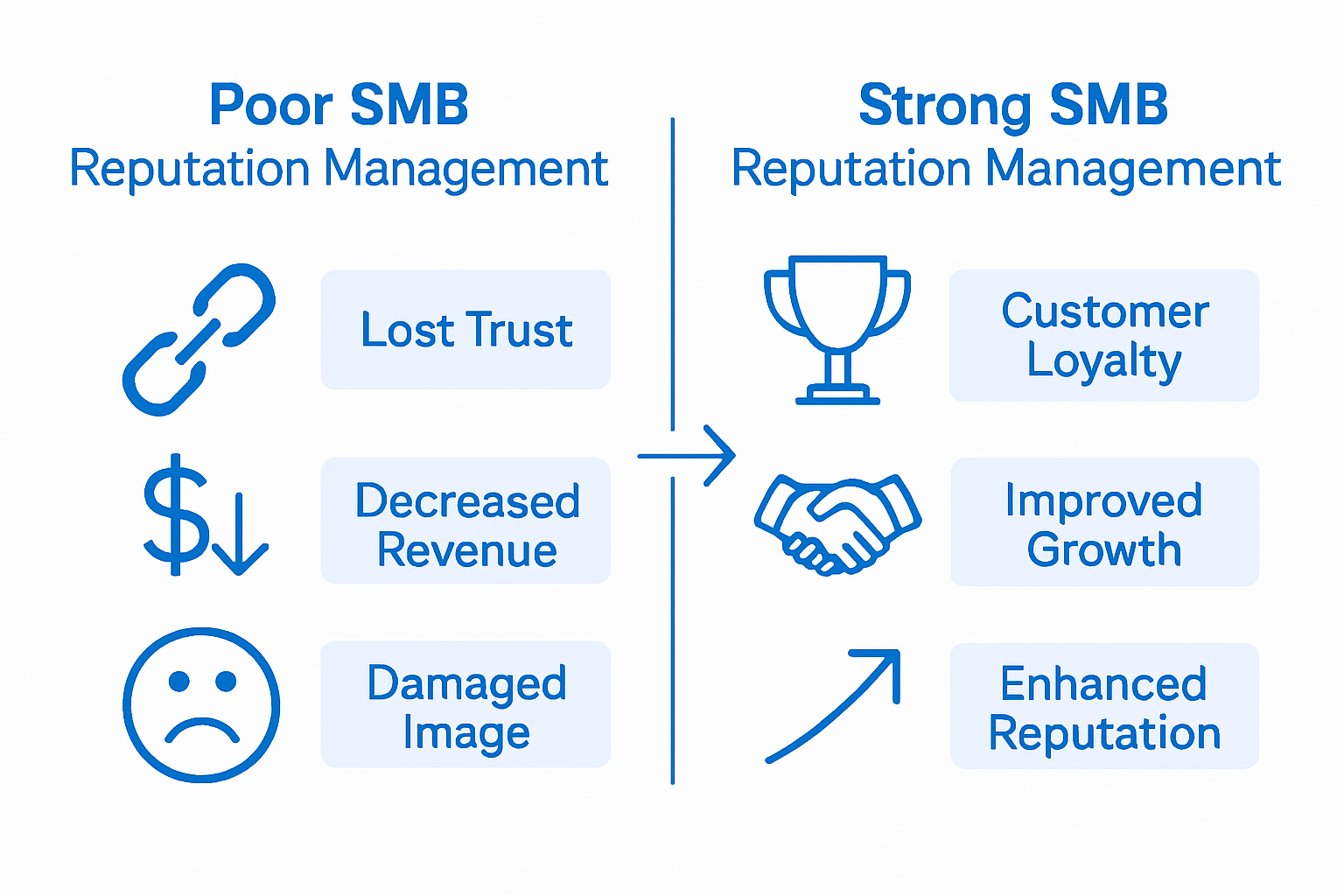
Successful reputation management is not about creating a perfect image, but about building authentic relationships with customers. By proactively addressing potential issues, responding professionally to feedback, and demonstrating a genuine commitment to customer satisfaction, small businesses can transform potential reputation challenges into opportunities for building long-term trust and loyalty.
Protect Your SMB Growth with Smarter Reputation Management Solutions
The article “Reputation Management Explained: Protecting SMB Growth” highlights how small and mid-sized businesses face ongoing challenges with online reviews, real-time brand monitoring, and transparent customer engagement. These pain points demand an integrated approach, combining proactive digital reputation tracking and consistent communication to build trust and prevent costly reputation risks. If you are looking to avoid common pitfalls like ignoring feedback or inconsistent messaging, it is essential to adopt solutions that streamline these tasks without overwhelming your resources.
Bij Ga nu online - Maak verbinding, we offer an all-in-one marketing automation software and digital growth platform designed specifically for SMBs. Our system includes powerful tools for reputation management, lead nurturing, and CRM—all in one affordable and easy-to-use solution. With done-for-you setup and real human support, you gain real-time monitoring, review response capabilities, and comprehensive reporting to keep your brand image strong and your customers engaged. This approach turns digital conversations into opportunities for growth and lasting trust.
Ready to take control of your online reputation before challenges escalate?

Explore how our proven platform empowers you with
- Unified reputation management and CRM
- Automated review monitoring and response
- Transparent customer engagement tools
Don’t wait to protect your most valuable asset. Visit Go Online Now today and start growing smarter with confidence.
Veelgestelde vragen
What is reputation management for small and mid-sized businesses?
Reputation management is a strategic approach to shape and protect a business’s public perception across various platforms, both digital and traditional. It involves monitoring online mentions, engaging with customer feedback, and consistently communicating the brand’s narrative.
How can online reviews impact the reputation of a small business?
Online reviews serve as digital currency of trust, greatly influencing customer decisions. They provide potential customers with transparent insights into a business’s performance and can bolster credibility when managed effectively.
What are the key components of modern reputation management?
Key components include real-time digital monitoring of brand mentions, proactive engagement with customer feedback, crisis communication protocols, and maintaining consistent and transparent brand messaging across all platforms.
What common mistakes should small businesses avoid in reputation management?
Small businesses should avoid ignoring negative feedback, having inconsistent brand messaging, being reactive instead of proactive, lacking transparency, and engaging in unethical reputation tactics, as these can harm their reputation and customer trust.
Aanbevolen
- Improving Online Reputation Process for Business Growth – Go Online Now
- Value of Online Reputation Management for Business Owners
- Understanding Digital Growth Strategies for SMBs – Go Online Now
- Understanding Why Digital Marketing for SMBs Matters – Go Online Now
- Tech for Small Businesses: Complete Guide for 2025 – Projector Display
- Rôle Du Web Dans La Croissance D’Entreprise : Guide Complet – IT-Pascaud
- Read – 15 Strategies for Customer Retention That Work in Australia. SLY Collective Underwear