

Managing multiple marketing tools can quickly turn into a juggling act for any business owner. With workloads piling up and budgets under pressure, finding a way to streamline marketing tasks becomes a top priority. Nearly 60 percent of small businesses report wasted time and resources due to disconnected marketing systems. Understanding what all-in-one marketing platforms are—and how they combine vital features like email, CRM, and analytics—can make a real difference in how efficiently a company runs and scales.
Defining All In One Marketing Platforms
Een all-in-one marketing platform is a powerful digital solution that consolidates multiple marketing tools and capabilities into a single, integrated system. According to ResultSolution, these comprehensive suites help marketers streamline their efforts and better manage campaigns across multiple platforms.
These platforms typically combine essential marketing functions that small and medium-sized businesses need to grow effectively. Key features often include:
- Email marketing automation
- Customer relationship management (CRM)
- Social media management
- Lead generation and tracking
- Analyse en rapportage
- Campaign management
- Content creation tools
The primary goal of an all-in-one marketing platform is to eliminate the complexity of using multiple disconnected tools. By centralizing your marketing technology stack, businesses can save time, reduce operational costs, and gain more comprehensive insights into their marketing performance. 7 Essential Examples of Digital Marketing Tools for SMBs demonstrates how integrated platforms can dramatically simplify a company’s digital marketing strategy.
When evaluating these platforms, businesses should look beyond just feature lists and consider factors like user-friendliness, integration capabilities, scalability, and the specific needs of their industry. Not all platforms are created equal, and what works perfectly for one business might be overwhelming or insufficient for another. The key is finding a solution that offers the right balance of comprehensive features and intuitive design.

Essential Features and Integrated Tools Explained
All-in-one marketing platforms are designed to simplify and supercharge digital marketing efforts through a comprehensive suite of integrated tools. These powerful platforms bring together multiple critical functions that traditionally required separate software subscriptions, creating a unified ecosystem for businesses to manage their entire marketing strategy.
The core integrated tools typically encompass several key areas:
- Marketingautomatisering
- Automated email sequences
- Trigger-based campaign workflows
- Lead nurturing pipelines
- Customer Relationship Management (CRM)
- Contact management
- Sales pipeline tracking
- Interaction history logging
- Communication Channels
- E-mailmarketing
- SMS messaging
- Social media management
- Live chat integration
Beyond basic functionality, advanced platforms offer sophisticated features that transform how small and medium-sized businesses approach marketing. 10 vragen voordat u marketingautomatiseringssoftware koopt highlights the importance of understanding the depth and breadth of tools before making an investment.
The real power of these integrated platforms lies in their ability to break down data silos and provide holistic insights. By connecting different marketing functions, businesses can track customer journeys more effectively, understand complex interactions, and make data-driven decisions.
This interconnectedness means marketing teams spend less time manually transferring data between systems and more time developing strategic initiatives that drive growth.
When selecting an all-in-one marketing platform, businesses should prioritize solutions that offer seamless integrations, user-friendly interfaces, and scalable features. The goal is not just to have multiple tools under one roof, but to have those tools work together intelligently, providing a unified view of marketing performance and customer engagement.
Types of Marketing Automation and CRM Solutions
Marketing automation and CRM solutions have evolved to meet the diverse needs of businesses across different industries and scales. According to ResultSolution, these comprehensive platforms help marketers streamline their efforts and better manage campaigns across multiple platforms, offering tailored solutions for various business requirements.
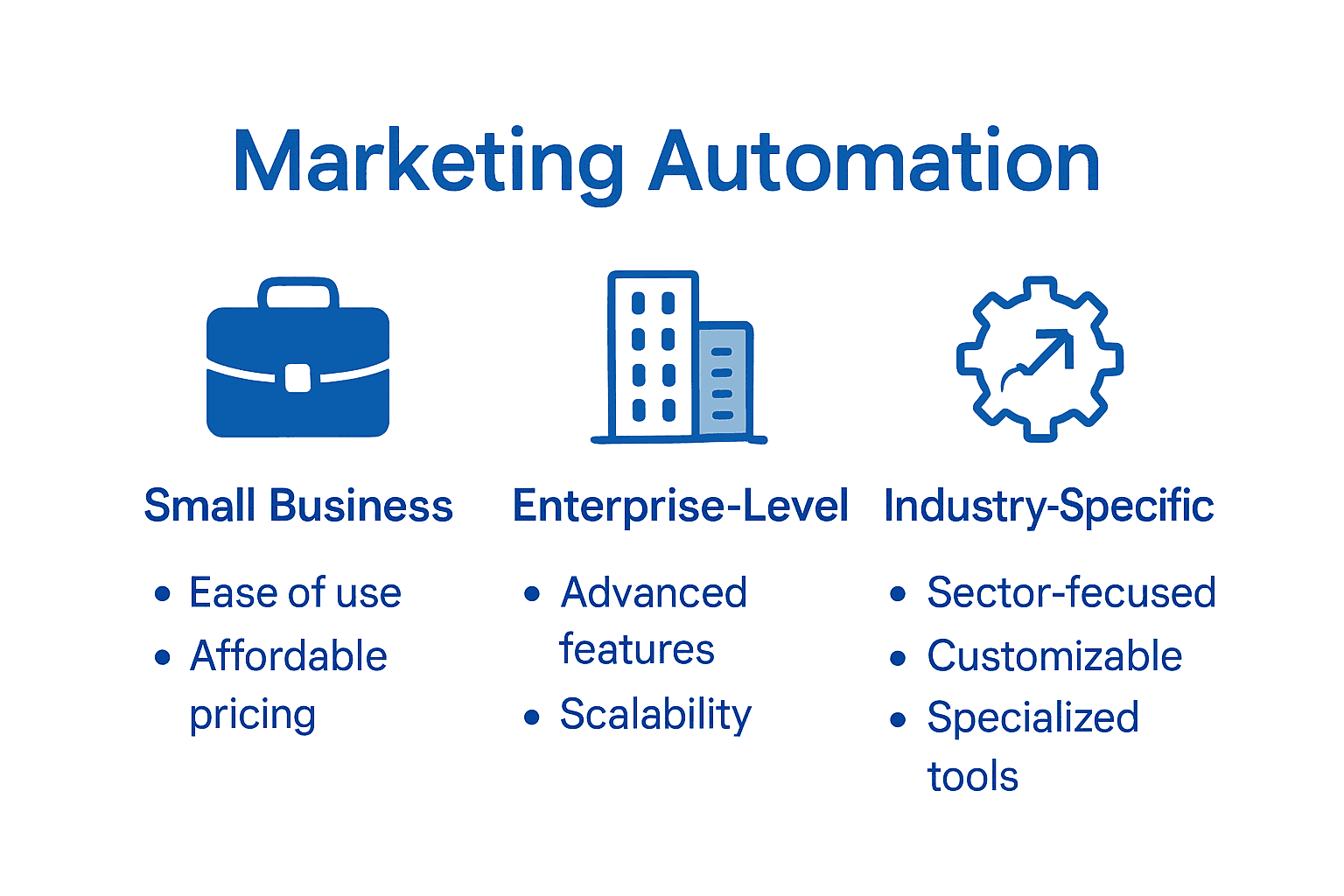
Businesses can typically choose from several distinct types of marketing automation and CRM solutions:
Small Business Solutions
- Lightweight, affordable platforms
- Basic email marketing and contact management
- Simple reporting and analytics
- Limited but essential integrations
Enterprise-Level Platforms
- Advanced workflow automation
- Complex segmentation capabilities
- Robust reporting and predictive analytics
- Multiple user access and permissions
Industry-Specific Solutions
- Customized tools for specific sectors
- Pre-built templates and workflows
- Compliance and regulatory features
- Specialized communication channels
When exploring these solutions, businesses should carefully evaluate their specific needs. De juiste marketingautomatiseringssoftware kiezen emphasizes the importance of selecting a platform that aligns with your unique business objectives and growth strategies.
The most effective marketing automation and CRM solutions go beyond basic functionality. They offer intelligent features like AI-powered lead scoring, predictive customer journey mapping, and seamless cross-channel communication.
 These advanced capabilities transform marketing from a cost center to a strategic revenue generation engine, enabling businesses to create more personalized, data-driven customer experiences that drive meaningful engagement and growth.
Here’s a comparison of common types of marketing automation and CRM solutions:
| Solution Type | Belangrijkste kenmerken | Best For |
|---|---|---|
| Small Business | Basic email marketing Contact management Simple analytics | Startups Small teams |
| Enterprise-Level | Advanced automation Complex segmentation Robust analytics | Large organizations Fast growth |
| Branchespecifiek | Pre-built templates Regulatory compliance Custom workflows | Gezondheidszorg Vastgoed Legal |
Ready to Build a Smarter Marketing Strategy?
Get a free 1-on-1 Growth Strategy Call to discuss your goals, identify opportunities, and find practical ways to improve your marketing and automation.
Real-World Use Cases for SMBs and SMEs
Marketing automation platforms transform how small and medium-sized businesses operate across diverse industries. According to ResultSolution, these comprehensive platforms help marketers streamline their efforts and manage campaigns more effectively, providing practical solutions for real-world business challenges.
Let’s explore specific use cases across different business sectors:
Coaching and Consulting Services
- Automated lead nurturing sequences
- Client onboarding workflows
- Gepersonaliseerde vervolgcommunicatie
- Performance tracking and reporting
Real Estate Professionals
- Property inquiry management
- Automated client follow-up campaigns
- Segmented email marketing
- Client relationship tracking
Professional Service Providers
- Appointment scheduling automation
- Client communication management
- Service reminder systems
- Lead qualification processes
Inzicht in digitale groeistrategieën voor het MKB highlights how targeted automation can dramatically improve business efficiency and customer engagement. By implementing these platforms, businesses can transform manual, time-consuming processes into streamlined, intelligent systems that work continuously in the background.
The true power of marketing automation lies in its ability to create personalized, scalable experiences. Small businesses can now compete with larger organizations by leveraging intelligent technologies that adapt to individual customer needs, track intricate interactions, and deliver precisely timed, relevant communications. This approach doesn’t just save time—it fundamentally reimagines how businesses connect with their customers, turning complex marketing challenges into strategic opportunities for growth.
Comparing Alternatives and Evaluating Costs
Marketing platform selection represents a critical investment for small and medium-sized businesses, requiring careful analysis of features, pricing, and long-term value. The landscape of marketing automation solutions can be complex, with numerous options spanning different price points and capabilities.
When comparing alternatives, businesses should consider multiple critical factors:
- Cost Structures
- Monthly subscription models
- Annual pricing with potential discounts
- Per-user pricing
- Feature-based tiered pricing
- Feature Comparisons
- Core marketing automation capabilities
- CRM integration depth
- Reporting and analytics complexity
- Scalability potential
- Integration ecosystem
- Total Cost of Ownership
- Initial setup expenses
- Training requirements
- Potential additional integration costs
- Technical support fees
- Potential productivity gains
10 Questions Before Buying Marketing Automation Software provides essential guidance for navigating these complex evaluation processes, emphasizing the importance of comprehensive assessment beyond surface-level pricing.
Beyond raw numbers, smart businesses evaluate marketing platforms through a strategic lens. The most expensive solution isn’t always the best, and the cheapest option might ultimately cost more through inefficiencies and limited capabilities. Successful platform selection involves understanding your specific business needs, projected growth, and the potential return on investment that each solution offers. The goal is finding a platform that not only fits your current budget but also supports your future marketing and sales objectives without requiring frequent, disruptive migrations.
Common Pitfalls and How to Avoid Them
Marketing automation platforms can be transformative tools for businesses, but they’re not without potential challenges. According to ResultSolution, these comprehensive platforms help marketers streamline efforts, but successful implementation requires strategic navigation of common pitfalls.
Businesses frequently encounter several critical mistakes during platform adoption:
- Overcomplication Trap
- Implementing too many simultaneous automations
- Creating overly complex workflow sequences
- Neglecting user experience in automation design
- Losing human touch in communication
- Integration Challenges
- Insufficient technical compatibility assessment
- Incomplete data migration strategies
- Overlooking existing technology ecosystem
- Underestimating integration complexity
- Training and Adoption Failures
- Minimal team training investment
- Resistance to new technological processes
- Insufficient change management
- Lack of clear implementation roadmap
Choosing the Right Marketing Automation Software provides crucial insights into navigating these potential obstacles, emphasizing the importance of deliberate, strategic implementation.
Successful marketing automation isn’t about technology—it’s about strategic alignment with business objectives. The most effective approach involves gradual implementation, continuous learning, and maintaining a balance between technological capabilities and human creativity. Businesses must view these platforms as collaborative tools that enhance, rather than replace, strategic thinking and personalized customer interactions. By anticipating potential challenges and developing comprehensive adoption strategies, organizations can transform potential pitfalls into opportunities for growth and innovation.
Unlock Seamless Growth with the Right All-in-One Marketing Platform
Are you tired of juggling multiple disconnected marketing tools that complicate your workflows and drain your time? This guide highlights how small and medium-sized businesses face the challenge of managing complex marketing stacks without losing focus or budget. If your goal is to streamline marketing automation, unify your CRM, and gain clear insights without getting overwhelmed by over-engineered platforms, you need a solution built specifically for your growth stage.
Go Online Now-Connect understands these exact pain points. Our platform integrates email marketing automation, lead nurturing, appointment scheduling, and pipeline management all in one easy-to-use system that saves you time and drives up to 85% more conversions. Plus, we back it with real human support and done-for-you setup so you can avoid common pitfalls like overcomplication and training failures.
Explore how our comprehensive digital marketing services support your strategy and content needs as well by visiting the Digital Marketing Archives – Go Online Now and learn more about our full capabilities at Ga nu online. Discover additional support options through Virtuele assistentie archieven – Ga nu online designed to free your time to focus on what matters most.
Stop letting disconnected tools hold your business back. Experience a powerful all-in-one marketing automation software and digital growth partner designed just for SMBs and SMEs. Visit https://goonlinenow.co today and take the first step toward growth that is smarter and hassle-free.
Get a Free Growth Strategy Built Around Your Business
Let’s discuss your current marketing, growth goals, and challenges. Get personalized insights and clear next steps to help you move your business forward.
Veelgestelde vragen
What is an all-in-one marketing platform?
An all-in-one marketing platform is a comprehensive digital solution that integrates multiple marketing tools and capabilities into a single system, helping businesses manage campaigns and marketing efforts more effectively.
What are the key features of an all-in-one marketing platform?
Common features include email marketing automation, customer relationship management (CRM), social media management, lead generation and tracking, analytics and reporting, campaign management, and content creation tools.
How do I choose the right all-in-one marketing platform for my business?
Evaluate platforms based on user-friendliness, integration capabilities, scalability, pricing models, and the specific needs of your industry to ensure the solution aligns with your business objectives.
What are the common pitfalls to avoid when implementing a marketing automation platform?
Common pitfalls include overcomplicating workflows, underestimating integration challenges, and inadequate training for team members, which can hinder the successful adoption of the platform.
Aanbevolen
- 7 Essential Digital Marketing Platforms Examples – Go Online Now
- 7 Essential Examples of Digital Marketing Tools for SMBs – Go Online Now
- How to Market Your Brand Effectively for Business Growth – Go Online Now
- Social Media vs Other Marketing: Choose Wisely – Go Online Now
- Multi-Channel Marketing for SMEs: Mastering Success Across All Platforms | Kickass Online
- Marketing omnicanal que es y cómo puede impulsar tu crecimiento en 2025